
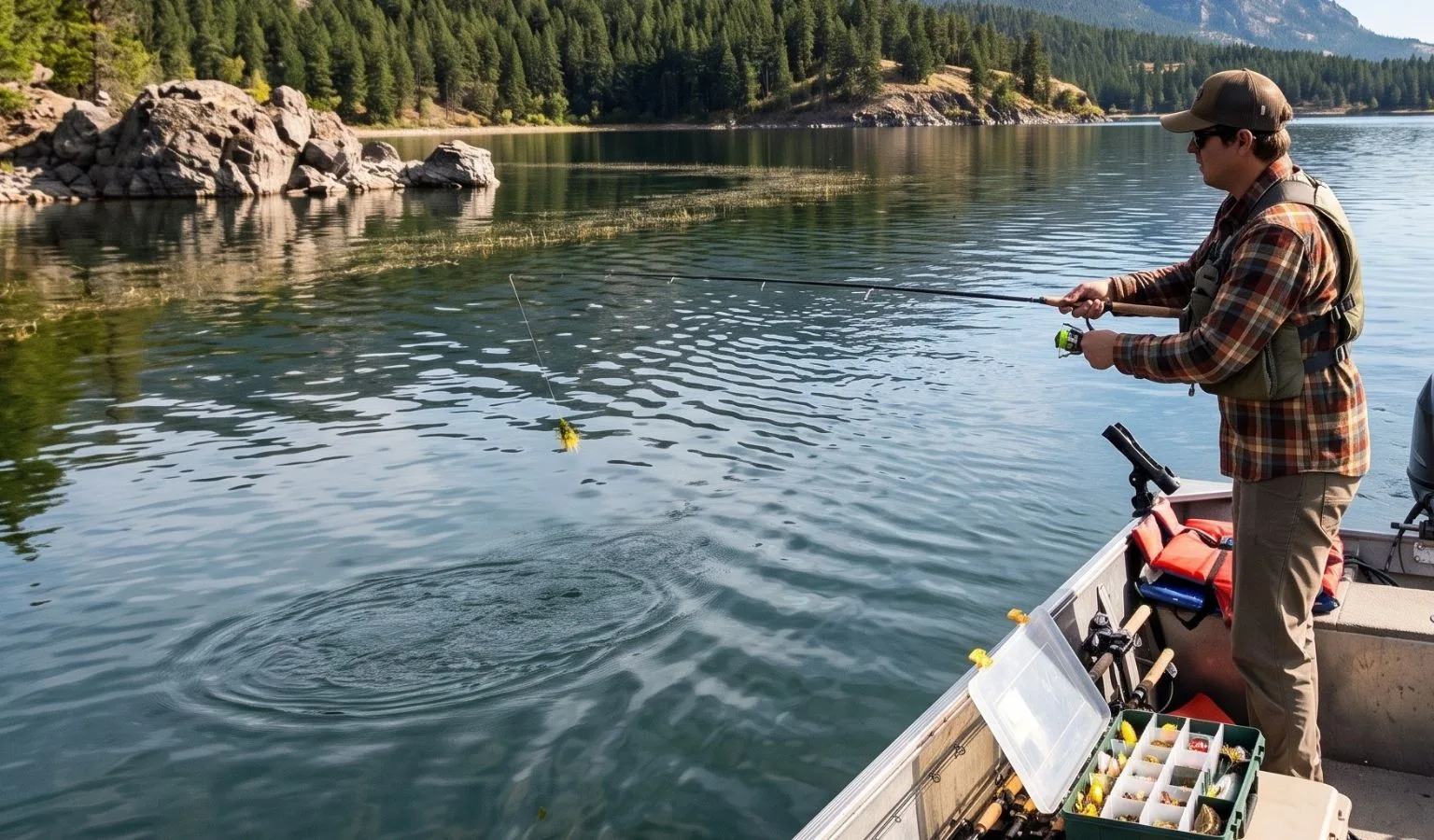
Dust off the tackle box and double-check your leaders—between dialed-in kokanee at Regulating and heavyweight walleye sliding into their fall patterns at Hauser, it’s officially prime time to get on the water. Here are reports for Hauser and Helena Valley Regulating Reservoir by Jonathan Miller with Montana Outdoor Approved Capital Sports in Helena, Montana:
Hauser Lake Fishing Report
Hauser:
Trout are showing up strong again in front of Spokane bay at about 17′ of water. Usually around this time is when the browns start moving into that area to begin their spawn. I would recommend a marabou jig or a zonker and casting. The North end by the dam to White Sandy has also been a productive stretch. It is much more of a trolling game in this stretch. Same colors as Canyon Ferry: silver, black/gold, rainbow trout or fire tiger.
Walleyes are biting well still off the weed lines. In fact at the John Arnold, first place team weighed in 40lbs for 5 fish. Hauser is starting to throw some big fish again. Notably, the guys I have talked with have all noticed big clouds of bait. We haven’t figured out what they are yet but they are small minnow of some kind. It is exciting. Hopefully that is a sign that forage is making a strong reappearance. Also of note, the walleye seem to be returning to rocky point and reefs. So I would guess that is the indication we will start seeing more and more fall patterns emerging. Which coincides with the Causeway arm starting to fish well again. I would recommend jigs and jerk baits. Perch, goby or electric minnow seems to be the hot colors for jigs right now. Silver, gold and perch colored jerk baits are my go to colors to start with. Just remember to have a leader for the pike as they have been very active as well.
Hauser Lake Trout: Understanding the Fall Brown Trout Transition
If you’ve fished Hauser for any length of time, you know that the shift into late summer and early fall is one of the most exciting windows of the year for trout anglers. Brown trout in particular are driven by instinct as water temperatures begin to cool and daylight hours shorten. That movement Jonathan mentions in front of Spokane Bay is classic pre-spawn behavior—browns staging in moderate depths before making their push toward shallower gravel and rocky structure.
Fishing that 15-to-20-foot zone with a marabou jig or a zonker is a proven approach because these flies and soft materials pulse and breathe naturally in the water, triggering strikes even from fish that aren’t aggressively feeding. When casting in this zone, work the presentation slowly and let it sink to depth before beginning a retrieve with subtle lifts and pauses. Browns can be moody in transition, so giving them a moment to commit often makes the difference.
The stretch from the dam down to White Sandy on the north end is a different animal. This area rewards trollers who can cover water efficiently and maintain consistent depth and speed. The color recommendations—silver, black/gold, rainbow trout, and fire tiger—are worth keeping on your rod without overthinking it. These patterns have proven reliable across the Missouri River chain lakes, and Hauser is no exception. If you’re rigging for trolling here, a quality fluorocarbon leader in the 8-to-12-pound range will give you the right balance of stealth and strength.
Walleye at Hauser: Reading the Fall Pattern Shift
Hauser’s walleye fishery is genuinely one of the best-kept open secrets along the Missouri River chain. The report of a 40-pound bag of five fish coming out of the John Arnold tournament is a serious benchmark—that’s not a fluke, that’s a healthy, productive walleye population showing up in force. When big fish start showing in tournament weights like that, it’s a reliable signal that the lake is in good shape and the bite is real.
The transition Jonathan is describing—walleye moving off weed lines and back toward rocky points and reefs—is a textbook fall behavior shift. As water cools, baitfish scatter and walleye follow structure rather than vegetation to ambush prey. Rocky points, submerged reefs, and hard-bottom transitions become prime hunting grounds. This is exactly the time to slow down and pick apart that structure methodically rather than covering open water.
The mystery clouds of small baitfish are genuinely intriguing. Whether they turn out to be juvenile perch, emerald shiners, or something else entirely, the presence of that kind of forage concentration is excellent news for the long-term health of the fishery. Walleye and other predators will key on those bait clouds, so if you can locate them visually or on your fish finder, working the edges is often more productive than fishing directly through the school.
For jig selection, the perch, goby, and electric minnow colors Jonathan recommends all mimic natural forage effectively in Hauser’s water clarity. When working jigs along rocky structure, a lift-drop cadence covering the bottom slowly will keep your presentation in the strike zone longest. Jerkbaits in silver, gold, and perch tones are excellent for covering water quickly when you’re prospecting new areas or trying to trigger reaction strikes from more aggressive fish.
One note that bears repeating: pike are active right now, and Hauser holds some substantial fish. Using a short wire or heavy fluorocarbon leader—even a simple 12-to-15-pound bite tippet—can save you a lot of lost lures and heartbreak. Many anglers skip the leader and regret it within a session or two this time of year.
Helena Valley Regulating Reservoir Kokanee Report
Regulating Reservoir:
Kokanee are biting decently well from the little I’ve heard. Depths range from 10′ down to 35′. Mainly trolling out of kayak. Using a dipsy diver or small snap weight to get to depth with a wedding ring. Hot Pink or Chartreuse are safe colors to start with. If you have the means to find the schools, jigging a silver or gold kastmaster or Swedish pimple is effective tipped with corn.
Kokanee on Regulating Reservoir: Tactics That Work
Helena Valley Regulating Reservoir might not get the same headlines as Canyon Ferry or Hauser, but for kokanee fishing, it punches well above its size. The fact that a kayak-based troll is producing fish across a 10-to-35-foot depth range tells you the fish are scattered vertically—which actually works in your favor if you’re willing to experiment a little to dial in the exact zone on any given day.
Dipsy divers and snap weights are go-to tools for kokanee trollers precisely because they let you run a relatively light main line and leader while still reaching target depths without a heavy downrigger setup. For kayak anglers especially, this is a practical and effective approach that keeps your rig simple. The wedding ring spinner—a classic for kokanee throughout Montana and the Pacific Northwest—provides flash and vibration that mimics the small invertebrates and zooplankton kokanee feed on. Adding a small piece of corn or a single maggot to the hook can make the difference on neutral or finicky fish.
Hot pink and chartreuse are reliable starting colors for kokanee virtually everywhere they’re found in Montana, and Regulating is no different. If those aren’t producing after a reasonable amount of time, consider working through orange, red, or UV-reactive patterns. Kokanee can be surprisingly color-sensitive, and a small tweak can flip the switch on an otherwise slow morning.
For those who can locate the schools on a fish finder or depth sounder, jigging a Kastmaster or Swedish Pimple tipped with corn is an incredibly effective technique when you’re directly over fish. The key with jigging for kokanee is using light line—6-pound test or lighter fluorocarbon—and keeping your jigging motion subtle. These are not fish you want to rip a lure past aggressively. Small hops and flutters tend to outperform aggressive jigging strokes in most conditions.
Planning Your Trip: Access, Gear, and Local Knowledge
Both Hauser Lake and Helena Valley Regulating Reservoir are easily accessible from Helena, making them ideal destinations for anglers who want quality fishing without a long drive. Hauser Lake has multiple access points including the Hauser Dam area and boat ramps along the lake’s length, while Regulating Reservoir is well-suited for kayaks, canoes, and smaller motorized craft given its size and character.
Before heading out, it’s always worth stopping into Capital Sports in Helena for the most current local intel. The staff there, including Jonathan Miller, are plugged into what’s happening on these waters in real time—and that kind of up-to-the-moment knowledge is worth more than any general guide can provide. They can also help you stock up on the specific jig colors, wedding ring sizes, and terminal tackle that are actually moving fish right now, rather than guessing from a list.
As always, make sure your Montana fishing license is current and check the latest FWP regulations for any slot limits, possession limits, or special rules that apply to these waters before you launch. Regulations can change seasonally, and staying compliant protects both you and the fishery for seasons to come.
The window is open. Whether you’re chasing big walleye at Hauser, targeting pre-spawn browns, or loading the cooler with kokanee at Regulating, right now is one of the best times of year to be on these lakes. Get out there.
Editor’s note: Corrected the store name from ‘Capital One Sports’ to ‘Capital Sports’ to match the business’s actual name.
Montana's outdoor week, in your inbox at 7am Friday.