
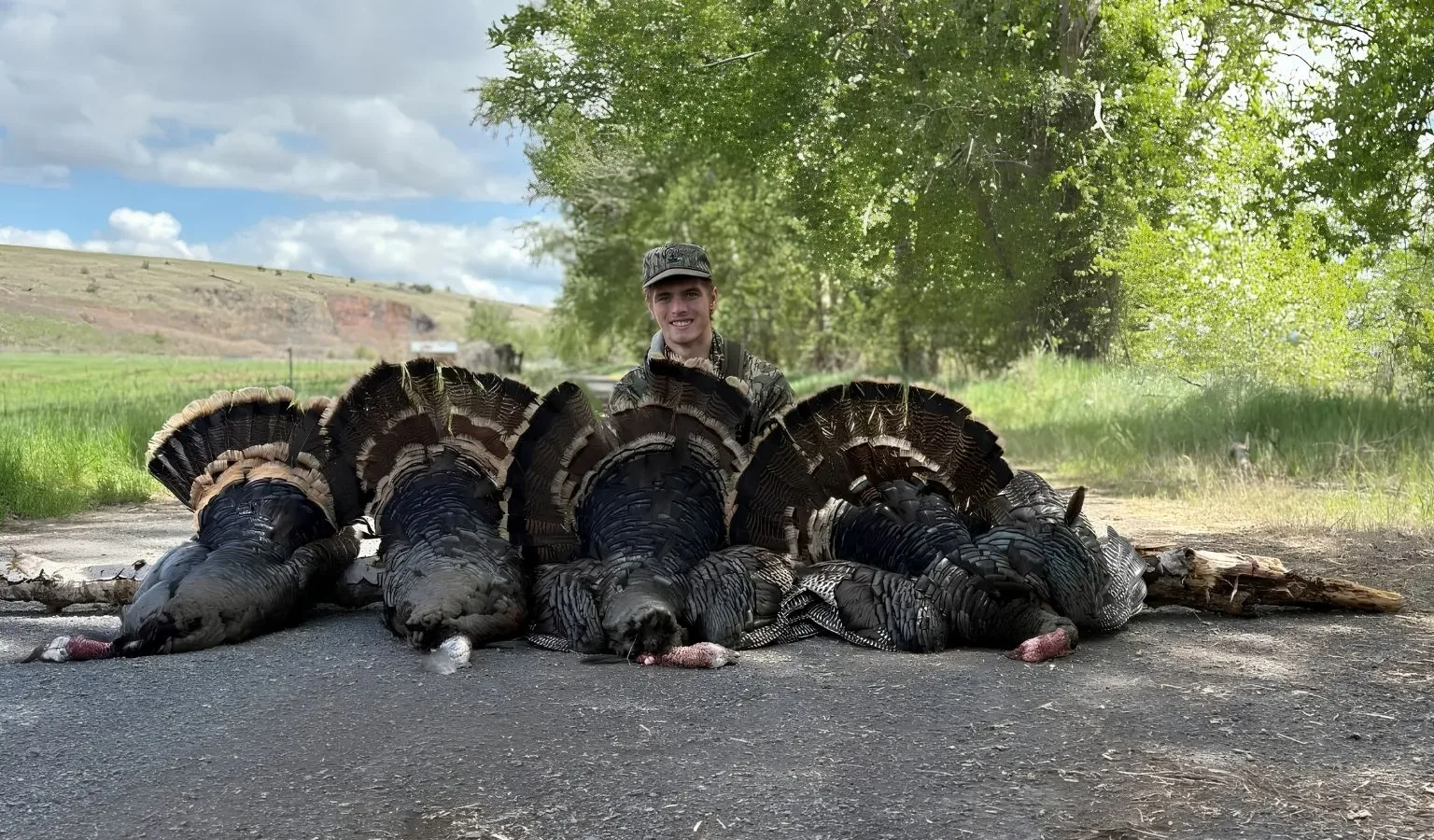
Building a social media persona as a master woodsman is tough to pull off when your entire highlight reel is fueled by illegal activity across seventeen states. According to a recent Fish and Wildlife article, Carter J. Hickey, a twenty-one-year-old from Ohio, treated game regulations like suggestions—spotlighting game from vehicles, ignoring bag limits, poaching out of season, and bragging about it all on TikTok. After a wave of public tips sparked a coordinated multi-state investigation by the U.S. Fish and Wildlife Service and state wildlife agencies, Hickey’s outlaw run ended in court with guilty pleas to seventeen wildlife crimes and thousands in fines for his accomplices.
The cost of playing an outlaw influencer came out steep, hitting both his wallet and his pride:
- Over $33,500 in restitution, fines, penalties, and contributions to the Ohio Turn In a Poacher program.
- 15 days in jail, two years of probation, and 80 hours of community service.
- A five-year ban on hunting and trapping privileges.
- Seizure of his gear, including three firearms, a bow, hunting blinds, decoys, 115 pounds of poached turkey meat, and 47 turkey fans.
To cap it off, the court ordered Hickey to post a public apology video on the very TikTok channel he used to boast about his illegal kills, alongside a written apology for trespassing and unlawfully taking a 10-point buck in a public park. Poaching robs ethical hunters and damages conservation efforts, which is why wildlife agencies rely on the public to call out illegal acts. Suspected wildlife crimes can be reported anonymously to the U.S. Fish and Wildlife Service at 1-844-FWS-TIPS.
The TikTok Angle: When Social Media Becomes Evidence
There’s a particular kind of irony in getting caught because you couldn’t stop showing off. Hickey didn’t just poach—he documented it, captioned it, and posted it for followers. What he apparently never considered is that wildlife agents have social media feeds too. So does the general public, which includes a whole lot of hunters who take the rules seriously and don’t appreciate watching someone else trash the resource they care about.
Game wardens and conservation officers across the country have become increasingly savvy about monitoring public social media content. A video bragging about a kill taken out of season, a photo of a pile of birds that’s obviously over the bag limit, or a clip of spotlighting deer from a truck bed—all of it can and does find its way to law enforcement. In Hickey’s case, the tips reportedly came flooding in from the public after his content circulated widely enough to reach people who recognized what they were seeing.
The lesson here isn’t subtle: if you post it, you own it. Screenshots live forever, and digital evidence is admissible. The same phone that got you ten thousand views can put you in a courtroom.
Seventeen Crimes Across Seventeen States — How Does That Even Happen?
Most poaching cases are local. A guy shoots a deer out of season on a back road. A fishing violation gets spotted by a warden on patrol. But a case spanning seventeen states suggests something more systematic—a pattern of crossing state lines to hunt illegally, likely in pursuit of specific species, seasons that were closed at home, or simply to keep moving ahead of scrutiny.
Multi-state wildlife cases require coordination between the U.S. Fish and Wildlife Service and individual state agencies, which is no small logistical feat. Each state has its own regulations, enforcement agencies, and legal processes. Pulling together seventeen separate violations into a coherent federal and state prosecution takes significant investigative resources. That this case got built and prosecuted successfully is a credit to how seriously wildlife law enforcement is taken when the public demands accountability.
For context, the Lacey Act—a federal law dating back to 1900—makes it illegal to transport, sell, or acquire wildlife that has been taken in violation of state, tribal, or foreign law. It’s the legal mechanism that allows federal prosecutors to get involved when poaching crosses state lines, and it carries serious teeth. Violations can result in felony charges, prison time, and substantial fines.
What Poaching Actually Costs the Rest of Us
It’s easy to frame poaching as a victimless crime, especially when the animal is already dead. But that framing ignores how wildlife management actually works. Game populations are managed using harvest data. Bag limits, season dates, and license structures are all calibrated to keep populations healthy while allowing sustainable harvest. When someone yanks animals out of the system without reporting them, that data gets corrupted. Wildlife managers make decisions based on numbers that no longer reflect reality, and populations can decline faster than anyone realizes until it’s too late.
In Montana, where hunting is genuinely woven into the culture and the economy, this hits close to home. The state’s elk herds, deer populations, and wild turkey numbers aren’t limitless. Every animal that gets poached is one that a licensed hunter didn’t get to pursue legally, one that didn’t contribute to harvest data, and one that didn’t generate the license revenue that funds Fish, Wildlife & Parks operations. The system only works if people participate honestly in it.
Turkey poaching in particular—given the 115 pounds of meat and 47 fans seized from Hickey—is worth calling out specifically. Wild turkey populations in many states, including Montana, have required active management and restoration work over the decades. They’re not inexhaustible, and taking birds illegally, out of season, without regard for sex or bag limits undermines the conservation investments that made those populations possible in the first place.
Montana’s Approach to Poaching Enforcement
Montana Fish, Wildlife & Parks runs its own tip line—the Montana Poaching Hotline—and it gets used. The state’s hunting community has little patience for people who cheat the system, and the rural character of most Montana hunting country means local eyes are usually watching. Wardens here cover enormous geographic territory, from the Clark Fork drainage in the west to the Powder River breaks in the east, and they depend heavily on community cooperation to do their jobs effectively.
If you see something that looks wrong in the field—a spotlighted animal, a vehicle stopped in suspicious circumstances along a game-rich corridor, or someone hauling out more than their limit—the right move is to report it. You don’t need to be certain. That’s what investigators are for. In Montana, you can report suspected wildlife crimes to FWP at 1-800-TIP-MONT (1-800-847-6668). Reports can be made anonymously.
Penalties for wildlife violations in Montana are real and they escalate with repeat offenses and the nature of the crime. Beyond fines and potential jail time, convicted poachers can lose hunting and fishing privileges—sometimes for years, sometimes permanently—under the state’s revocation statutes. Montana also participates in the Interstate Wildlife Violator Compact, which means a license revocation here can follow you across participating states. Check current FWP regulations and statutes for specifics, as penalties are subject to change.
The Gear Seizure: A Note on What You Stand to Lose
Three firearms. A bow. Hunting blinds. Decoys. All of it gone. For any serious hunter, that list of seized equipment represents not just dollar value but years of accumulated investment in the pursuit. Quality optics, a well-tuned bow, a rifle zeroed for specific field conditions—these aren’t things you replace without pain. Courts in wildlife cases routinely order the forfeiture of equipment used to commit violations, and judges aren’t particularly sympathetic when the violations were systematic and brazen.
In Hickey’s case, the gear seizure on top of $33,500 in financial penalties makes the total cost of his “influencer” career genuinely staggering. For a twenty-one-year-old, that’s a financial hole that will take years to climb out of—assuming the probation terms and community service hours don’t eat up the time needed to earn the money in the first place.
The Public Apology Twist: A New Kind of Accountability
The most pointed part of Hickey’s sentence may be the requirement to post a public apology on the same TikTok channel he used to build his illegal brand. There’s a poetic logic to it. You used this platform to disrespect the resource and mislead your followers into thinking this behavior was acceptable or admirable. Now you’ll use it to explain exactly why it wasn’t.
It’s the kind of creative sentencing that reflects a growing judicial awareness that social media crimes require social media remedies. And it puts something valuable on record for anyone who stumbles across his old content looking for a role model: a direct, court-ordered correction from the person himself.
The Bottom Line for Ethical Hunters
Cases like this one are a reminder of why following the rules matters, and not just because you might get caught. Hunting culture in Montana and across the West is built on a foundation of fair chase, honest harvest reporting, and genuine respect for game populations. Those values are what separate hunting from mere killing, and they’re what give the hunting community its credibility when wildlife management decisions are made at the political and regulatory level.
The public tips that brought Hickey down didn’t come from game wardens with surveillance drones. They came from ordinary hunters and outdoorspeople who saw something wrong and made a phone call. That’s the system working exactly as it should.
Suspected wildlife crimes can be reported anonymously to the U.S. Fish and Wildlife Service at 1-844-FWS-TIPS. In Montana, contact FWP’s poaching hotline at 1-800-TIP-MONT. Neither line requires you to leave your name, and both take the calls seriously.
Photo courtesy of Ohio Department of Natural Resources
Montana's outdoor week, in your inbox at 7am Friday.