
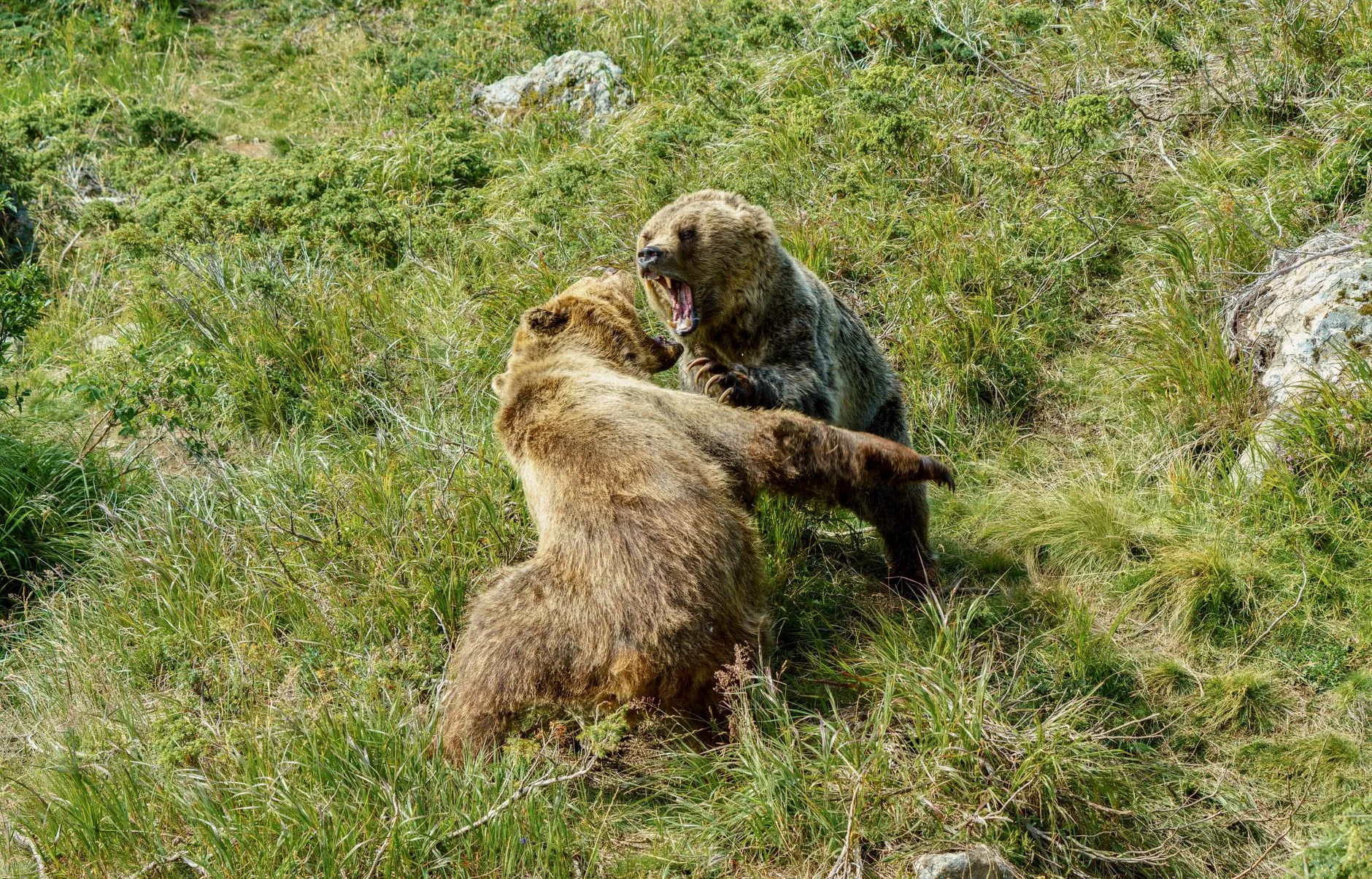
If you’re heading into the Montana backcountry this fall — whether you’re chasing elk in the Bob Marshall, archery hunting whitetails along the Yellowstone breaks, or just putting boots on public land — this video from Montana FWP deserves your full attention before you go. Black bear monitoring biologist Colby Anton breaks down exactly what’s driving bear behavior in September and why some years are flat-out more dangerous than others.
What Hyperphagia Actually Means — and Why It Changes Bear Behavior
By September, black bears are deep into hyperphagia — a biological feeding frenzy driven by the hard deadline of winter. To survive hibernation, a black bear needs to gain roughly three to four pounds per day during this period, which means putting away somewhere between 15,000 and 20,000 calories daily. That’s not an exaggeration. Their entire existence in the weeks before denning is oriented around one thing: finding the most calorie-dense food available, as fast as possible.
Under normal conditions, that means bears are working overtime on huckleberries in the high country, whitebark pine nuts along the Continental Divide, and army cutworm moths at rocky alpine outcrops. These are wild, high-elevation food sources that keep bears where bears are supposed to be — away from people. But here’s where it gets important for anyone planning a fall hunt: when those food sources fail, the equation changes completely.
In a food failure year — triggered by summer drought, a late spring frost that kills berry blossoms, or a poor whitebark pine cone crop — bears don’t just go hungry and give up. They expand their search radius dramatically and start showing up in places they’d normally avoid. Campgrounds along the South Fork of the Flathead. Trailheads in the Bitterroot. Hunting camps in the Rocky Mountain Front foothills. Any place with a calorie payoff becomes a target, and a gut pile or an unprocessed carcass left overnight is about as attractive to a food-stressed bear as anything in the woods.
Why This Matters Most During Hunting Season
Fall general seasons put thousands of Montana hunters into prime bear habitat at exactly the moment when bear behavior is most erratic and food-driven. FWP has documented the pattern clearly — years when natural food crops come up short produce measurable spikes in bear-human conflicts, livestock depredations, and bears that ultimately have to be destroyed. It’s a cascade that starts with berry blossoms and ends badly for everyone involved, including the bear.
Montana’s black bear season runs concurrently with general deer and elk seasons across much of the state, so there’s a realistic chance you’ll cross paths with one regardless of what you’re after. In Regions 1, 2, and 4 — the northwest corner, the Bitterroot and Missoula drainages, and the Great Falls area and Rocky Mountain Front — black bear densities run high enough that smart bear habits aren’t a courtesy, they’re a requirement.
Practical Steps Every Montana Hunter Should Take This Fall
Anton’s breakdown in the video above is worth watching in full, but here’s what it translates to on the ground:
- Process animals quickly and completely. Don’t leave gut piles, hides, or quarters unattended overnight if you can avoid it. If you have to leave a carcass, hang it at least ten feet off the ground and away from your camp, and approach it carefully the next morning — bears find them fast.
- Run a clean camp. Every scented item — food, cooking gear, toothpaste, trash — goes into a hard-sided bear box or properly hung bear bag. This applies whether you’re in a designated campsite on the Lolo National Forest or a spike camp on BLM ground in the breaks.
- Carry bear spray and know how to deploy it. It should be on your hip, not buried in your pack. Studies consistently show bear spray is more effective than firearms in stopping a bear attack. A canister runs $40–$50 at most Montana outdoor retailers and is a reasonable investment against a very bad day. Check the safety clip before you head out each morning and replace any canister that’s past its expiration date.
- Make noise on the approach. Most bear encounters happen because someone surprised a bear at close range. Talk, clap, use a bear bell — especially when you’re moving through dense brush along creek drainages where bears are likely to be feeding.
- Know the signs of a food failure year. If you’re scouting in late August and the huckleberry crop looks thin, or FWP puts out early-season advisories about increased bear activity, take it seriously. Those conditions don’t improve through September.
The Bottom Line
Bear encounters in the Montana backcountry aren’t inevitable, but they’re predictable enough that going in unprepared is a choice, not bad luck. Colby Anton’s expertise is the real deal, and fifteen minutes with this video is the kind of pre-season prep that costs nothing and could make a genuine difference when you’re miles from the trailhead. Watch it before you load the truck — then grab a can of bear spray on your way out of town if you don’t already have one on your gear list.
Editor’s note: Corrected the FWP Region 4 description, which incorrectly placed Havre (a Region 6 Hi-Line town) in Region 4; Region 4 covers the Great Falls area and Rocky Mountain Front.
Montana's outdoor week, in your inbox at 7am Friday.