Upper Salmon River Steelhead Fishing Report 11.3.26
Angela Montana·November 4, 2026
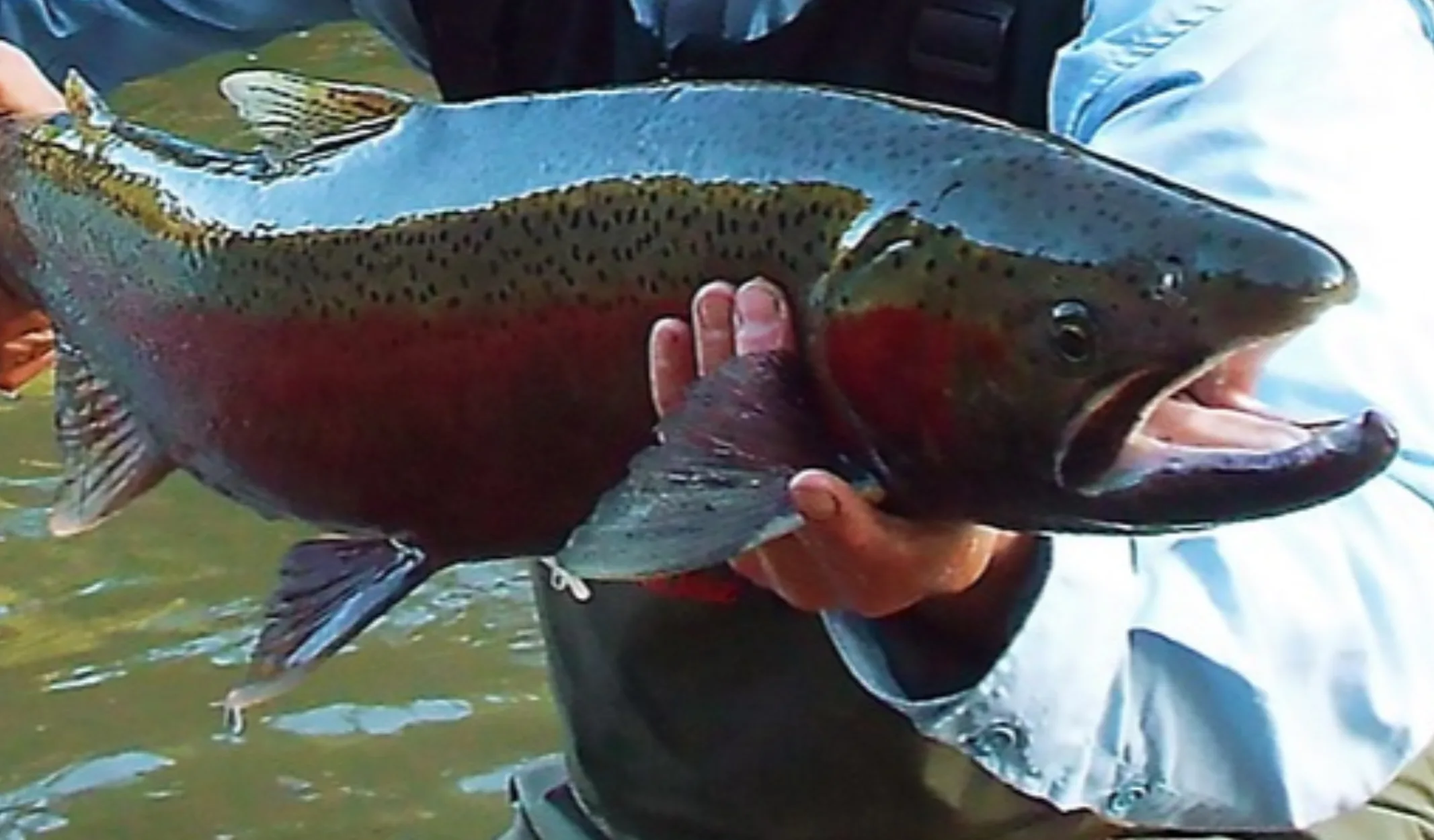
The steelhead bite picked up with the river’s clarity—and anglers followed. Last week, effort rose across the Upper Salmon, and catch rates improved upstream of the Middle Fork, with the best action reported mid-week. Here’s Brent Beller’s Idaho Fish and Game update for October 26–November 1:
Here is the Upper Salmon River (USR) steelhead fishing report for last week (October 26-November 1). The attached PDF contains the angler effort and catch rate table location codes 14-17. Additionally, the two attached images show the flow and temperature readings for the USR during the past week.
We observed a large increase in angler effort last week on the USR. Most anglers continued to fish downstream of North Fork in location code 15, but we did start to see more effort upstream of North Fork in location code 16 and upstream of Salmon in location code 17. Despite the large increase in anglers compared to the previous week, overall angler effort continued to be noticeably lower than what we have observed during the past couple of fall fisheries.
Catch rates also improved considerably in all areas upstream of the Middle Fork Salmon River last week. We began seeing more steelhead caught as soon as river conditions improved following the rainstorm that impacted the area two weekends ago. The best fishing was mid-week, from Tuesday to Friday, before a second round of wet weather arrived for the weekend. Anglers interviewed downstream of North Fork in location code 15 averaged 25 hours per steelhead caught, while anglers interviewed upstream of North Fork in location code 16 averaged 17 hours per steelhead caught. Angler effort was low, and we did not obtain many interviews from upstream of the Lemhi River in location code 17, but anglers interviewed in that area had the best average catch rate for the week at 9 hours per steelhead caught.
As of today, the Salmon River has good visibility and is flowing at 1,280 cfs through Salmon, ID. Water temperatures did not change much throughout last week and remained in the mid-40s over the weekend. The weather forecast for the upcoming weekend looks promising, so we are anticipating another busy week on the USR.
Photo by Angela Maxwell
What the Numbers Mean: Reading the Hours-Per-Fish Data
Idaho Fish and Game reports catch rates as average hours fished per steelhead caught, which is a useful way to size up a fishery. A lower number means better fishing. By that measure, last week’s report tells a clear story: about 25 hours per fish below North Fork, 17 hours per fish above North Fork, and 9 hours per fish upstream of the Lemhi River.
A few cautions before you read too much into those figures. Interview samples are only as large as the number of anglers creel clerks happen to contact. The Beller report notes that upstream of the Lemhi, effort was low and interviews were few, so that 9-hour average rests on a small sample. Treat it as a promising signal, not a guarantee. Steelhead fishing is also streaky by nature, and a handful of lucky or unlucky anglers can swing an average. Still, the upstream trend is worth noting, especially for anglers willing to trade a little extra driving for less competition.
Understanding the Location Codes
Idaho Fish and Game divides the Upper Salmon fishery into numbered location codes, and the report covers codes 14 through 17. Based on the update, code 15 runs downstream of the North Fork area, code 16 covers water upstream of North Fork, and code 17 picks up upstream of the town of Salmon, including water above the Lemhi River confluence. The attached PDF mentioned in the report has the full effort and catch rate table for these stretches. For exact boundaries, check the current Idaho Fish and Game fishing information before you plan your day.
Because fish are generally moving upstream through the fall and into winter and spring, catch rates tend to shift among these sections over time. When anglers begin to see more effort and better results upstream, it often signals that fish are continuing their push toward the headwaters and spawning tributaries.
Why Water Clarity and Flow Drive the Bite
The report ties the improvement in catches to river conditions recovering after a rainstorm. That makes sense. Steelhead are sight-oriented and respond to what they can see, and a river running off-color from rain or runoff is tough on gear and fly anglers alike. As the river clears and flows settle, fish become easier to find and more willing to take a presentation.
At 1,280 cfs through Salmon with good visibility, the river is in a workable window. Flow matters not just for visibility but for where fish hold. Steelhead tend to hold in walking-speed water with some depth or structure, such as seams, tailouts, boulder pockets, and the soft water off faster currents. When flows change, those holding lanes shift, so a run that produced last week may fish differently after a rise or drop.
Temperature: The Quiet Factor
Water temperatures held in the mid-40s through the weekend. Steelhead are cold-water fish, and temperatures in this range keep them active enough to feed and move without being pushed into extreme lethargy. As the season advances and water cools toward the upper 30s, fish typically slow down and concentrate in slower, deeper holding water. Watch the temperature graph from the USGS gauge on the Salmon River at Shoup, shown above, and adjust your presentation: slower and deeper as the water gets colder.
Fishing Tips for Fall Upper Salmon Steelhead
Steelhead are often called the fish of a thousand casts, and patience is part of the deal. These evergreen approaches help put the odds in your favor:
Cover water methodically. Work a run from the top down, taking a step or two between casts so you present to every holding lane before moving on.
Match presentation to conditions. In clear, cooler water, smaller and more subtle offerings often make sense. If the river carries some color, brighter or larger offerings can help fish find your bait or lure.
Slow down and get deep. Cold-water steelhead rarely chase. Get your offering down to the fish and keep it in the strike zone as long as possible.
Fish the transitions. Tailouts, current seams, and the edges of faster runs are classic steelhead lies.
Pay attention to light. Low-light periods early and late in the day can be productive, and fish can be spooky in bright, clear conditions.
Dress for the cold. Late fall mornings on the Salmon can be bitter. Layers, warm gloves, and a thermos make long days far more bearable.
Handling and Releasing Fish Responsibly
Many steelhead in this fishery are wild fish that must be released, while hatchery fish may be kept under the rules in effect. Because rules about identifying, keeping, and releasing steelhead can change from season to season, always check current Idaho Fish and Game regulations before you fish. When releasing a fish, keep it in the water as much as possible, wet your hands before touching it, avoid squeezing the fish, and support it gently until