
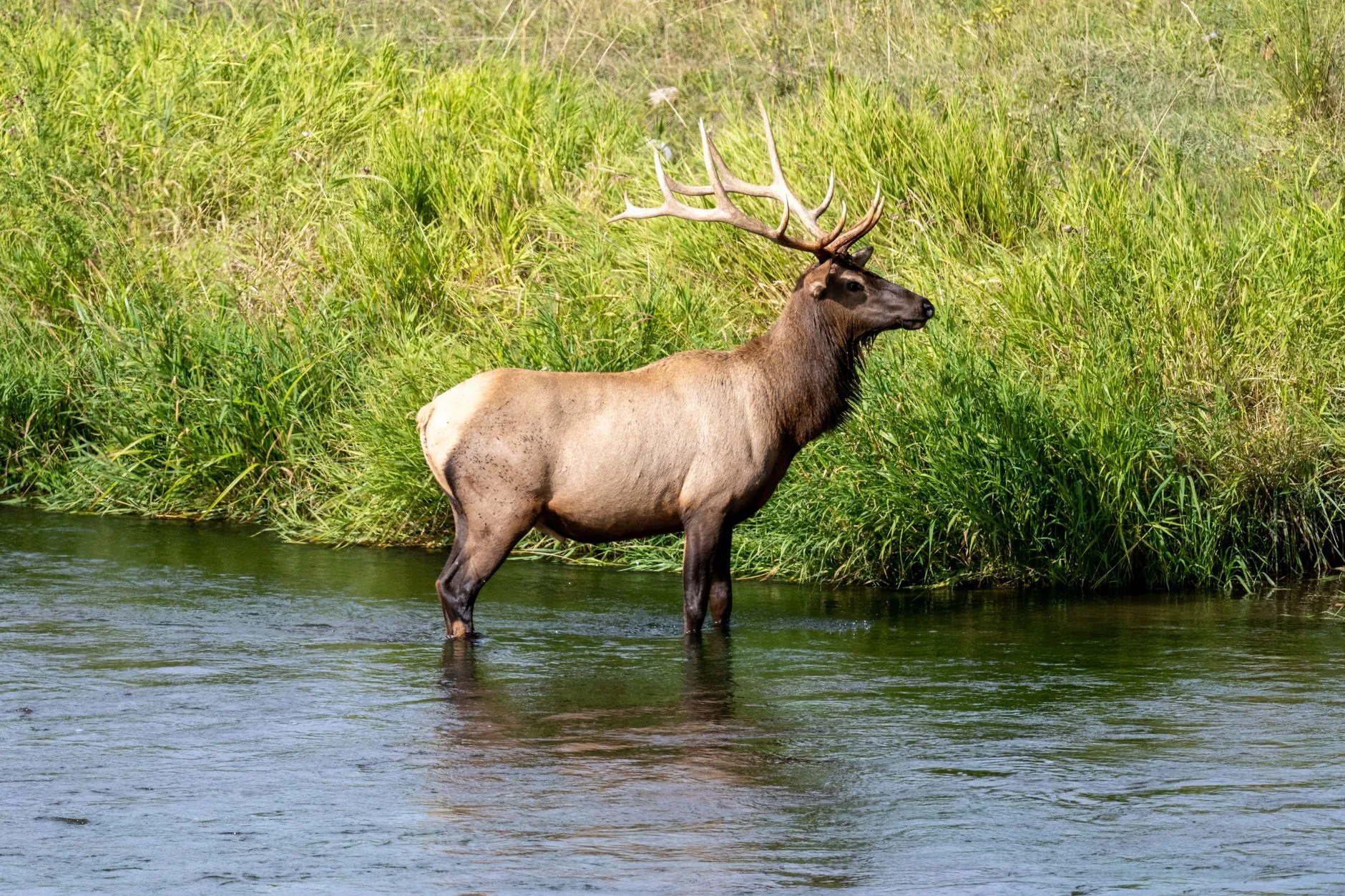
Here’s the number that should stop you mid-scroll: Montana is home to roughly 150,000 elk — one of the largest free-ranging elk populations in the lower 48. And yet, every fall, thousands of hunters walk out of the backcountry empty-handed. Not because the elk aren’t there. Because they didn’t do their homework before they went in.
This is that homework.
Whether you drew a coveted special permit for the Missouri Breaks or you’re running a general B tag in the Bitterroot, Montana elk hunting rewards the prepared and punishes the casual. Here’s what FWP data, decades of on-the-ground experience, and hard regional knowledge actually tell us — broken down in a way a state agency webpage never will.
Montana Elk Populations, Ranges, and What FWP’s Numbers Actually Mean
Montana Fish, Wildlife & Parks divides the state into elk management units, and population goals vary dramatically by region. The Rocky Mountain Front — think Sun River, Dearborn, and Blackleaf — consistently holds some of the densest elk concentrations in North America. FWP’s objective for the Sun River herd alone sits around 2,500 animals, and they’ve regularly exceeded it. That’s both good and complicated: more elk means more competition for tags, more hunting pressure, and tighter quotas in adjacent units.
Up in the northwestern corner of the state — the Kootenai and Cabinet ranges — elk numbers are lower and the timber is thick enough to make you feel like you’re hunting in a closet. Wolves and habitat fragmentation have reshaped those herds significantly over the past 20 years. FWP’s annual elk ecology reports show recovery in some units, stagnation in others. Hunters targeting the northwest need to plan for smaller herds, more difficult terrain, and the real possibility of crossing fresh wolf sign before they ever glass a bull.
Eastern Montana is a different world entirely. The Missouri Breaks, the Powder River country, and the river corridors near Miles City hold huntable elk numbers — but access is everything out there. Much of that country is checkerboarded private and public land, and if you don’t have OnX loaded and landowner permission secured before you leave home, you’ll spend more time reading fence lines than glassing bulls.
The real takeaway from FWP population data isn’t just “how many elk are there” — it’s understanding whether a herd is at, above, or below objective. That drives how many tags get issued, whether cow tags are available, and how aggressive the season structure will be in any given year. Those numbers matter. Read them.
General Tags vs. Special Permits — and Why the Rut Changes Everything
Montana’s elk licensing system trips up out-of-state hunters constantly, so here’s the plain-language version.
A general elk tag — available over the counter for residents, by license for nonresidents — lets you hunt antlered elk in most general hunting districts during the general season, which typically opens in late October. That’s after the rut. Bulls are exhausted, the henned-up behavior is done, and your bugling is going to fall flat more often than not. You can kill a bull on a general tag. Plenty of people do. But you’re hunting a different animal than you were six weeks earlier.
Special permits, drawn through FWP’s system, are where the real magic happens. Many of those hunts open in early to mid-September, right as the rut is peaking. In Montana, the rut generally runs from mid-September through early October, with peak bugling activity shifting by elevation and latitude. High-country units in the Beartooths or the Bob Marshall Wilderness tend to peak earlier. Lower-elevation river-bottom units along the Yellowstone or Clark Fork run a week or two behind. Honestly, some of the best bugling I’ve ever heard was in a drainage off the Front during the third week of September — and I had it completely to myself because I was on a special permit hunt most guys never bother applying for.
If you’re serious about calling in a bull — that steam-breath-in-the-cold-air moment — you need either a special permit or an archery tag, since Montana’s archery season opens September 1st and covers the entire rut window. Resident archery tags are over the counter. For nonresidents, they’re still over-the-counter but capped in total number, so don’t wait until August to buy yours.
One thing most online guides skip right past: the late season. Montana’s late elk hunts — some running into January in select districts — can be brutally cold and logistically demanding. But they produce mature bulls that have survived the full pressure of October. If you have the gear and the grit, don’t sleep on them.
Public Land Access: Where to Actually Find Huntable Country
Montana has roughly 30 million acres of public land — national forests, BLM ground, state land, and designated wilderness. The challenge isn’t finding public land. It’s finding public land with elk that hasn’t been hammered by every truck with a roof rack parked off Highway 2 since opening weekend.
On the Bob Marshall Wilderness, the Selway-Bitterroot, or the Absaroka-Beartooth, most hunting pressure evaporates past mile five. If you’re not willing to pack in, you’re competing with everyone else who isn’t either — and there are more of them every year. Go deeper. That’s not romantic advice; it’s just math.
Montana’s Block Management Program is worth serious attention, especially for eastern Montana where public land is sparse. FWP enrolls private land for public hunting access through the program — over 1,000 properties statewide in strong years. That’s a legitimate tool, not a consolation prize. Cross-reference the Block Management map with OnX before your season and you’ll find huntable country that most out-of-staters never knew existed.
State land is the other underused option. The Montana Department of Natural Resources manages millions of acres of state trust land, and outside of a few well-known parcels, hunter pressure is light. Check state land boundaries on the Montana State Land app before your hunt — you might be surprised what’s sitting right next to the national forest you’ve been crowded out of for years.
- Always verify current Block Management enrollment. Properties change year to year. Download the current FWP BMA map before each season, not the one you saved to your phone in 2021.
- State land requires a license to access for hunting. The State Land Recreational Use License is inexpensive and available online — but you need it. Don’t skip that step.
Montana elk hunting is not a lottery you win once and show up. The hunters who consistently fill tags are the ones who’ve put in the offseason miles — scouting ridges in July, pulling trail cameras in August, and knowing three different drainage options when their first choice gets blown out by other hunters opening morning. The elk are there. The question is whether you’ve done enough to deserve one.
Montana's outdoor week, in your inbox at 7am Friday.