
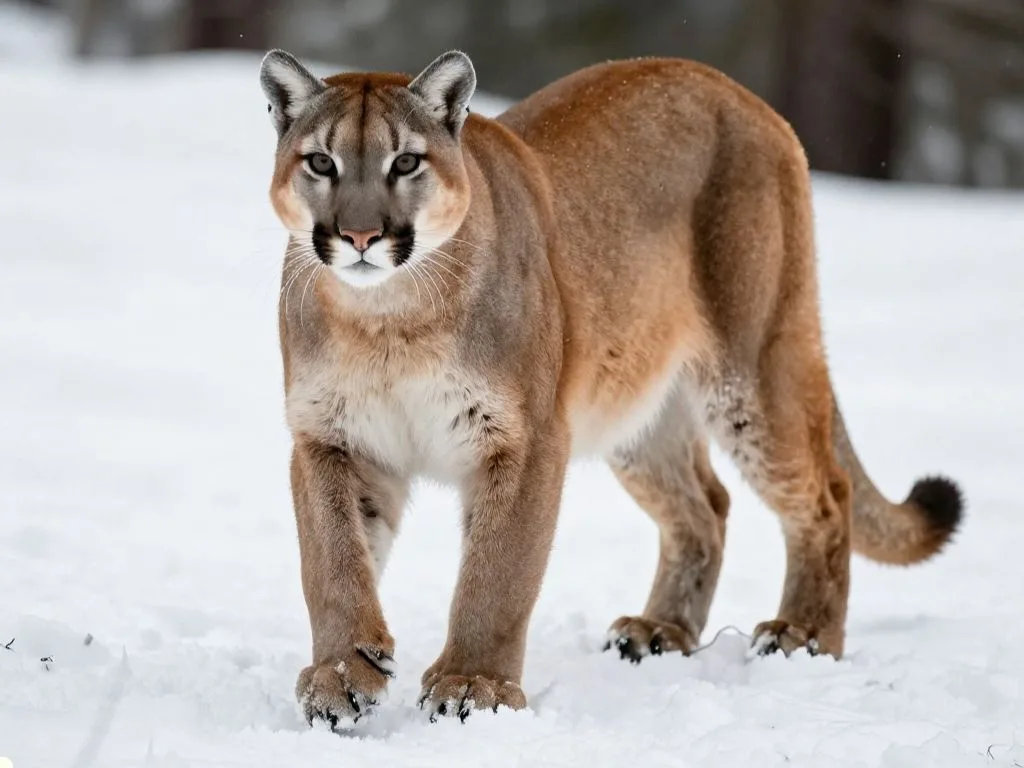
Yellowstone cougars change diets, behavior to avoid wolves
BRETT FRENCH | bfrench@billingsgazette.com
In Yellowstone National Park, the reason cats and canines don’t get along is simple — wolves will kill cougars and steal their food.
A recently published study that utilized GPS collar data collected over nine years found that interactions between the two predators often revolved around elk.
Elk are a big animal, averaging between 500 to 700 pounds. So when a cougar kills an elk it can take days to devour that much meat.
Should a pack of wolves walk nearby and catch scent of the kill site, they will chase off the cougar, and even kill the big feline if possible, to claim the meat. Strangely, wolves won’t eat the cougar they kill and cougars avoided animals that wolves had killed.
This is different than smaller predators, such as coyotes and foxes, which will scavenge larger predators’ prey. In the cougar’s case, researchers said their dynamic is “enemies without benefits,” as opposed to the smaller predators which may be killed by wolves, but also get a lot of food from their prey.

Oregon State study
Wesley Binder, a doctoral student at Oregon State University, was lead author of the study published in the journal PNAS.
“The new study builds on decades of research showing that wolves dominate interactions because they live in packs, while cougars are solitary,” according to an Oregon State news release. “Previous studies have demonstrated how subordinate carnivores exhibit a tradeoff with dominant carnivores; they suffer mortalities but also benefit from scavenging their kills. Yet cougars seldom scavenge other carnivore kills and are instead efficient hunters themselves, leading to unclear principles that govern their interactions with wolves.”
Binder previously worked for nearly a decade in the park on the Yellowstone Cougar Project. That ongoing study, along with the Yellowstone Wolf Project, provided information from more than 3,900 kill sites in the park for analysis. The data was collected between February 2016 and March 2024 in the winter, spring and summer.
During that time 716 wolf kills were documented along with 136 instances of kleptoparasitism — when prey is stolen that another animal killed.
“Prey species included 201 bison, 90 deer, 542 elk, and 19 carcasses of other ungulate species,” the study found.
In that same period, 513 cougar kills were identified including 220 deer, 272 elk, and 28 carcasses of other ungulates.