
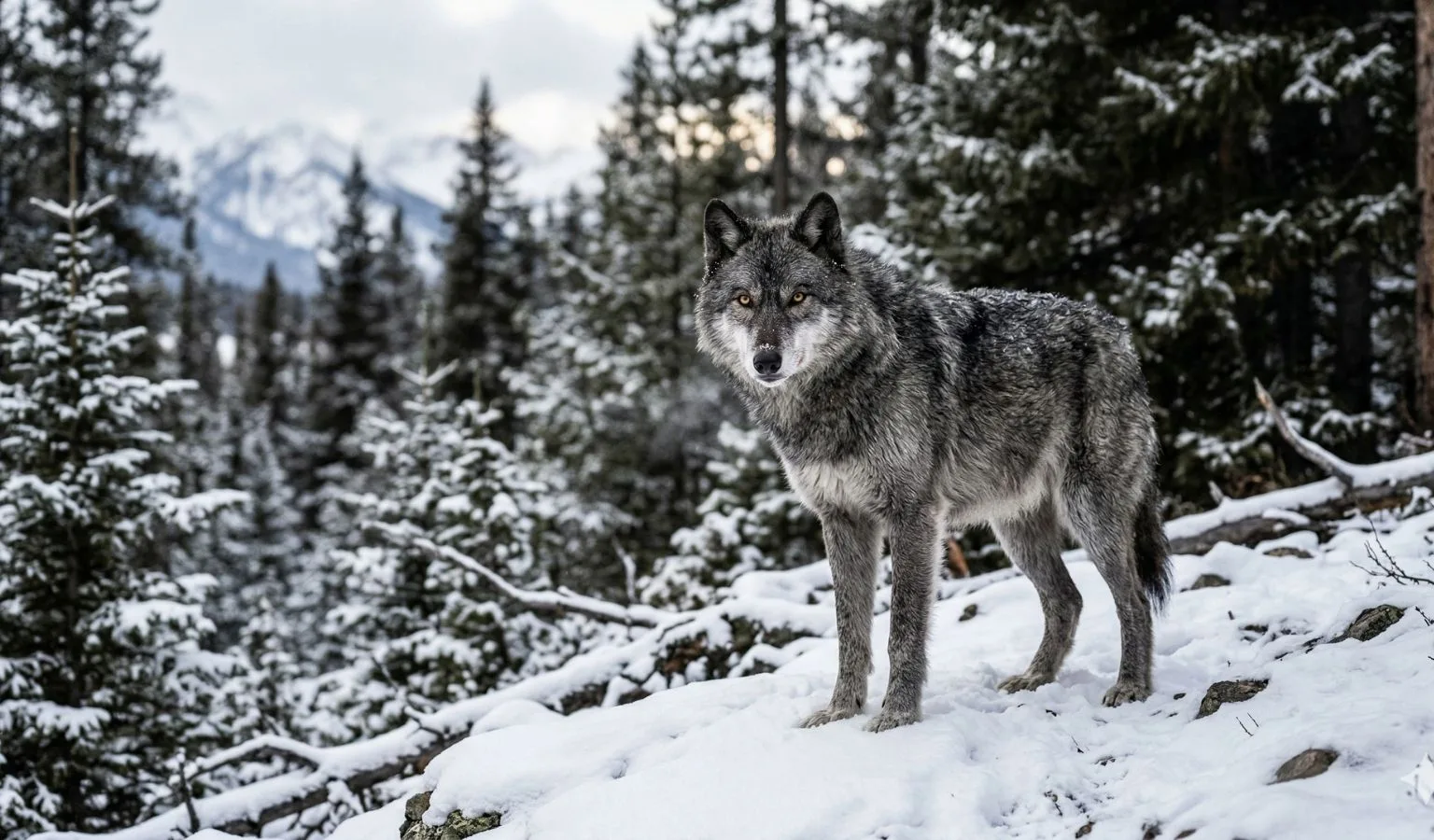
While the urban sprawl of Hamburg seems a world away from the peaks of the American West, a recent incident at a German IKEA has bridged the gap between European and American wildlife conflicts. The biting of a woman in Germany’s second-largest city marks a dramatic “Montana moment” for Europe, mirroring the long-standing tensions found in the Treasure State. Just as Montana wolves have thrived beyond since their reintroduction to the Rockies, German populations have surged to over 1,500 individuals, leading to the same polarizing debates over public safety and livestock protection that have defined Montana’s Fish, Wildlife & Parks policies for decades.
The capture of the Hamburg wolf—a young male likely seeking territory—highlights a shared biological reality: as packs expand, young “dispersers” often end up in human-dominated landscapes. In Montana, where wolf management includes highly regulated hunting and trapping seasons to mitigate such proximity, the sight of a wolf in a residential area is a rare, if controversial, part of life. With Germany’s Parliament now moving to legalize wolf hunting just weeks before this urban encounter, the nation appears to be following Montana’s lead, transitioning from a philosophy of “strict protection” to one of active, state-led management to prevent wild predators from becoming permanent fixtures in the suburbs.
Montana's outdoor week, in your inbox at 7am Friday.