
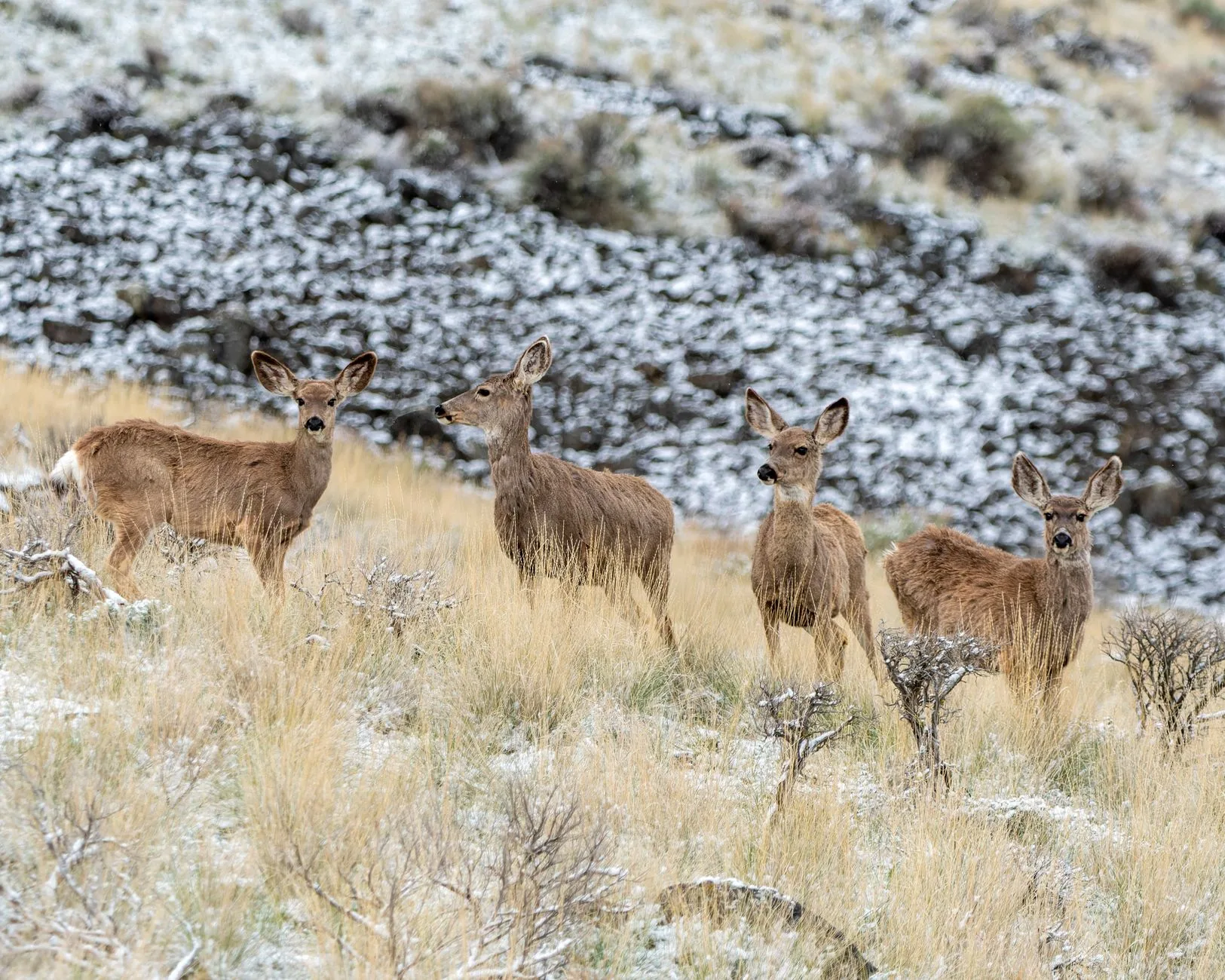
If you hunt mule deer in eastern Montana, this is the news you’ve been waiting to hear — and it’s backed by three consecutive years of hard data. Montana Fish, Wildlife & Parks just dropped a new video breaking down what’s actually happening with mule deer numbers in Region 7, and the short version is this: things are trending in the right direction. Counts are up, fawn ratios are improving, and the muleys that make the prairies and coulees of southeastern Montana so special are showing real signs of recovery.
Region 7 covers the far southeastern corner of the state — think Carter, Fallon, Powder River, and Custer counties — a landscape of big sky, broken badlands, and some of the most underrated mule deer country in the West. This region took some hard hits in recent years from severe winters and drought, which hammered fawn survival and sent overall numbers sliding. That’s exactly why three straight years of increasing counts and improving fawn ratios is such a meaningful milestone. Fawn-to-doe ratios are the canary in the coal mine for deer herds — when fawns are surviving at healthy rates, you’re looking at a population with real momentum heading into the next few seasons.
Why Region 7 Mule Deer Country Is Worth Understanding
Southeastern Montana doesn’t always get the same attention as the state’s more famous hunting destinations — the Missouri Breaks up north, or the big-timber elk country to the west — but Region 7 has quietly produced some exceptional mule deer hunting for generations. The terrain is the key. Badlands drainages, cedar-choked coulees, sagebrush flats, and the river bottoms of the Powder, Tongue, and Little Missouri systems create a mosaic of habitat that muleys are perfectly built to exploit. These deer aren’t just surviving out here — historically, they’ve thrived.
The counties in this region also offer a mix of public and private land access that rewards hunters willing to do their homework. BLM ground is scattered throughout the landscape, and Montana’s Block Management Program has historically enrolled ranches in this part of the state, giving hunters access to private land that would otherwise be closed. If you haven’t explored what Block Management properties are available in your target hunting district, the FWP website maintains an up-to-date map each season — it’s one of the most underused tools available to nonresident and resident hunters alike.
What Drove the Decline — and Why Recovery Takes Time
To appreciate where Region 7’s mule deer population is now, it helps to understand what knocked it down in the first place. Mule deer are notoriously sensitive to back-to-back environmental stressors. A brutal winter that depletes body fat reserves is tough on adults; it can be catastrophic for fawns born the following spring to does that never fully recovered. String two or three hard winters together, add drought conditions that reduce forage quality during critical late-summer months when deer are building fat for winter, and you have a recipe for population decline that can take years to reverse.
That’s not mismanagement — that’s ecology. Mule deer populations across the West are cyclical, and land managers have learned that aggressive harvest during down cycles only makes the hole deeper and the climb out longer. The conservative approach FWP took in Region 7 during the lean years — tightening license availability, protecting doe populations, and letting the age structure of the buck herd rebuild — is exactly the kind of patient, evidence-based management that produces the data we’re seeing now.
The Role of Fawn-to-Doe Ratios
It’s worth taking a moment to explain why biologists and hunters both pay such close attention to fawn-to-doe ratios, because this metric tells you more about where a population is headed than raw deer counts alone. A herd can look numerically stable while quietly aging out — older does, fewer fawns, a population running on borrowed time. When fawn ratios improve and hold over multiple consecutive years, it signals that does are successfully carrying pregnancies, that fawns are surviving past their most vulnerable first weeks of life, and that the habitat is productive enough to support recruitment into the herd. Three straight years of improving ratios in Region 7 isn’t a blip — it’s a trend, and trends are what management decisions are built on.
What This Means for Hunters This Fall
For hunters planning a Region 7 deer hunt this fall, this data matters beyond just optimism. It could influence how FWP structures license availability and any special permit decisions going forward. Right now, Region 7 offers both general deer B licenses and a variety of special permits across its hunting districts — and a recovering population could eventually open the door to more liberal opportunities in areas that have been tightly managed during the lean years. It’s worth pulling up the current FWP deer regulations for your specific hunting district and keeping an eye on any license availability updates as fall draws closer. The Miles City and Billings FWP offices are your best local contacts for ground-level intel on specific units.
Beyond licenses, a recovering population also means more deer on the landscape to pattern and pursue — and mule deer in this part of Montana behave differently than their counterparts in mountain country. These are prairie and breaks deer. They move with the wind, they use topography to their advantage in ways that can fool hunters used to glassing open hillsides, and they can cover surprising amounts of ground between water sources during dry falls. If you’re hunting Region 7 for the first time, invest serious time in e-scouting the drainage systems. Mule deer here tend to use coulees and creek bottoms as travel corridors and thermal cover, moving out to feed on adjacent flats and bench tops during low-light hours.
Gear and Tactics Worth Considering
Hunting eastern Montana’s open country puts a premium on optics and long-range shooting capability. A quality spotting scope is arguably more important here than in timbered country — the ability to locate deer from a distance, assess them without spooking them, and plan a stalk across broken terrain is the core skill set this country demands. Wind is constant and often swirling in the coulees, so scent control discipline matters more than many hunters expect in open prairie settings. On calm mornings, mule deer in this region can hear you coming from impressive distances across firm ground.
Water sources become increasingly important as the fall hunting season progresses and natural water dries up across the prairie. Locating reliable water — whether stock tanks, springs, or creek pools — and setting up observation points downwind can be a highly effective strategy in this landscape, particularly during the early season when temperatures are still warm.
The Bigger Picture: Montana’s Approach to Mule Deer Management
The bigger takeaway here is that wildlife management in Montana — when it’s working — looks exactly like this. Patient, data-driven decisions during tough population cycles, combined with habitat work and responsible harvest management, eventually show up in the numbers. FWP’s Region 7 biologists deserve credit for sticking to the process. If you’re a mule deer hunter, a wildlife watcher, or just someone who cares about what’s living out there in the breaks and river bottoms of eastern Montana, give this video a watch. It’s a genuine good-news story, and those are worth paying attention to.
It’s also a reminder that the relationship between hunters, landowners, and wildlife managers in Montana is a genuine partnership. The harvest data hunters report, the access landowners provide through programs like Block Management, and the long-view decisions biologists make with incomplete information all feed into outcomes like this one. When the system works, it works because everyone’s pulling in the same direction.
Keep Watching — and Keep Reporting
Population recovery is never a straight line, and a good run of data doesn’t mean the work is done. Mule deer in Region 7 and across the West remain vulnerable to the kind of severe winter events that have knocked populations back before. Climate variability, habitat changes, and predator pressure all continue to factor into the equation. FWP biologists will keep running aerial surveys, collecting harvest data from hunters, and adjusting management accordingly.
If you hunt Region 7 this fall, your harvest report is more valuable than you might think. Turn it in. Be honest about what you saw — not just what you shot. The more complete the data FWP has going into the next planning cycle, the better positioned the herd is for continued recovery. Mule deer country in southeastern Montana is worth protecting, and right now, it’s giving us real reason to be encouraged.
Montana's outdoor week, in your inbox at 7am Friday.