
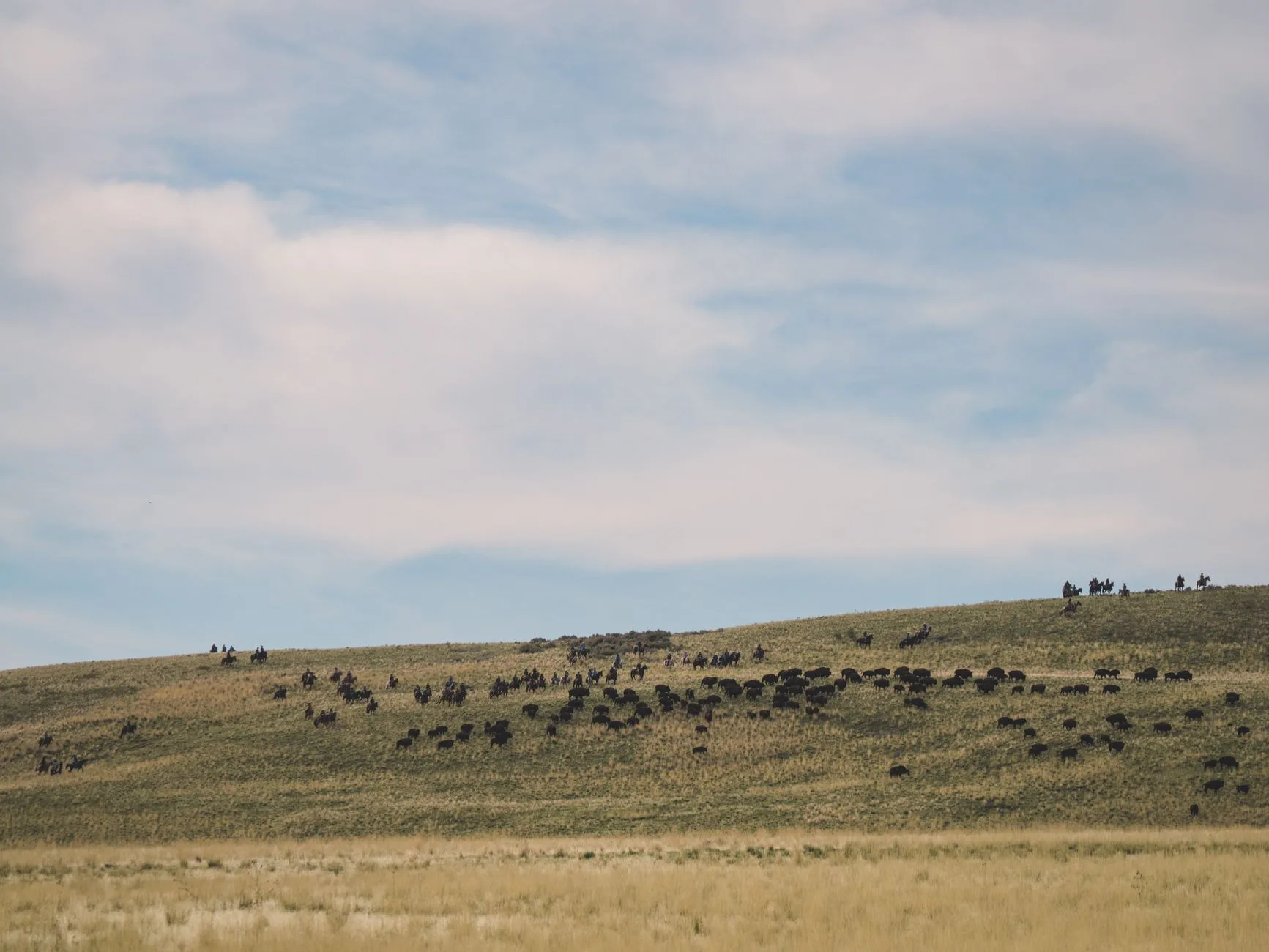
Back in 1989, when Ted Turner bought the Flying D Ranch outside Bozeman and started replacing cattle with bison, plenty of Montanans thought he’d lost his mind. Ranchers rolled their eyes. Neighbors grumbled. Fast-forward to today, and Turner’s original gamble has grown into one of the largest private bison restoration efforts on earth — roughly 45,000 animals across nearly 2 million acres spanning multiple states, with Montana sitting right at the center of it. A new short documentary from The Recovery Atlas digs into how that happened and what it means for the land, the animal, and the people who live alongside both.
For hunters and wildlife watchers in Montana, the bison question has never been simple. These aren’t the half-domesticated, fence-to-fence commercial bison you see on a hundred smaller operations. Turner’s herds — anchored at the Flying D near Gallatin Gateway and the Ladder Ranch down in New Mexico — are managed to behave as wild animals, which means they move, they graze hard, and they reshape the land around them. If you’ve ever driven through the Gallatin Valley and watched a few hundred of them push across a hillside like a slow brown wave, you understand why people are paying attention. The ecological argument for bison on the Northern Plains is as strong as it’s ever been, and this film makes that case without pulling punches.
From Near-Extinction to Landscape Player
To understand why Turner’s bet matters, it helps to remember how close the species came to disappearing. Bison once ranged across most of the continent, with enormous herds on the Northern Plains that shaped Native cultures, other wildlife, and the grasslands themselves. By the late 1800s, commercial hunting and a deliberate campaign against the herds had driven them to a few hundred animals in the whole country. Yellowstone’s remnant herd and a handful of private ranchers who kept small groups are a big part of why the species survived at all.
Most of the bison alive today descend from those few survivors, and the majority are raised as livestock for meat. That’s the context for Turner’s operation: a large share of his animals are managed for conservation and ecological function, with a commercial meat component helping fund the work. How those two goals fit together is one of the more debated parts of the story, and the film doesn’t hide from it.
Why Bison Are Different From Cattle on the Land
A common reaction from Montana ranchers is that a bison is just a cow with a hump. Biologists and range managers would push back on that. Bison and cattle both graze, but the way they use a landscape differs in ways that matter:
- Movement. Bison managed as wild animals roam widely rather than sitting on a creek bottom, which can reduce the kind of repeated pressure on riparian areas that cattle sometimes cause.
- Diet. Bison lean heavily on grasses and sedges, while cattle and elk each have their own mix of preferences. That difference can change which plants thrive over time.
- Disturbance. Wallowing, rubbing, and hoof action create patchy ground disturbance that many native plants and insects benefit from. Prairie ecologists often describe this as part of what the Northern Plains evolved with.
- Winter behavior. Bison are built for hard Montana winters and will swing their heads to clear snow for forage, which is part of why they handle cold country so well.
None of this makes bison automatically better or worse than cattle for every acre. It does explain why conservation groups see them as a keystone species worth restoring, and why landowners who depend on conventional grazing sometimes see the issue differently.
What It Means for Montana Sportsmen
Where it gets interesting for Montana sportsmen is the ripple effect. Wild bison management intersects directly with the ongoing battles over Yellowstone bison hazing, the state’s evolving bison hunting framework on public lands near the park, and — unavoidably — the American Prairie project and its own push to rewild the Missouri Breaks country. Montana Fish, Wildlife & Parks has been carefully expanding bison hunting opportunity in recent years, including tags in the upper Yellowstone corridor, and the larger the private conservation footprint gets, the louder those conversations become. Turner’s operation and American Prairie are different animals politically, but to a rancher in Meagher County or a hunter trying to draw a bison tag near the CMR, they’re part of the same pressure front.
Hunting Bison in Montana: What to Know
If the film has you thinking about carrying a bison tag, a few practical points are worth keeping in mind. Opportunities, quotas, season dates, and application rules change from year to year, so always check current FWP regulations before you plan anything. In general, though, expect the following:
- Limited opportunity. Wild bison hunting in Montana is tightly controlled and is not a typical over-the-counter hunt. Plan around application deadlines and drawing odds rather than assuming you can simply buy a tag.
- Public-land hunts are different from ranch operations. Hunting wild bison on public land near Yellowstone is a very different experience from a managed hunt on private ground, in terms of access, rules, and expectations.
- Know the boundaries. In the Yellowstone corridor, where public, private, and park lands meet, knowing exactly where you are and where you can legally hunt is not optional. Carry good mapping tools and confirm boundaries before you pull a trigger.
- Be ready for the work. A bison is a very large animal. Think through your shot placement, your caliber and bullet choice, and especially your recovery and meat-handling plan before you ever draw a tag.
Access, Neighbors, and Private Land
Large private conservation holdings change the access picture in ways that hunters feel quickly. Land that once ran cattle and may have offered informal hunting access can become more tightly managed once ownership changes. Whether that is good or bad depends on your point of view, but it is a real consideration for anyone who relies on private-land permission. If you hunt near any large conservation or rewilding project, build relationships early, respect posted boundaries, and ask rather than assume.
The Bigger Montana Picture
It would be easy to treat this as a story about one billionaire and one species, but the more useful way to read it is as part of a larger shift in how Montanans think about working land. Ranching families, conservation groups, tribes, and state and federal agencies are all trying to answer similar questions: how much wild country do we want, who pays for it, and who gets a say?
Tribal nations have been central to bison restoration efforts across the region, and many see the animal as culturally and spiritually significant in ways that go beyond ecology or recreation. That perspective deserves a place in the conversation alongside the ranching and hunting views, and it is part of why bison restoration carries more weight in Montana than a typical land-use debate.
Disease management, fencing, and bison’s legal status as either livestock or wildlife also remain unresolved in various places. Those details drive a lot of the friction between neighbors, and they are likely to keep shaping policy for years.
Watching Bison Responsibly
Even if you never draw a tag, bison are worth seeing, and that comes with some common-sense responsibilities. Bison can look slow and docile and are anything but. They are fast, unpredictable, and responsible for a steady stream of injuries to people who get too close, especially around Yellowstone.
- Stay well back and use binoculars or a spotting scope rather than approaching for a closer look.
- Never get between a cow and her calf, and give bulls extra room, particularly during the rut in late summer.
- Stay in your vehicle on roads where animals are close, and don’t block traffic.
- Keep dogs leashed and under control, or leave them home.
Worth Your 15 Minutes
Whether you think large-scale bison restoration is the best thing to happen to Montana grasslands in a century or a well-funded outsider’s experiment playing out on land that used to run cattle, this film is worth your 15 minutes. It’s put together well, it’s honest about the scale of what Turner built, and it raises questions that aren’t going away anytime soon. The bison are back — in serious numbers — and Montana is going to keep sorting out what that means for ranchers, hunters, and the landscape itself for a long time to come.
Editor’s note: Corrected a geographic description: Montana's wild bison hunting occurs on public lands near Yellowstone, not 'east of the park' (which is in Wyoming).
Montana's outdoor week, in your inbox at 7am Friday.