
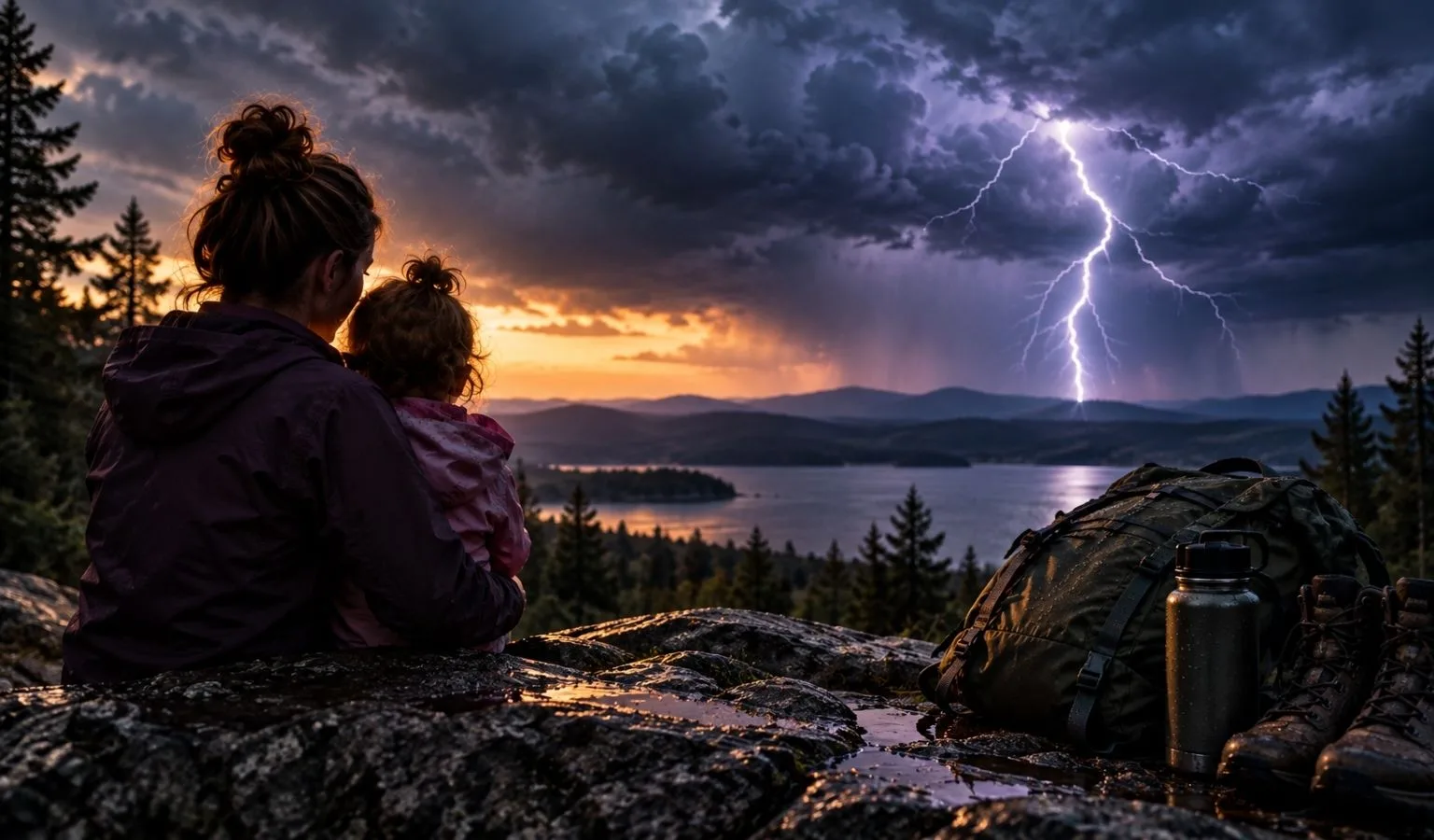
What started as a simple dash indoors to escape a Florida storm became an unimaginable tragedy for Kameron Glasgow, whose wife, Kenya, and toddler daughter, Kennedi, were struck by lightning outside his aunt’s home in Margate. According to an article via Wide Open Spaces, Kameron was close enough to feel the electrical shock himself, recalling, “I was right there. I got the actual aftershock from the ground.” Despite first responders’ efforts, both mother and daughter died, leaving Kameron to grieve while caring for his surviving daughter. As he faces a future without two of the people he loved most, he says, “It’s going to be tough, but I’ll be ok because I have to be.” Their heartbreaking story is also a sobering reminder for hikers, campers, anglers, hunters, and anyone who enjoys the outdoors that lightning is no ordinary weather hazard.
According to the CDC’s lightning strike data , lightning caused 517 deaths in the United States between 2006 and 2025, with outdoor leisure activities accounting for nearly two-thirds of those fatalities. And here’s the unsettling part: lightning can strike more than 10 miles from a storm, while electrical currents traveling along the ground can seriously injure or kill people who never receive a direct hit, via CDC lightning facts. For outdoor enthusiasts, the message is simple: don’t wait for the rain to start pouring or assume a tent, tree, or picnic shelter will keep you safe. Check the forecast before heading out, seek shelter in a fully enclosed building or hard-topped vehicle at the first sound of thunder, and wait at least 30 minutes after the last rumble before returning outdoors. Those are CDC lightning safety guidelines. No hike, fishing trip, camping adventure, or afternoon on the water is worth gambling with a storm that can change lives in a single flash.
Montana's outdoor week, in your inbox at 7am Friday.