
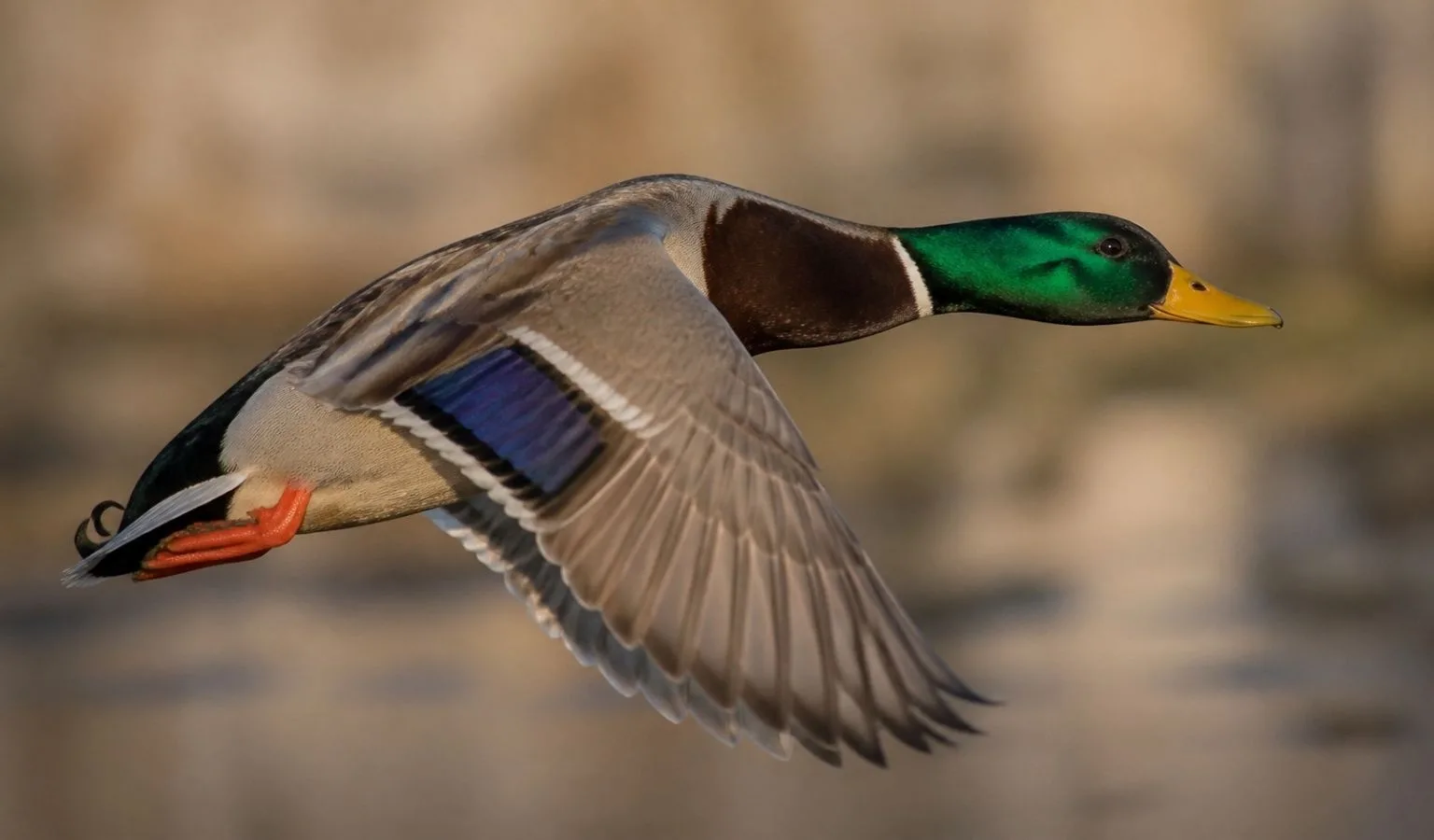
Somewhere over the Mississippi Flyway, a GPS-marked drake mallard just got his whole year — November 2024 through November 2025 — turned into a timelapse, and it reads less like a travel diary and more like a continental bar crawl: wetland to wetland, never staying long.
He’s one of roughly 200 Arkansas mallards fitted with GPS transmitters over five years, part of a research effort to understand what these birds do after they arrive for winter. The answer, apparently, is “everywhere.”
Because here’s the twist: no single wetland, property, or even state checks all a duck’s boxes. His year is a relay of different venues — a shallow spot to dabble (they feed by tipping forward, tail to the sky, never diving), a quiet bay to shed all his flight feathers at once and sit flightless in camouflage “eclipse” plumage, a refueling stop mid-migration, and eventually somewhere to raise the kids. He covers that map fast, too — with a 50-mph tailwind, mallards can fly 800 miles in eight hours Source.
Facts:
- Mallards are North America’s most abundant duck — ~19 million breeding birds Source
- The oldest known mallard was a male at least 27 years, 7 months old Source
- ~40% of all North American waterfowl and shorebirds use the Mississippi Flyway Source
- They’re also the continent’s most hunted duck — about 1 in 3 ducks in the bag Source
The moral of one bird’s dot-on-a-map: Arkansas’s wetlands are just one rest stop on a continental route, and keeping the whole flyway stocked with healthy habitat takes an army of landowners, agencies, and conservation groups pulling the same direction. Credit to the Osborne Lab for the project and The Nature Conservancy for the spotlight.
Montana's outdoor week, in your inbox at 7am Friday.