
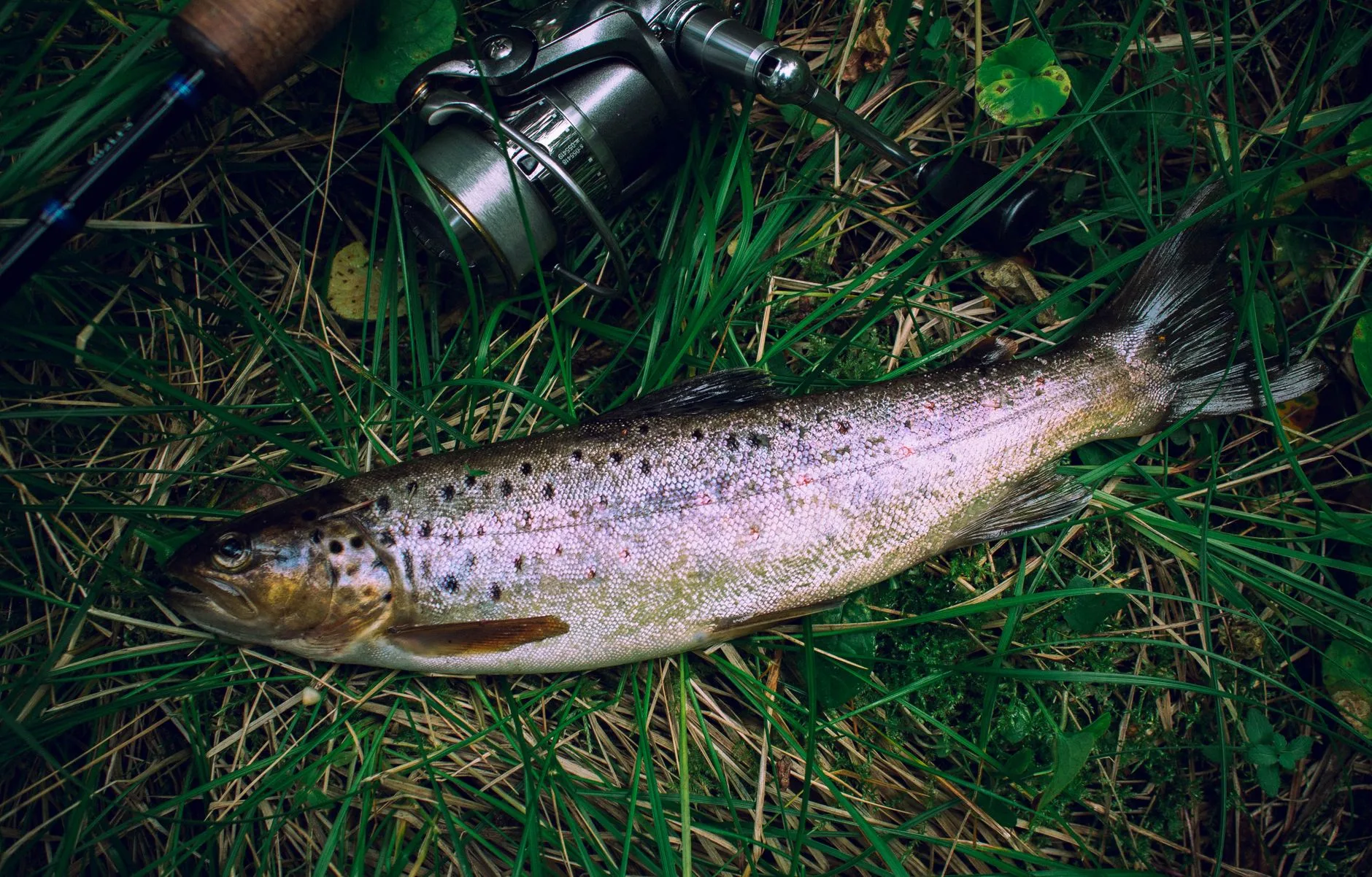
The late-fall brown trout window on the Yellowstone below Livingston is one of the shortest and most productive stretches in Montana fly fishing — and right now, the first week of November, it’s open. Don’t wait. This thing closes fast.
Current River Conditions
Water temps on the Yellowstone below Livingston have dropped into that classic late-fall range that puts brown trout in a transitional, aggressive mood. The spawn has either wrapped up or is winding down on most of the river, and fish that were locked onto redds are starting to drop off and feed. Post-spawn browns are hungry, slightly beat up, and looking to put weight back on — which is exactly the kind of fish that’ll chase a big streamer hard on a gray November afternoon.
Clarity has improved considerably from earlier fall conditions. Water’s running clean across much of the Livingston-to-Columbus corridor, flows are dropping, and the system is settling into its winter rhythm. That typically pushes fish into more predictable holding water — deeper slots, undercut banks, transition zones between fast and slow current. If you know the river well, you already know the seams that hold fish this time of year. If you’re newer to the Yellowstone, work the outside bends and anywhere a shelf drops off into depth. That’s where they’ll be.
Check the USGS gauge data before you commit to a float. Conditions can shift meaningfully from week to week in November, and what was true last Thursday may not be true when you’re loading the drift boat Saturday morning.
What’s Fishing Well
Streamers
Streamer fishing for late-fall brown trout on the Yellowstone is the main event right now, and it’s producing. Post-spawn browns are aggressive, territorial, and willing to move for a fly — particularly during low-light windows in the morning and again in the late afternoon before the light goes flat.
Olive, black, and natural sculpin-style patterns have been consistent producers on this stretch historically, and there’s no reason 2026 is any different. Big articulated flies in the four-to-six-inch range, fished on a sink-tip or full-sinking line, get you down to where the fish are holding without spending all day mending. Swing them through deeper slots with some life in the retrieve. Honestly, the adjustment most anglers need to make this time of year is slowing down — fish metabolism drops with the water temp, and a streamer that lingers in the zone a beat longer can be the difference between a follow and a committed eat. Don’t rush it.
Smaller sculpin and leech patterns on a lighter sink-tip are also worth carrying for picky or pressured fish, particularly in clearer water where the big stuff might push them off rather than trigger them.
Nymphs
Don’t overlook nymphing entirely, especially for rainbows. Rainbows on the Yellowstone tend to feed more consistently through winter than browns, and they’ll work a nymph rig throughout the day when flows and clarity allow. Stonefly and midge patterns fished deep under an indicator, or tight-lined on a Euro setup, are worth having rigged on a second rod for slower stretches or when streamer action cools off mid-morning. Small midge clusters and soft-hackled emergers can also draw attention during any midday activity — even cold November days will sometimes produce a hatch around noon when the sun finally hits the water.
Wind: The Variable That Can Wreck Your Day
Here’s the part of the November report that doesn’t get enough attention. The wind. The Paradise Valley and the Yellowstone corridor below Livingston are notorious for it in the fall, and November can be absolutely brutal. It’s not uncommon to look at a beautiful bluebird morning forecast and step out at the boat ramp into a sustained 25-mile-per-hour headwind that turns casting a full-sinking line into an exercise in frustration — or worse, a safety issue.
In my experience, the valley funnels wind in ways that don’t always match regional forecasts, and what’s calm in Livingston proper can be a completely different story five miles downstream. Every local guide I’ve talked to says the same thing: check the forecast obsessively, and stay flexible about where and whether you float. If you’re planning a long drift — say, eight or ten miles — be honest with yourself about whether the wind forecast gives you a reasonable out. A short, flexible float you can bail on beats committing to a long drift and spending six hours fighting chop and wind.
Wind from the northwest tends to push hardest in the afternoon. Early starts are your friend in November. Get on the water at first light, fish the morning window hard, and have a plan ready if things go sideways at noon.
Cold-Weather Float Planning: The Practical Stuff
A few things worth repeating as temperatures drop, because every year someone skips this part and regrets it:
- Dress for immersion, not just air temperature. Water temps in the Yellowstone this time of year are cold enough that an unexpected swim is a serious situation. A dry suit or quality waders with a wading belt, combined with a PFD, isn’t optional. Guides wear them. You should too.
- Bring more layers than you think you need. Standing in a drift boat on a cold November morning with wind coming down off the Absarokas is a different animal than the same air temperature on a calm day. Wool or synthetic mid-layers, a wind shell, and hand warmers aren’t comfort items — they’re how you stay effective and safe through a full day on the water.
Beyond gear, keep your floats realistic. The days are short in November — you’re losing light by 5 p.m. — and a long float that looked manageable on paper can turn into a scramble to get off the water before dark. Know your takeout, know your time, and don’t push it. The fish will be there tomorrow too, assuming the wind lets you back on.
Montana's outdoor week, in your inbox at 7am Friday.