
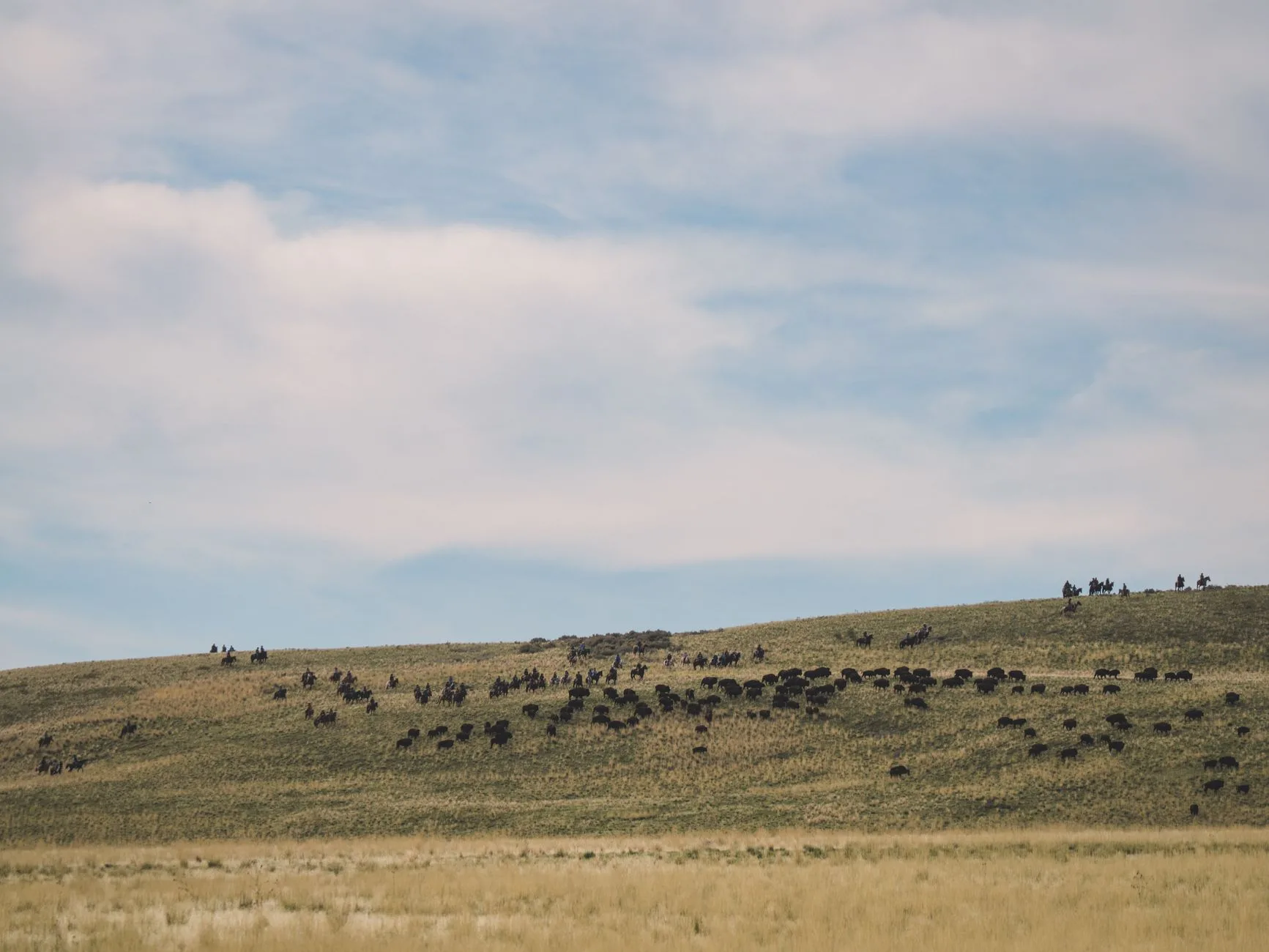
Just after midnight on October 20, 2005, sixteen bison stepped off a trailer and into a holding pasture in northeast Montana. Nobody knew exactly what would happen next. The animals had been gone from that country for well over a century, and the grass they were walking on had been grazed, plowed, and picked over by generations of other uses.
Twenty years later, a new video from the Beyond Blueprint channel looks at what that small herd set in motion. If you’ve spent any time in the Missouri Breaks country or out toward the Charles M. Russell National Wildlife Refuge, it’s worth twenty minutes of your evening.
Here’s what makes the story land for those of us who hunt and fish this state: the prairie is the part of Montana we tend to drive through on the way to the mountains. We talk elk, trout, and mule deer in the high country, but the grasslands out east are where pronghorn, sage grouse, sharp-tails, and mule deer live their whole lives. A healthier prairie means healthier habitat for all of it. Bison grazing patterns create a patchwork of tall and short grass, bare ground, and wallows, and that variety is exactly what ground-nesting birds and fawning does need.
The other piece is the land itself. Northeast Montana is a checkerboard of private ground, BLM parcels, state trust land, and federal refuge, and anyone who has tried to piece together a legal access route to a good mule deer coulee knows how complicated it gets. Large-scale restoration here only works when those pieces get managed with some shared purpose, and the video gives a sense of how that coordination has played out in practice. Landowner relationships, fencing, and neighbors who have run cattle for generations are as much a part of this story as the bison.
Now for a bit of honest commentary. Bison restoration is not a topic Montanans agree on, and you don’t have to look hard to find strong feelings at the café counter. Concerns about fencing, brucellosis, grazing competition, and who controls public land use are legitimate, and any fair look at this project should sit with them rather than skip past them. The video is largely a success story, so watch it with that in mind, and then go talk to a rancher or two about what they’ve seen themselves. The best take usually lives somewhere between the documentary and the diner.
Still, the core idea is hard to argue with. Sixteen animals, a long patience, and twenty years of grass. For anyone who has glassed a ridgeline at first light and wondered what this country looked like before we rearranged it, this is a rare look at what it might look like again.
Pour a coffee, settle in, and give it a watch. Then tell us what you think in the comments, especially if you’ve spent time on the ground in that part of the state.
Montana's outdoor week, in your inbox at 7am Friday.