
BRETT FRENCH | bfrench@billingsgazette.com
The more bighorn sheep, the better, an advisory panel to Montana Fish, Wildlife & Parks agrees.
How to grow the state’s herds, however, is a challenging topic.
“We hardly have any herds that we can take animals from,” said panel member Bob Garrott, who spent about 25 years studying bighorn sheep while a professor at Montana State University. “We shouldn’t be thinking about starting a new herd with 30 animals in the herd like we did in the pre-predator restoration days.”
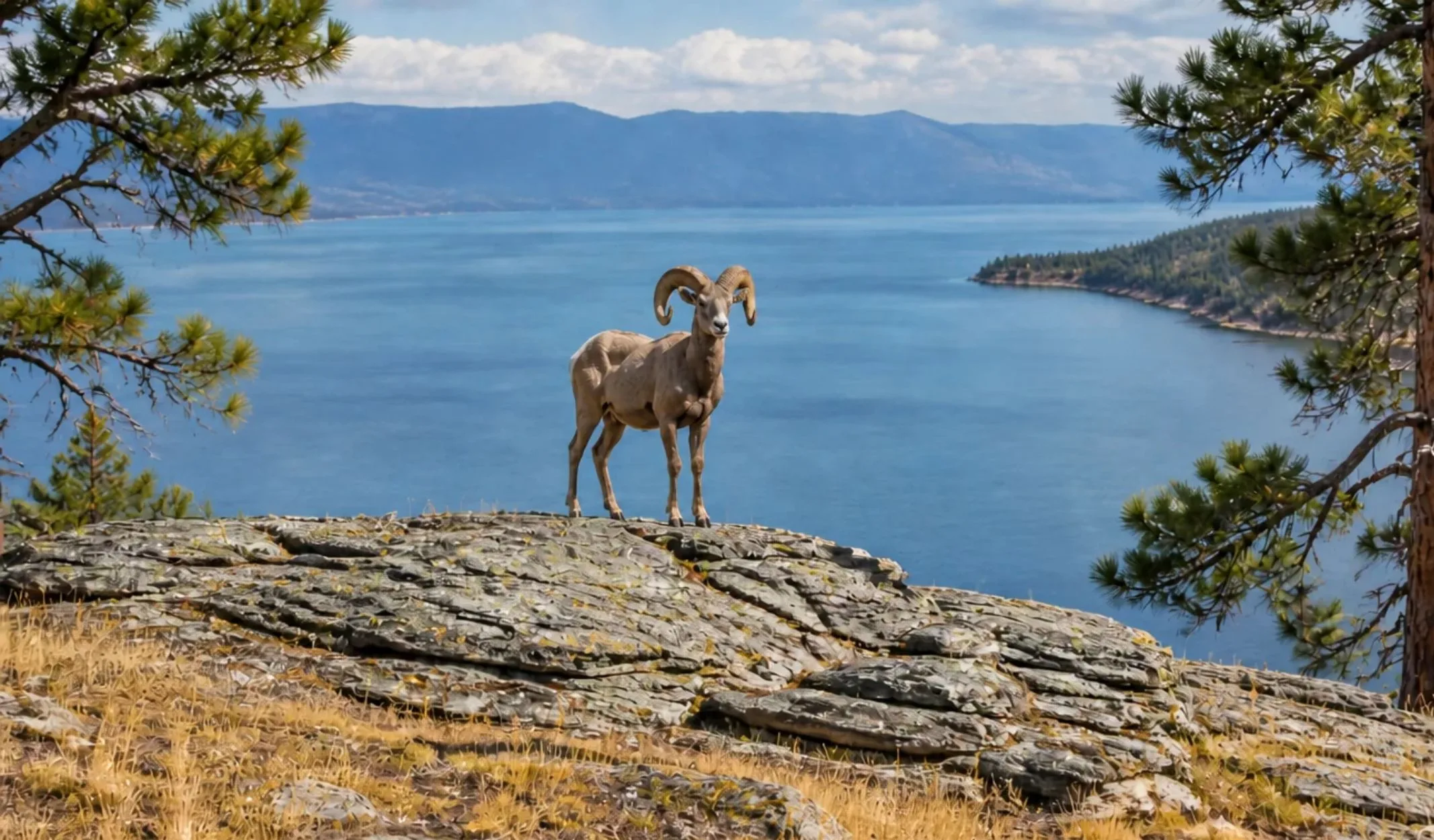
So how about developing a nursery herd that’s not hunted — a bighorn sheep hatchery? That’s essentially what Wild Horse Island, located in Flathead Lake, has become.
Out of the last 16 translocations, five have utilized sheep taken from the island.
Panel’s third meeting
The Bighorn Sheep Restoration Advisory Panel gathered in Helena on Monday, Nov. 16, and Tuesday, Nov. 17.
The group is charged with developing guidelines for introduction of bighorns to private lands, particularly in Eastern Montana along the Yellowstone and Missouri rivers, where herds thrived more than 200 years ago.
There is bighorn habitat in the region, analysis has shown, but how would the state navigate releasing sheep onto private lands?
Counting sheep
Garrott speculated that no matter what the advisory panel devises, it could be two to five years before any work on the ground is undertaken.
“We can talk about how many we’d like to have, but there aren’t very many opportunities for us to move sheep in the near future,” he said.
Since the 1980s, the state’s long-term average bighorn population has hovered around 5,500 animals. This year’s estimate is just below that figure but higher than the number surveyed in 2022 and 2024.
Over the years, FWP has moved sheep 146 times through 2021. No captures have been conducted since then, although another is being planned in the Madison Range. In 2014, four translocations were conducted, the most in the past 15 years.
The panelists also raised concerns about taking sheep from a huntable herd and placing the animals on private land where access becomes an issue.
“That’s where public outreach has to be very in the front of that and say, ‘Hey, we’re worried that if we don’t do this they’re going to just die on their own anyway,” said panelist Matt Kilsdonk, a Butte engineer and member of the Wild Sheep Foundation.
Some suggestions
Garrott wrote a document to offer ideas for the group. He said in a predator-rich environment many bighorns are killed within the first six months of relocation.
“Part of the reason might be that sheep aren’t in cohesive groups when we just dump them out on the landscape,” he said. “That’s why we talked about soft releases.”
A soft release would keep the transplanted group together at the site before freeing them.
Houndsmen could be hired to track down and kill mountain lions that prey on bighorns to increase the chances of the transplanted herd’s survival. Or lions could be hunted in an area designated for an upcoming transplant.
Another suggestion he offered was using tranquilizers for a longer period during translocations to keep the sheep calm.
Garrott also recommended the use of drop nets to collect animals from the same social group, rather than utilizing helicopter capture of individuals, which is expensive and more traumatic for the animals.
Stocking a release site with mineral blocks to provide needed trace minerals was another idea to keep animals close to the release site while improving their overall health. Garrott noted that in regional studies ewes living at high elevations would descend in a summer search for minerals.
Garrott said some sheep are geared to such migrations while others remain wherever they are placed.
“They might not move even if the landscape would suggest they’d be better off being elevational migrants,” he said.
However, he pointed to a herd near Thompson Falls, established from nonmigratory Wild Horse Island sheep stock, that have done well.
“One could argue that if it’s a mountain range, as opposed to prairie breaks country, it might be worth thinking about adding source herds that are migratory to begin with,” Garrott suggested.
He also said that asking landowners to allow a place for the public to see bighorn sheep on private lands for a limited time could increase acceptance of the translocations.
Disease concerns
Montana’s bighorn herds have repeatedly been stricken with deathly disease outbreaks. The most recent occurrence was in the Missouri River Breaks in 2025 where a transplanted herd, which temporarily flourished growing to 318 animals, almost completely died off due to a pneumonia outbreak.
Pneumonia is a common infection that kills sheep or has been known to limit their reproductive ability. To reduce the likelihood of infections, wildlife managers have attempted to keep domestic herds — which carry the pathogens — separated from wild sheep.
For this reason, choosing any new translocation site will include ensuring no domestic sheep herds are nearby.
More information on bighorn sheep and the advisory group can be found at the Montana Fish, Wildlife & Parks website.
Montana's outdoor week, in your inbox at 7am Friday.