
Most of us expect to look out the window and see a squirrel stealing birdseed, a rabbit nibbling on the lawn, or maybe a neighbor’s dog conducting an unauthorized inspection of our landscaping.
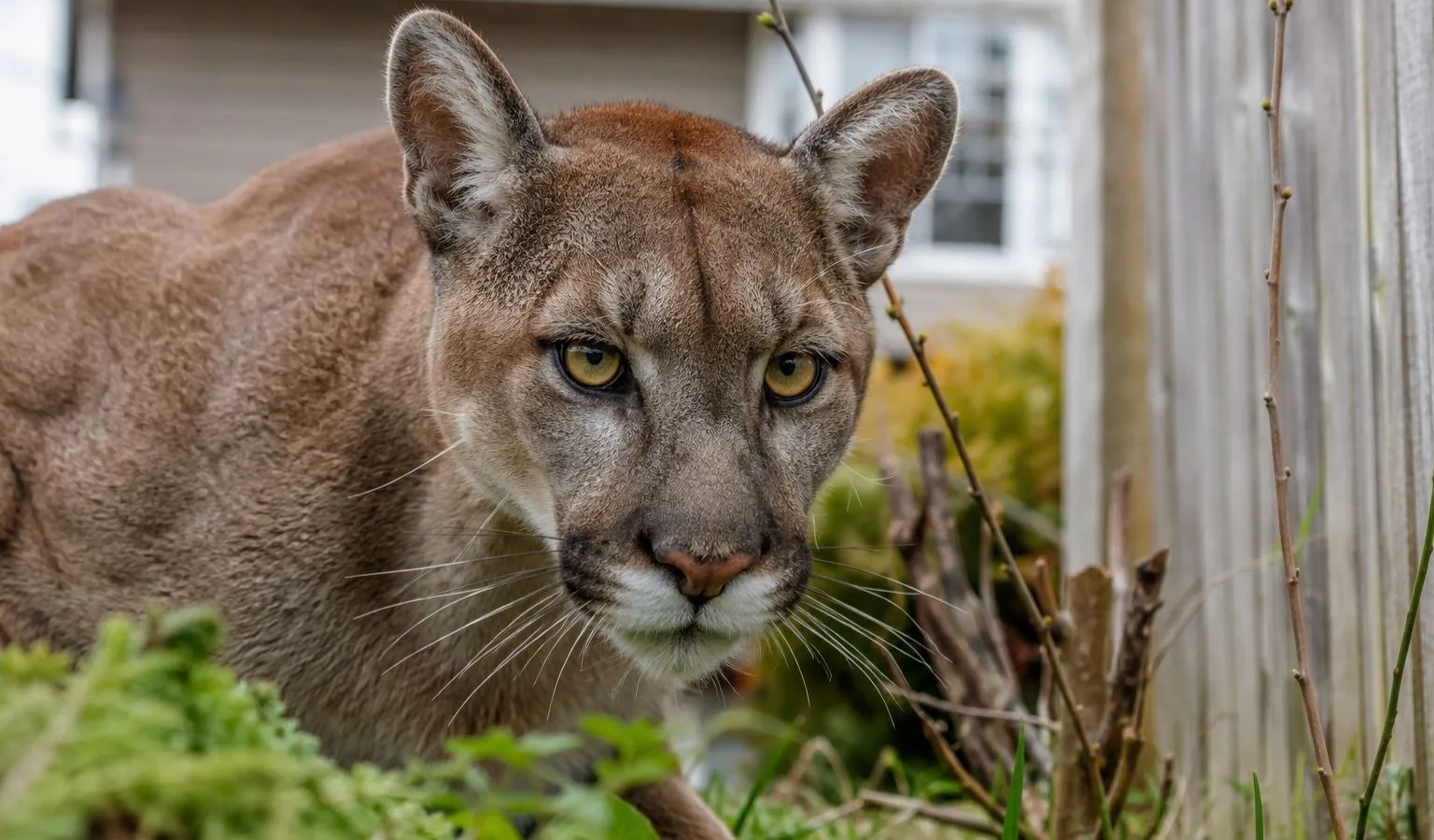
What we don’t expect to see is a 150-pound mountain lion casually lounging in the yard.
Yet that’s exactly what happens in several neighborhoods across the western United States. In one recent California incident, residents found a mountain lion stretched out in a backyard garden, looking less like a predator (that’s debatable) and more like a giant house cat enjoying a lazy afternoon nap. Authorities eventually relocated the animal safely.
A mountain lion isn’t supposed to look comfortable in your yard.
When we see a bear, our brains immediately scream, “Danger!” But mountain lions are different. They’re sleek. Quiet. Calm. They move with the confidence of an animal that knows it’s at the top of the food chain. Seeing one reclined beside your flower bed is unsettling because it makes the extraordinary seem ordinary.
Imagine opening your curtains, coffee in hand, and spotting what appears to be an oversized tabby cat. Then your brain catches up.
That’s not Mr. Whiskers.
That’s a cougar.
A cougar that could clear an 8-foot fence without breaking a sweat.
Wildlife experts note that mountain lions are naturally elusive and generally avoid people. However, expanding neighborhoods, habitat fragmentation, and the presence of deer and other prey animals can bring them closer to residential areas than many homeowners realize.
The good news is that encounters are still relatively rare, and mountain lions usually want nothing to do with humans. The bad news? They are masters of stealth. If you happen to see one, there’s a decent chance it noticed you long before you noticed it.
What Should You Do If You See a Mountain Lion?
First, resist the urge to get a better photo for social media.
Wildlife agencies recommend:
- Stay calm and do not approach the animal.
- Never run. Running can trigger a predator’s instinct to chase.
- Make yourself appear larger by raising your arms or opening a jacket.
- Keep children and pets close to you.
- Maintain eye contact and slowly back away.
- If a mountain lion acts aggressively, make noise, throw objects, and fight back if attacked.
For homeowners in mountain lion country, experts also recommend keeping pets indoors at night, removing attractants that bring deer into the yard, and reporting sightings to local wildlife authorities.
Perhaps the strangest thing about mountain lion sightings isn’t that they happen—it’s how relaxed the animals often appear. One lion was found hiding under a car in a busy neighborhood. Another calmly rested in a residential backyard. A famous Los Angeles mountain lion even became known for appearing in driveways and urban spaces.
It’s a reminder that while we may think of suburbs as human territory, wildlife doesn’t necessarily see the same boundaries.
So the next time you glance out the kitchen window and spot something lounging in the yard, take a second look.
If it has a 30-inch tail, weighs as much as a linebacker, and looks suspiciously unbothered by your existence, maybe skip the “Here kitty, kitty” routine and call wildlife officials instead.
Some guests aren’t looking for belly rubs.
Sources info:
- National Park Service
- US Fish & Wildlife Service
- National Park Service – Mountain Lion Safety Guidelines
- People
Montana's outdoor week, in your inbox at 7am Friday.