
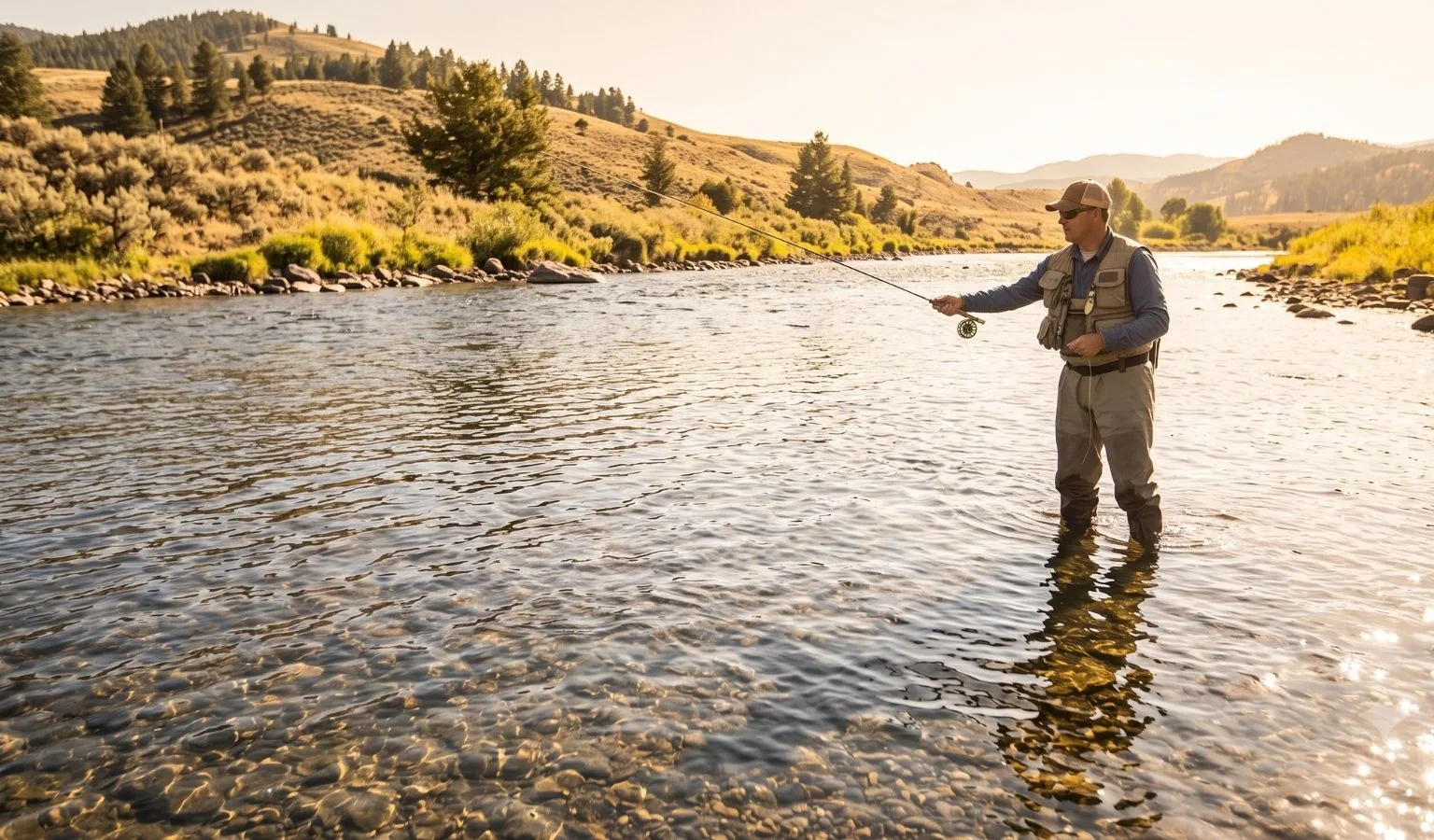
HELENA – Rising river water temperatures are prompting more daily fishing restrictions and a few localized closures for several Montana rivers and creeks in the southwest and western part of the state.
The first of these restrictions, commonly known as hoot owl restrictions, prohibit fishing from 2 p.m. to midnight each day. They are designed to prevent excessive fish mortality due to angling when water temperatures are warm.
New Hoot Owl Restrictions Taking Effect July 29
Daily hoot-owl restrictions will take effect July 29 in the following areas:
- Big Hole River will expand restrictions to include the entire river downstream of Saginaw Bridge on Skinner Meadows Road
- Blackfoot River from Cedar Meadow Fishing Access Site to the confluence with the Clark Fork River
- Monture Creek from the confluence with Falls Creek to the Highway 200 bridge
- Clark Fork River restrictions extended downstream to include the river from Flint Creek to the confluence with the Flathead River
- East Fork of the Bitterroot River from the Highway 93 crossing at Sula to its confluence with the West Fork of the Bitterroot; the entire mainstem of the Bitterroot is already under restrictions.
- Lolo Creek from its headwaters to the confluence with South Fork Lolo Creek
- Rock Creek from its headwaters at the confluence of the West and Middle Forks to the mouth of Stoney Creek
- Silver Bow Creek in its entirety from Blacktail Creek at Montana St. in Butte to the mouth of Warm Springs Creek at the Gas City Rd. Bridge
New Full Closures to Protect Bull Trout
There are also a few new full fishing closures (closed to fishing all day) to protect bull trout that can congregate in these areas. These begin July 29 and apply to a 100-yard radius of the mouths of the following rivers and creeks that are tributaries to the Clark Fork River:
- Mouth of Fish Creek
- Mouth of Rattlesnake Creek
- Mouth of St. Regis River
These closures apply to a 100-yard radius of the mouth, which includes that portion of the Clark Fork River where they flow in.
Fishing restrictions are already in effect for additional waterbodies in the state and other sections of some of the rivers and creeks listed above. For a full list of current fishing restrictions, click here.
Why Hoot Owl Restrictions Work — And Why They Matter
The term “hoot owl” is a colorful Montana reference to the early morning hours when owls are active — and when rivers are at their coolest. By prohibiting fishing from 2 p.m. to midnight, FWP effectively channels angling pressure into the window when water temperatures are lowest and trout are least physiologically stressed. That typically means early morning fishing, often from first light through midday, before afternoon heat drives temperatures into dangerous ranges.
It’s worth understanding why warm water is so dangerous to trout. Unlike warm-water species such as bass or walleye, cold-water fish like cutthroat, brown trout, rainbow trout, and bull trout have narrow thermal tolerance windows. As water warms, dissolved oxygen levels drop and fish must work harder to breathe. Their metabolism races, immune systems are suppressed, and the physical act of being caught, fought, handled, and released — even with the best intentions — can push an already-stressed fish past the point of recovery. A trout that swims away after release may still die hours later from delayed mortality if conditions are severe enough.
FWP’s drought policy provides for angling restrictions when flows drop below critical levels for fish, when water quality is diminished, or when maximum daily water temperatures reach at least 73 degrees for three consecutive days. In cutthroat trout waters, angling restrictions occur when the temperatures reach at least 66 degrees for three consecutive days. In bull trout waters, angling restrictions occur when the temperatures reach at least 60 degrees for three consecutive days. Water temperatures of 77 degrees or more can be lethal to trout.
Understanding the Bull Trout Closures
The full closures at the mouths of Fish Creek, Rattlesnake Creek, and the St. Regis River deserve special attention. Bull trout are a federally threatened species in Montana, and they respond to warming main-stem river temperatures by congregating near the mouths of cold tributary streams. These confluence zones become critical thermal refugia — essentially life-saving cool-water pockets — where bull trout stack up waiting for conditions to improve.
Fishing pressure at these locations, even catch-and-release, poses a disproportionate risk because of how densely the fish concentrate. A single angler working a small confluence pool can repeatedly stress the same individual fish. The 100-yard radius closure around each mouth — which includes the Clark Fork itself where the tributaries enter — is designed to give these fish an undisturbed sanctuary through the heat of late summer.
Bull trout are native to Montana and serve as an indicator of watershed health. Their continued presence in Clark Fork tributaries is a conservation success story worth protecting, and FWP’s targeted closures reflect a science-based approach to managing the species during its most vulnerable period.
Where to Fish Instead: Montana’s Summer Alternatives
Hoot owl restrictions don’t mean the fishing season is over — not by a long shot. Montana has an enormous variety of waters, and many of them fish exceptionally well through late summer. Here are some productive alternatives worth exploring:
High-Elevation Lakes and Streams
Alpine lakes and headwater streams above 6,000 feet typically stay cold well into summer and often hold good populations of cutthroat trout. Many of these waters see far less pressure than the famous valley-bottom rivers and reward anglers willing to put in a hike. The Bitterroot, Anaconda-Pintler, and Bob Marshall wilderness areas all offer backcountry options within reach of the affected drainages.
Reservoirs and Large Lakes
Montana’s larger reservoirs and lakes — including Flathead Lake, Canyon Ferry, Holter, and Clark Canyon — remain open throughout the summer and can offer excellent fishing for species that handle warmer conditions better, including lake trout (lakers), walleye, perch, and smallmouth bass. Clark Canyon Reservoir, near the headwaters of the Bitterroot drainage, is a particularly well-regarded trophy trout fishery that often holds up through the summer months.
Early Morning Window on Restricted Rivers
Even on restricted rivers, the early morning fishing window — from first light until the 2 p.m. cutoff — can be outstanding. Trout that have been relatively undisturbed through the heat of the afternoon often feed aggressively in the cool of the morning. Anglers who adjust their schedule to be on the water at dawn and off by early afternoon can still have productive days while respecting the spirit and letter of the restrictions.
Catch-and-Release Best Practices During Warm Water Conditions
Catch-and-release anglers can reduce stress on fish by getting them to the net or in hand quickly, keeping them in the water and reviving them prior to releasing them back into the river. Montana offers many other angling options with better conditions for fish, including larger lakers or reservoirs or higher-elevation lakes and streams.
A few additional practices make a real difference during summer conditions:
- Use barbless hooks or crimp your barbs — it dramatically reduces handling time and fish are less likely to be injured during removal.
- Avoid removing fish from the water for photos. If you must, keep it brief — under 10 seconds — and have your camera ready before the fish leaves the water.
- Face the fish upstream when reviving it, allowing oxygenated water to flow over the gills. Don’t release until the fish kicks strongly under its own power.
- Use a rubber net rather than nylon mesh, which can remove protective slime coating and cause abrasions.
- Consider fishing dries or nymphs rather than deep-running streamers that require long, exhausting fights.
FWP’s Role in Monitoring and Water Rights
Along with monitoring stream temperatures, FWP also monitors stream flows and, in some streams, holds instream flow water rights. FWP’s water program can issue a call on junior water users, when appropriate, to contribute to stream flows through the late summer and early fall. For more information on FWP water rights, click here.
This is an underappreciated tool in Montana’s fisheries management toolkit. When FWP holds a senior instream flow water right on a given river, it can legally call for water to remain in the channel rather than being diverted by junior appropriators during critically low periods. While this mechanism can’t solve a statewide drought, it can make a meaningful difference on specific reaches during the most difficult weeks of late summer, keeping flows high enough to support fish survival.
Stay Informed as Conditions Change
Fishing restrictions in Montana can change quickly as temperatures fluctuate. A stretch of cooler weather can allow FWP to lift restrictions, while an extended heat wave can trigger new ones. Anglers planning a trip to any of the affected rivers — or to Montana rivers generally during summer — should check FWP’s current closure and restriction list before heading out. Regulations can change on short notice, and fishing in a restricted area during restricted hours carries real consequences, including fines and possible loss of fishing privileges.
Bookmark FWP’s current closures and restrictions page and check it the day before any planned outing. It is updated regularly and provides the most current information by drainage and waterbody.
*The above press release is shared as a courtesy to our followers
Montana's outdoor week, in your inbox at 7am Friday.