
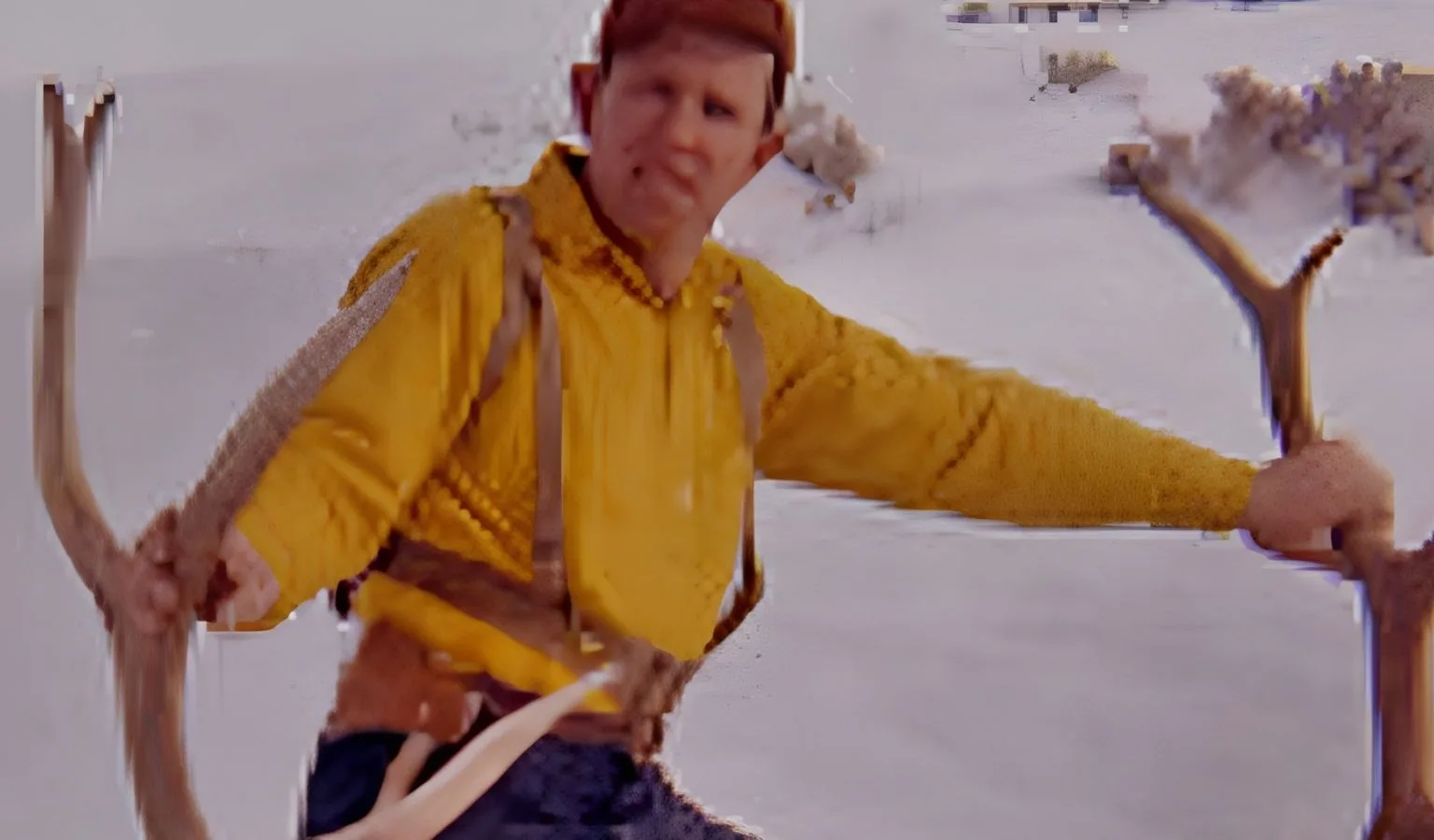
UPDATE: This particular bull elk is no longer at the Rocky Mountain Elk Foundation in Missoula and is currently on display at the Missoula International Airport
Back in October 1958, a dairy farm hand named Fred Mercer crawls out of his tent at 4:45 a.m., sees two inches of fresh snow, and, like any sane person would, decides that today’s to-do list is “follow one set of elk tracks for a dozen-odd miles up a Montana mountain and see what happens.” And, what happens is elk-hunting history.
The 39-year-old, armed with a .270 Winchester Model 70, a 4X Weaver scope, half a thermos of coffee, and a truly unreasonable amount of patience, tracked a wise old bull and his harem through timber, around passes, and up to 10,000 feet. The whole time, that crafty bull kept trying to swing his herd downwind of him because it knew! Mercer finally crested a ridge and found the biggest bull he’d ever seen feeding fifty yards away, described it as “the most magnificent wild thing” he’d ever laid eyes on, and made two shots count before the giant “crumpled like a dishrag.” Then, because 1958 hunters were definitely built different, he field dressed it, drank his coffee, ate his last candy bar, and walked seven miles back to camp in the dark like it was just a random Tuesday.
The bull, a massive 7×7 estimated at 1,200 pounds, scored 419 4/8 B&C points, got dubbed the “Elk of the Century” by Sports Illustrated in 1960, and snagged the Boone and Crockett Club’s Sagamore Hill Award — the Club’s highest honor — at the 9th Big Game Competition. It was the biggest elk ever killed in Montana at the time, second only to the 1890 world record, and today it still sits pretty as the 11th largest typical elk of all time and #2 for Montana. These days the legend lives on display at the Rocky Mountain Elk Foundation’s visitor center in Missoula, presumably inspiring everyone who walks past it to buy better boots. Huge thanks to the Boone and Crockett Club for resurfacing this gem in their “Adventures from the Archives” series, with 70,000+ big game entries in their records! Here’s to hoping they keep digging these stories out of the vault, because tales like Mercer’s are exactly why we keep trudging uphill in the snow with unrealistic expectations!!

Why Fresh Snow Made All the Difference
It’s no coincidence that Mercer’s hunt unfolded the morning after a two-inch snowfall. Fresh snow is arguably the greatest gift Montana’s mountains can hand an elk hunter, and serious backcountry hunters know to set the alarm extra early whenever the overnight forecast calls for accumulation. Here’s why it matters so much:
- Tracks are unmistakably fresh. A print pressed into new snow tells you the animal was there recently — often within hours. There’s no guessing whether you’re following last week’s ghost trail.
- The sign tells a story. Stride length, depth, spacing, and the direction of toe drag all reveal whether an elk was walking casually, feeding, or moving with purpose. A bull pushing cows leaves a distinctly different pattern than a lone animal moving through.
- Sound is muffled. A dusting of snow deadens the crunch of boots on frozen ground and dry leaves, letting a hunter close distance more quietly than on bare terrain.
- Elk move after a storm. Elk that have been bedded and hunkered down during a front tend to get up and feed aggressively once conditions improve. That feeding activity is exactly what put Mercer’s bull in the open at shooting light.
Montana’s elk country — particularly the mountainous western and southwestern regions — routinely gets those first significant October snowfalls right during the general rifle season. When the mountains turn white and conditions line up, the hunters who are already in the field with boots on the ground are the ones positioned to capitalize.
The Art of the Track: What Mercer Did Right
Tracking a single bull for a dozen-plus miles through vertical Montana terrain is not something most modern hunters attempt, and frankly, most wouldn’t survive it with their enthusiasm intact. But Mercer’s approach was textbook — even if the textbook hadn’t been written yet in 1958.
Commit and Don’t Overcomplicate It
Once Mercer picked up that track, he stayed on it. This sounds simple. It is not. Elk travel through other elk sign, cross old trails, and occasionally join or split from other animals. The temptation to second-guess yourself — to cut across and look for fresher tracks, or to abandon a set that disappears into thick timber — is constant. Mercer committed, and commitment is what put him on that ridge at fifty yards.
Understand the Wind, Not Just the Track
The detail about the bull continuously trying to swing his herd downwind of Mercer is not just a colorful anecdote — it’s a masterclass in elk behavior. A mature bull operating in survival mode uses his cows as a detection system. He’ll push them in a direction that puts his scent stream ahead of a suspected threat. Mercer recognized this and adjusted accordingly, making sure the wind stayed in his favor as the track wound upward. That kind of adaptability — reading the animal’s behavior mid-hunt and reacting — is what separates hunters who close the deal from hunters who eat tags.
Elevation Is the Great Equalizer
Mercer followed that bull to 10,000 feet. In October, that’s serious mountain hunting. Mature bull elk, particularly in the post-rut and late rut transition, often push to high, broken terrain where hunting pressure thins out and they can use topography to their advantage. If you’re after a genuinely big bull in Montana’s backcountry, be prepared to go where most hunters aren’t willing to follow. The elk figured that out a long time ago.
The Gear That Went the Distance
There’s something worth appreciating about Mercer’s setup. A Winchester Model 70 in .270 Winchester is not a flashy rig by any era’s standards — it’s a workhorse. The .270 Win has taken more elk in the American West than most cartridges that get triple the marketing attention, and the Model 70’s reputation for out-of-the-box accuracy made it a trusted companion for serious hunters of that era. A 4X Weaver scope offered exactly what a mountain hunter needed: a clear, honest sight picture without the weight or complexity of higher magnification.
That simplicity matters in the backcountry. When you’re covering a dozen miles of vertical terrain in October, every ounce is a negotiation. Modern hunters with access to lightweight rifles, quality optics, and advanced layering systems should honestly find it easier than Mercer had it — and yet the stories still mostly go the other direction. Something to think about next time you’re debating whether to add another pound of gear to a backcountry pack.
What a 419 4/8 B&C Score Actually Means
For context, the Boone and Crockett scoring system measures antler characteristics including main beam length, tine lengths, and mass measurements at several points on each antler, with deductions for asymmetry on typical entries. A typical bull elk that cracks 360 B&C is considered a legitimate trophy by almost any standard. Bulls topping 400 points are genuinely rare — the kind of animal that appears maybe once in a generation in a given drainage. Mercer’s bull at 419 4/8 wasn’t just a big elk. It was a structural anomaly, the product of exceptional genetics, ideal habitat, and the years of growth that only a bull allowed to reach true maturity can achieve.
The Sagamore Hill Award, which the Boone and Crockett Club presented to Mercer’s bull, is awarded at the Club’s big game competitions for the most outstanding trophy entered across all categories. Winning it speaks to how far above the curve this animal sat — not just among elk, but among all North American big game recognized in that competition cycle.
Montana’s Elk Legacy: Still Worth Chasing
Montana remains one of the premier elk hunting states in the lower 48, with a combination of public land access, diverse habitat, and a population of elk that — managed carefully — continues to produce world-class bulls. From the heavily timbered drainages of the Bitterroot and Bob Marshall wilderness areas to the open mountain country of the Beartooths and the Crazy Mountains, the state holds the kind of ground that can grow the next Fred Mercer story.
That said, elk hunting in Montana isn’t handed to anyone. Tags, seasons, and districts vary significantly depending on the management zone, and the rules change from year to year based on population data. Anyone planning a serious elk hunt in Montana — resident or nonresident — should start with Montana Fish, Wildlife & Parks to review current regulations, license availability, and any district-specific restrictions before making plans.
The public land picture in Montana is genuinely exceptional compared to most western states, but even here, backcountry access requires planning. Learning to navigate land ownership boundaries, securing the right maps, and putting boots on the ground before season opens are all habits that separate consistently successful elk hunters from hopeful ones.
Go See the Bull Yourself
If you haven’t made the trip to the Missoula International Airport, Mercer’s bull is reason enough to go. Seeing a 7×7 frame that scored 419 4/8 in person resets your mental image of what a truly exceptional elk looks like. It’s the kind of mount that stops conversations mid-sentence. More than that, it’s a tangible piece of Montana hunting history — a reminder that the right hunter, on the right morning, with the right amount of stubbornness, can still walk into the mountains and come out with a story that gets told for generations.
Fred Mercer wasn’t a professional hunter or a wealthy outfitter client. He was a dairy farm hand who saw fresh snow, laced up his boots, and went. Sixty-some years later, his bull is still in the record books, still on display, and still making people uncomfortable about how they spent their last elk season. That’s a legacy worth honoring every October when the first snow falls and the tracks start showing up fresh in the timber.
Montana's outdoor week, in your inbox at 7am Friday.