
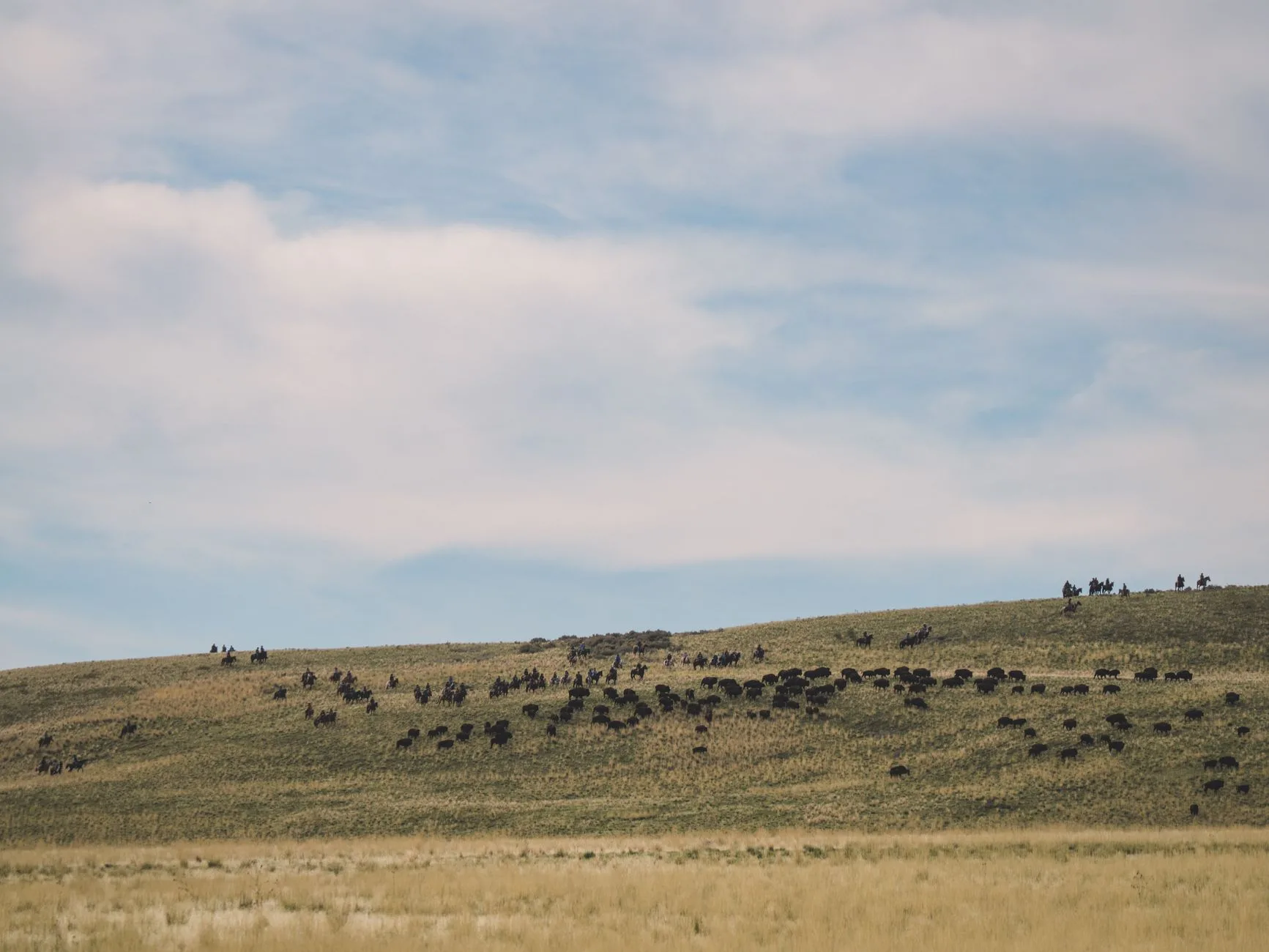
When Ted Turner started buying up Montana ranchland in the early 1990s, plenty of locals thought he’d lost his mind. A media mogul from Atlanta, buying hundreds of thousands of acres and turning cattle out in favor of bison? The jokes wrote themselves. But three decades later, Turner’s Flying D Ranch near Bozeman and his broader Montana holdings tell a genuinely different story — and this video from Regen Eco is worth your time if you care about where Montana’s landscape is headed.
What the Flying D Actually Is
The Flying D Ranch sits on roughly 113,000 acres in the Gallatin Valley southwest of Bozeman, running up against the Lee Metcalf Wilderness and bordering public land that Montana hunters and anglers use heavily every fall. Turner purchased the property in 1989 from the Wilkinson family, who had run it as a traditional cattle operation for decades. The land wasn’t barren in any literal sense — it was productive ranchland — but like much of the heavily grazed ground across southwest Montana at the time, it was ecologically simplified. Riparian areas along the Gallatin’s tributaries were compacted and degraded, native grasses were outcompeted in places by introduced species, and the kind of structural diversity that supports mule deer, elk, and upland birds had been largely worn down.
Turner pulled the cattle and started replacing them with bison. Today the Flying D runs somewhere between 4,000 and 5,000 bison, making it one of the largest privately held bison herds in North America. Thirty years is a long enough timeline to see real ecological outcomes rather than just intentions, and the before-and-after on ground that size is legitimately worth paying attention to.
Why Montana Sportsmen Should Care
Private land of this scale doesn’t stay ecologically isolated. The Flying D’s southern boundary runs into the Gallatin National Forest, where many of us hold deer and elk tags every season. When riparian corridors recover on 113,000 acres of adjacent private ground — and they have, measurably, along several of the Gallatin’s smaller tributaries — it affects water temperature, bank stability, and fish habitat on the public water downstream. Anglers working the upper Gallatin for brown and rainbow trout are fishing a system that’s connected to what happens on that private ground whether the fence line suggests otherwise or not.
Predator dynamics shift too. A bison herd that size attracts and sustains wolves and grizzlies differently than a cattle operation does. That has complicated implications for ranchers in the Madison and Gallatin valleys, but it also means predator-prey relationships on the surrounding public land look different than they did in 1990. If you’ve noticed changes in elk behavior in the Gallatin Canyon over the past 15 to 20 years — more timber, less open slope loafing, harder to pattern in early rifle season — landscape-level predator recovery is part of that story.
The Bison Management Angle
It’s worth placing the Flying D in the context of Montana’s broader bison politics, which remain as contentious as any wildlife issue in the state. The annual conflict over wild Yellowstone bison moving north into the Gardiner Basin — and the hazing, quarantine, and occasional slaughter that follows — reflects how loaded bison management still is here. What Turner’s operation demonstrates quietly, over decades rather than in press releases, is that bison and economically viable land management aren’t mutually exclusive. He built Ted’s Montana Grill specifically to move bison meat at commercial scale, creating a market-based incentive that closes the loop in a way most conservation models never manage.
Practical Takeaways for Hunters and Anglers
A few things worth keeping in mind if you’re spending time near the Flying D this season:
- Know the boundaries. The Flying D is private land and not open to public hunting. The adjacent Gallatin National Forest is public, but the fence lines aren’t always obvious on the ground. Download the onX layer for Gallatin County before you go and know where you are.
- Bison are not domesticated animals. If you’re hiking, fishing, or scouting near the boundary and encounter bison near a fence line, give them serious distance. They’re faster than they look and don’t behave like cattle.
- The upper Gallatin River is blue-ribbon trout water running through and adjacent to this landscape. Montana FWP regulations apply — check the current year’s regs for the Gallatin drainage before you fish, as special rules around catch-and-release and equipment restrictions apply in certain sections.
- Public land elk hunting in the surrounding units — particularly hunting districts 360 and 361 in the Gallatin drainage — can be productive but draws significant pressure out of Bozeman. If you’re hunting the early archery season in September, get boots on the ground well before opener to understand how elk are using the terrain relative to private boundaries.
The skeptics who called Turner crazy when he started all this don’t talk about it much anymore. Thirty years of outcomes have a way of settling arguments. Whether you’re interested in the conservation model, the bison politics, or just curious how a CNN billionaire ended up as one of the most consequential private landowners in Montana history, the video above is a solid place to start.
Montana's outdoor week, in your inbox at 7am Friday.