
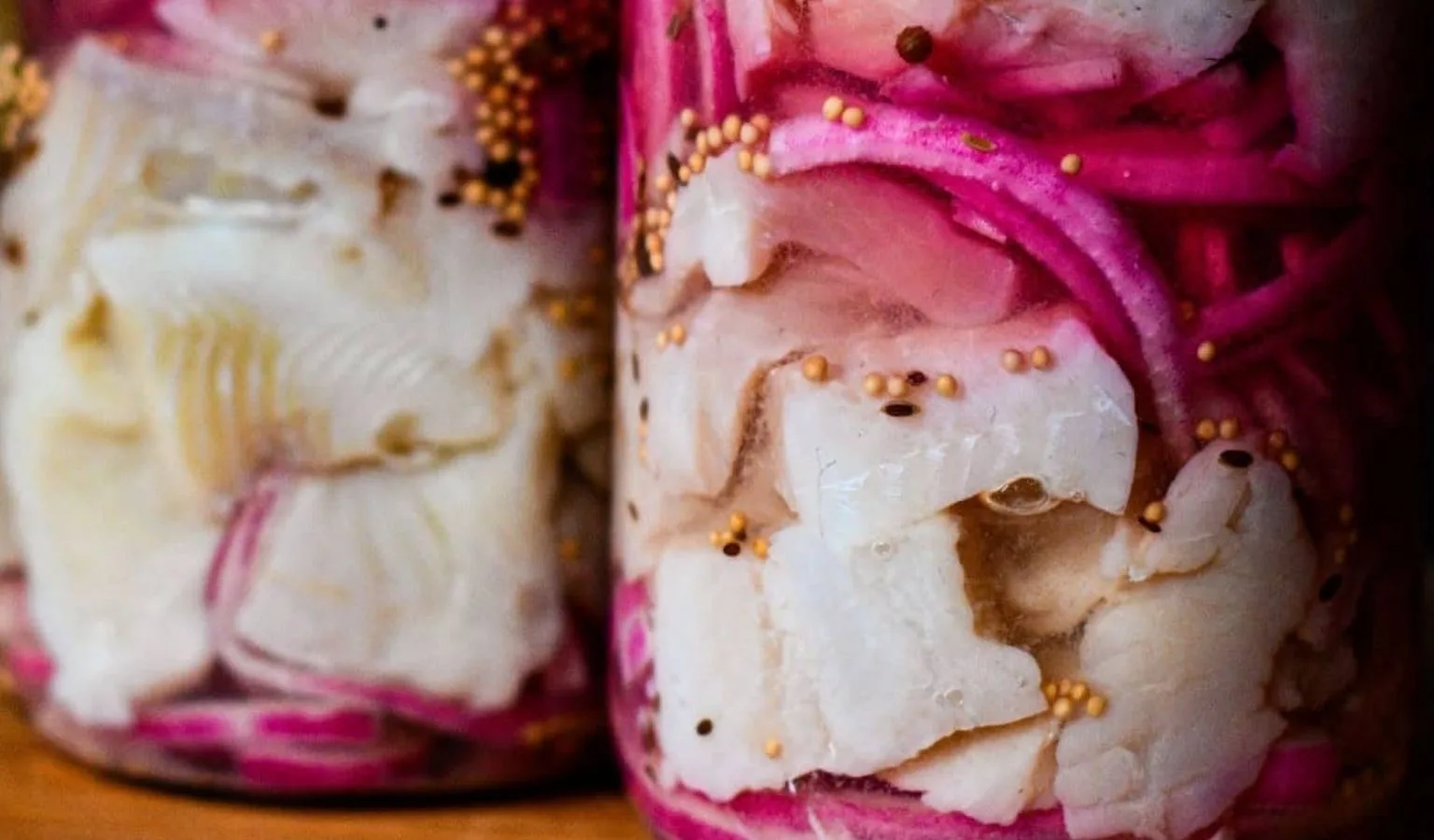
Northern pike are delicious, aggressive, and built with enough Y-bones to test the patience of a saint. Fortunately, there’s a wonderfully lazy solution: don’t remove them.
This old outfitter-style pickling method lets vinegar handle the tedious work. Kokanee Quinn learned that after curing and soaking, those troublesome little bones soften away, leaving tangy, tender bites of fish—and considerably less muttering at the cutting board. The same trick works with many other firm-fleshed fish, too.
What You’ll Need
For the cure
- 2 pounds northern pike Y-bone strips, cut into bite-size chunks
- 1/2 cup Morton Tender Quick
- 2 cups water
For the vinegar soak
- 3 cups white vinegar
For the sweet pickling brine
- 1 cup white vinegar
- 1/2 cup water
- 3/4 cup sugar
- 2 teaspoons pickling spice
- 1/2 cup red wine or port, optional
For the jars
- 1 medium onion, thinly sliced
- Jalapeño slices, optional
- Fresh garlic cloves, optional
Let the Chemistry Do the Filleting
Combine the Morton Tender Quick and 2 cups of water in a nonreactive glass or food-safe plastic container. Add the fish, making sure every piece is submerged. Cover and refrigerate, stirring occasionally so the cure gets equal time with everything.
Once the fish has cured, drain it and rinse the pieces thoroughly under cold water.
Return the fish to the container and pour in 3 cups of white vinegar. Cover and refrigerate again. This is where the vinegar begins its attack on those notorious Y-bones while giving the fish its unmistakable pickled character.
Make the Brine
Add 1 cup of white vinegar, 1/2 cup of water, the sugar, and pickling spice to a saucepan. Bring the mixture to a boil, stirring until the sugar dissolves.
Remove the pan from the heat and allow the brine to cool completely. Completely means completely—warm brine and cured fish are not invited to the same jar.
For a darker, fruitier flavor, stir in the red wine or port after the brine has cooled.
Pack the Jars
Drain the vinegar-soaked fish. Layer it in clean jars with the sliced onion. Add a couple of jalapeño slices if you enjoy a little heat, or tuck in a garlic clove if subtlety has never been your thing.
Pour the cold pickling brine over the fish until everything is covered. Seal the jars and keep them refrigerated. Give each jar a gentle shake every few days to redistribute the spices and prevent any one onion slice from becoming too powerful.
A Few Words Before You Raid the Jar
Keep the fish refrigerated throughout the entire process and use properly handled fish suitable for pickling. Pickling is not the same as pressure-canning, so these jars belong in the refrigerator—not on a pantry shelf. Follow trusted fish-safety guidance regarding freezing and parasite control, especially when using wild-caught fish.
The finished pike is sweet, tart, pleasantly spiced, and blissfully free of detectable Y-bones. Serve it cold with crackers, dark bread, cheese, or a strategically vague answer when someone asks how much is left.
One final outfitter tip: once the neighbors discover you’ve made a batch, locking the door becomes less of a joke and more of a serving suggestion.
Montana's outdoor week, in your inbox at 7am Friday.