
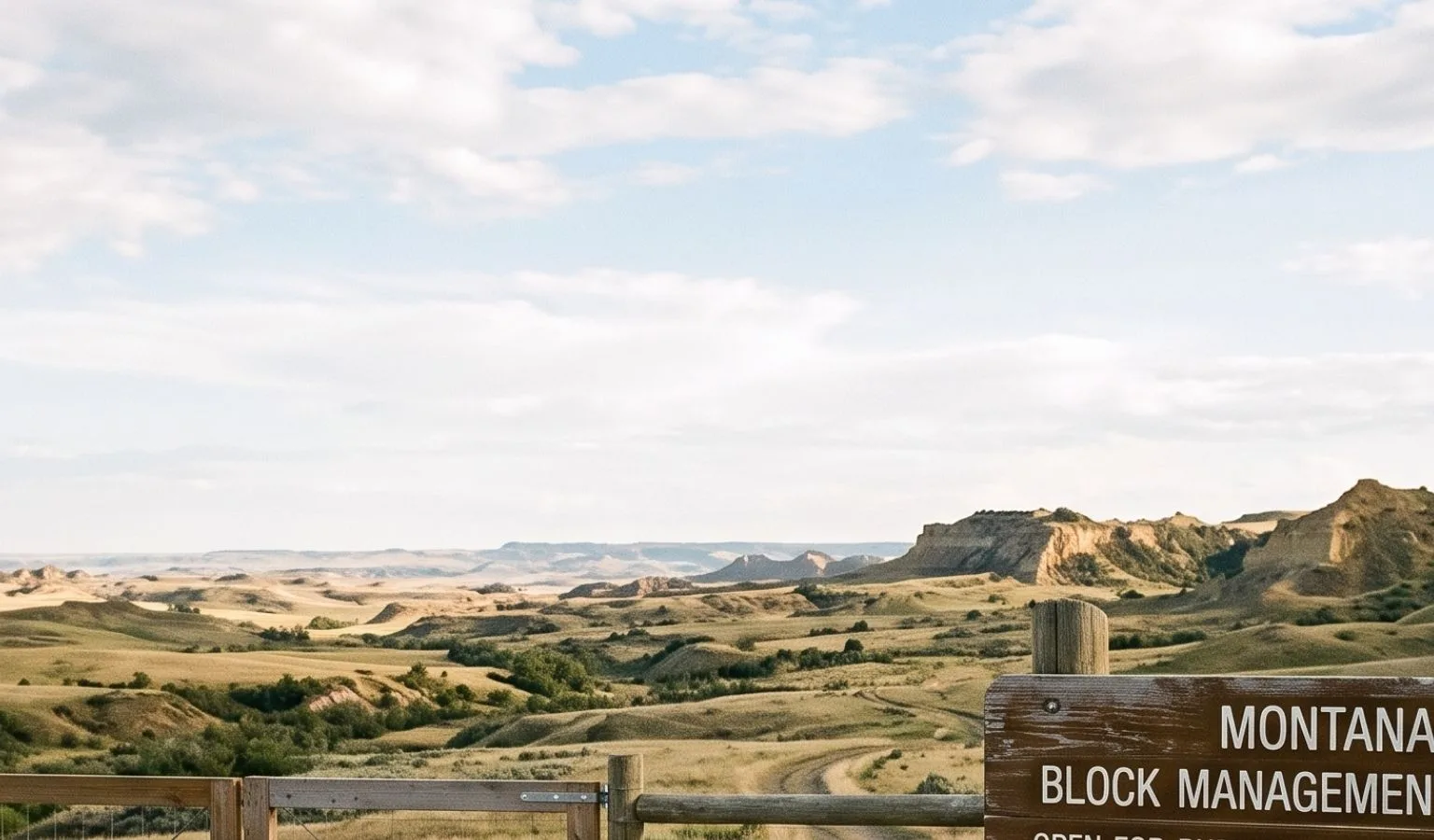
With the upcoming fall hunting season fast approaching, big game and bird hunters across Big Sky Country can now start mapping out their fall pursuits. Montana Fish, Wildlife & Parks (FWP) has officially released updated maps, regional guides, and land-use rules for its flagship public-access initiative, paving the way for outdoorsmen and women to venture onto millions of previously restricted acres.
Through cooperative agreements between state officials, conservation partners, and private hosts, “this year, FWP’s Block Management Program will provide access to nearly 7 million acres of private and isolated public land for the 2026 hunting season.” The program serves as a critical bridge between private property owners and sportsmen, helping maintain Montana’s rich heritage of outdoor recreation while easing land management pressures for agricultural operators.
What Is Montana’s Block Management Program?
For hunters newer to Montana or those who haven’t taken advantage of it before, the Block Management Program (BMP) is one of the most significant public-access tools available anywhere in the American West. Administered by FWP, the program enrolls private landowners — ranchers, farmers, and other rural property owners — who voluntarily open their land to licensed hunters in exchange for technical assistance, administrative support, and in some cases direct compensation funded in part through hunting license dollars.
The result is a patchwork of enrolled parcels spread across the state that collectively unlocks land that would otherwise be completely off-limits. Many of these properties also provide access to otherwise landlocked blocks of public land — national forest, BLM ground, or state trust land — that hunters simply couldn’t reach without crossing private property. In that sense, the program doesn’t just open private land; it dramatically multiplies the effective reach of existing public ground.
Participation by landowners is entirely voluntary, which means the enrolled acreage can shift from year to year. Some properties that were available last season may not appear on the 2026 maps, while new parcels may have been added. That’s one of the most important reasons FWP encourages hunters to consult the updated guides every single season rather than relying on memory or old maps.
How the Program Works: What Hunters Need to Know Before They Go
Not all Block Management Areas operate the same way, and that’s a detail that trips up even experienced Montana hunters. Each enrolled property carries its own specific set of access rules established by the participating landowner. Before you load the truck and head out, understanding those rules isn’t just courteous — it’s required.
Walk-In vs. Permission-Required Properties
Block Management Areas generally fall into one of two broad categories. Some are designated as walk-in areas, meaning any licensed hunter can access the property during legal hunting hours without any additional contact with the landowner. Others require hunters to obtain permission directly from the landowner or a designated contact before entering. Confusing these two access types is one of the fastest ways to sour a landowner relationship and potentially jeopardize future access for everyone.
Sign-In Requirements
Many BMA properties — even walk-in ones — require hunters to sign in and out at a register box located at the property entrance. This isn’t just bureaucratic box-checking. Sign-in data helps FWP document hunter use, demonstrate program value to participating landowners, and make the case for continued or expanded enrollment. Taking the 60 seconds to sign in properly is one of the simplest ways hunters can protect the program’s long-term health.
Vehicle and Access Restrictions
Vehicle restrictions vary widely by property. Some landowners allow road access only, while others permit off-road travel on designated trails. Many require foot access entirely once hunters pass the parking area. Respecting these restrictions is non-negotiable — tire tracks across a hay field or damage to a ranch road can end a landowner’s participation in the program for good. Always check the individual property sheet for vehicle rules before assuming anything.
Species and Hunting Opportunities Across the State
One of the strengths of Montana’s Block Management Program is the sheer diversity of hunting opportunity it unlocks. Depending on the region and the specific parcel, enrolled properties can support everything from trophy mule deer and whitetail hunting in the river breaks to elk in the foothills, antelope on the eastern plains, and upland birds nearly everywhere.
Big Game
Mule deer hunters working the Missouri River Breaks, the Powder River country, or the foothill zones along the Rocky Mountain Front will find Block Management areas that complement adjacent public land blocks beautifully. Whitetail hunters focused on creek bottoms and agricultural edges in central and eastern Montana will similarly find enrolled properties that put them into prime habitat. Elk hunters in western and central Montana regions can use BMA parcels as access corridors into larger wilderness or national forest tracts. Always verify that your specific license and any required permits cover the species and hunting district associated with the BMA property you intend to hunt — check current FWP regulations before you go.
Upland Birds and Waterfowl
The Block Management Program is equally valuable for upland bird and waterfowl hunters. Sharp-tailed grouse, Hungarian partridge, ring-necked pheasant, and sage grouse (where seasons are open — always verify current FWP regulations) inhabit a wide range of enrolled properties across Montana’s agricultural and grassland landscapes. Duck and goose hunters pursuing birds along prairie potholes, creek corridors, and river bottoms will also find that some BMA properties include wetland and riparian access that’s otherwise unavailable.
Planning Ahead: Mapping Your 2026 Season
To ensure smooth operations and preserve good relationships with participating landowners, hunters are urged to review site-specific regulations carefully well before heading into the field. Access terms — including sign-in procedures, permission requirements, and vehicle restrictions — vary significantly from one parcel to another.
Beyond serving as an administrative tool, state wildlife officials view early preparation as part of a broader ethical responsibility for everyone in the field. According to state officials, “the Block Management Program guide provides an excellent resource to help hunters plan ahead for access,” which fits into FWP’s broader emphasis on responsible conduct, safe firearm practices, and respecting private boundaries.
Here are some practical steps to build your pre-season planning routine around the newly released 2026 materials:
- Download the regional guides early. FWP breaks Block Management information into regional packets that correspond to its administrative regions across the state. Pull the guide for every region you plan to hunt — don’t just grab the one closest to home.
- Cross-reference BMA maps with onX or BaseMap. Layering Block Management boundaries over satellite imagery and topographic mapping gives you a much clearer picture of terrain, access points, and how enrolled parcels connect to nearby public land.
- Note permission-required properties and call early. If a property you want to hunt requires advance permission, make that call weeks before the season opener, not the night before. Landowners appreciate respect for their time, and early contact often makes a stronger impression.
- Have a backup plan. Because enrollment changes annually, a property you counted on last year may not be available. Identify two or three alternative parcels in your target area before the season begins.
- Scout responsibly. Pre-season scouting on BMA properties is generally allowed, but the same access rules apply outside of hunting season. Confirm the property’s rules and treat it with the same respect you would during a hunt.
Why the Block Management Program Matters for Montana’s Hunting Future
Access to huntable land is one of the defining challenges facing hunters and anglers across the United States. As agricultural land changes hands and rural properties are subdivided or posted, the availability of private land access has contracted in many parts of the country. Montana’s Block Management Program stands as a meaningful counterweight to that trend — a market-based, relationship-driven solution that keeps hunters connected to the landscape and keeps landowners engaged as conservation partners rather than adversaries.
The program also carries real economic weight in rural Montana communities. Hunters accessing BMA properties fill gas tanks, spend nights in small-town motels, eat at local diners, and support outfitters and guides. That economic activity reinforces the case for continued public investment in access programs and keeps hunting woven into the fabric of rural Montana life.
Treating every BMA property — and every participating landowner — with respect isn’t just good manners. It’s an investment in the program’s survival and in Montana’s hunting culture for the next generation.
Where to Get the 2026 Block Management Maps and Guides
Hunters looking to acquire property maps, request a printed statewide overview guide, or inspect individual property rules can find resources online at fwp.mt.gov/bma or by visiting any FWP regional office.
Printed guides can be picked up at FWP offices, many license vendors, and sporting goods retailers across the state. If you prefer digital tools, the FWP website allows you to search enrolled properties by region, species, and access type — making it easier than ever to zero in on parcels that match your specific hunting plans.
The 2026 season is shaping up to be another strong one for Montana hunters. With nearly 7 million acres unlocked through the Block Management Program and updated resources now in hand, there’s no better time to start building your fall game plan.
Montana's outdoor week, in your inbox at 7am Friday.