
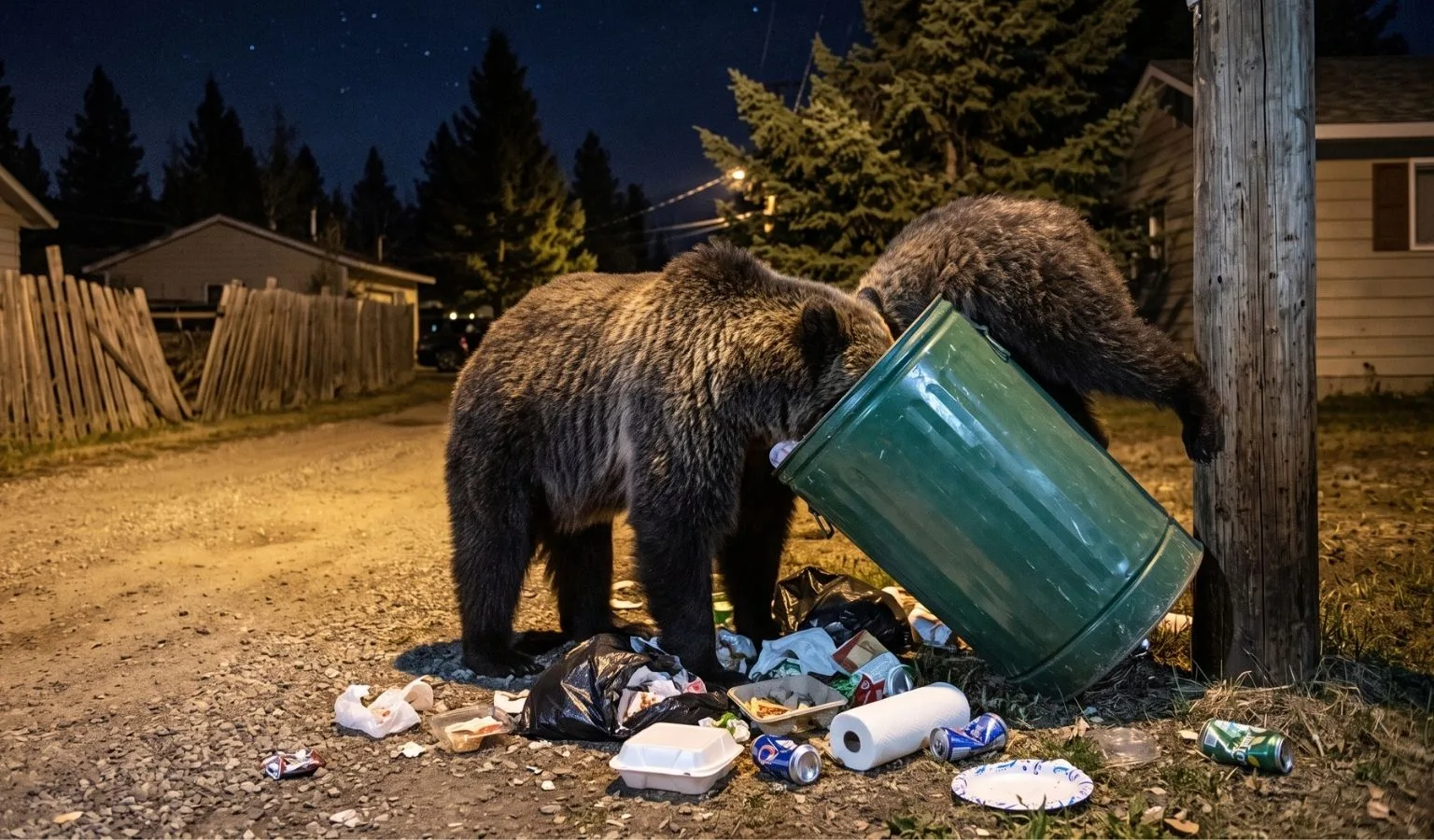
As we have all been reading, our bears woke up on the wrong side of the den this year, and now trash cans are paying the price. Thanks to a weirdly early spring followed by a late frost, the mountain buffet is completely wrecked, leading to what wildlife officials describe as “one of the worst natural food failure years on record.”
Because their usual wild berry staples got wiped out, hungry grizzlies and black bears are skipping the mountains entirely to crash neighborhood barbecues, knock over bird feeders, and raid chicken coops. Wildlife experts point out that these animals are running on empty just as they need to pack on pre-hibernation weight, which explains why we’re seeing “bears that should be foraging for berries in the mountains…getting into trouble around homes and communities looking for something to eat.”
What Black Bears Typically Eat
Despite being classified as carnivores, American black bears are primarily opportunistic omnivores whose diet consists heavily of plant matter:
- Plants & Berries (80%–85% of diet): The bulk of their calories comes from grasses, sedges, tubers, wild berries (huckleberries, serviceberries, chokecherries), and hard mast (acorns, beechnuts, walnuts).
- Insects & Invertebrates: They frequently rip open rotting logs and overturn rocks to eat ants, beetles, bee larvae, and grubs.
- Meat & Fish: When available, they feed on carrion (winterkill carcasses), small rodents, newborn deer fawns, and fish in coastal or river systems.
- Tree Climbing Adaptations: Short, curved claws allow them to easily scale trees to forage for high-hanging fruits, acorns, and beechnuts.
Source: National Park Service – Black Bears
What Grizzly Bears Typically Eat
Grizzly bears (brown bears) are larger, more aggressive diggers and have a diet adapted to high-elevation and open terrain:
- Roots, Bulbs & Tubers: Grizzly bears have 2–4 inch, slightly curved claws and powerful shoulder muscles designed for excavation, allowing them to dig up glacier lilies, yampa roots, and sweetvetch.
- High-Calorie Seasonal Surges: In late summer and fall, grizzlies rely heavily on fat-rich whitebark pine nuts and can consume tens of thousands of army cutworm moths per day in high-alpine talus slopes.
- Large Mammals & Ungulates: Grizzlies consume significantly more meat than black bears, hunting elk calves, bison calves, and aggressively scavenging carcasses left by wolves or winter mortality.
- Dietary Breadth: In ecosystems like Yellowstone, researchers have documented grizzly bears consuming more than 260 distinct species of plants, animals, and fungi.
Sources: NPS – Grizzly Bears: Ultimate Omnivores | NPS – Bear Food Habits in Yellowstone
If you’re living in or visiting big sky country, lock up your garbage, stash the bird seed, and keep your campsite spotless—otherwise, an uninvited 400-pound-or-more guest might just invite itself to dinner….and you definitely shouldn’t want that unless you have a tag and it’s a legal kill!
Montana's outdoor week, in your inbox at 7am Friday.