
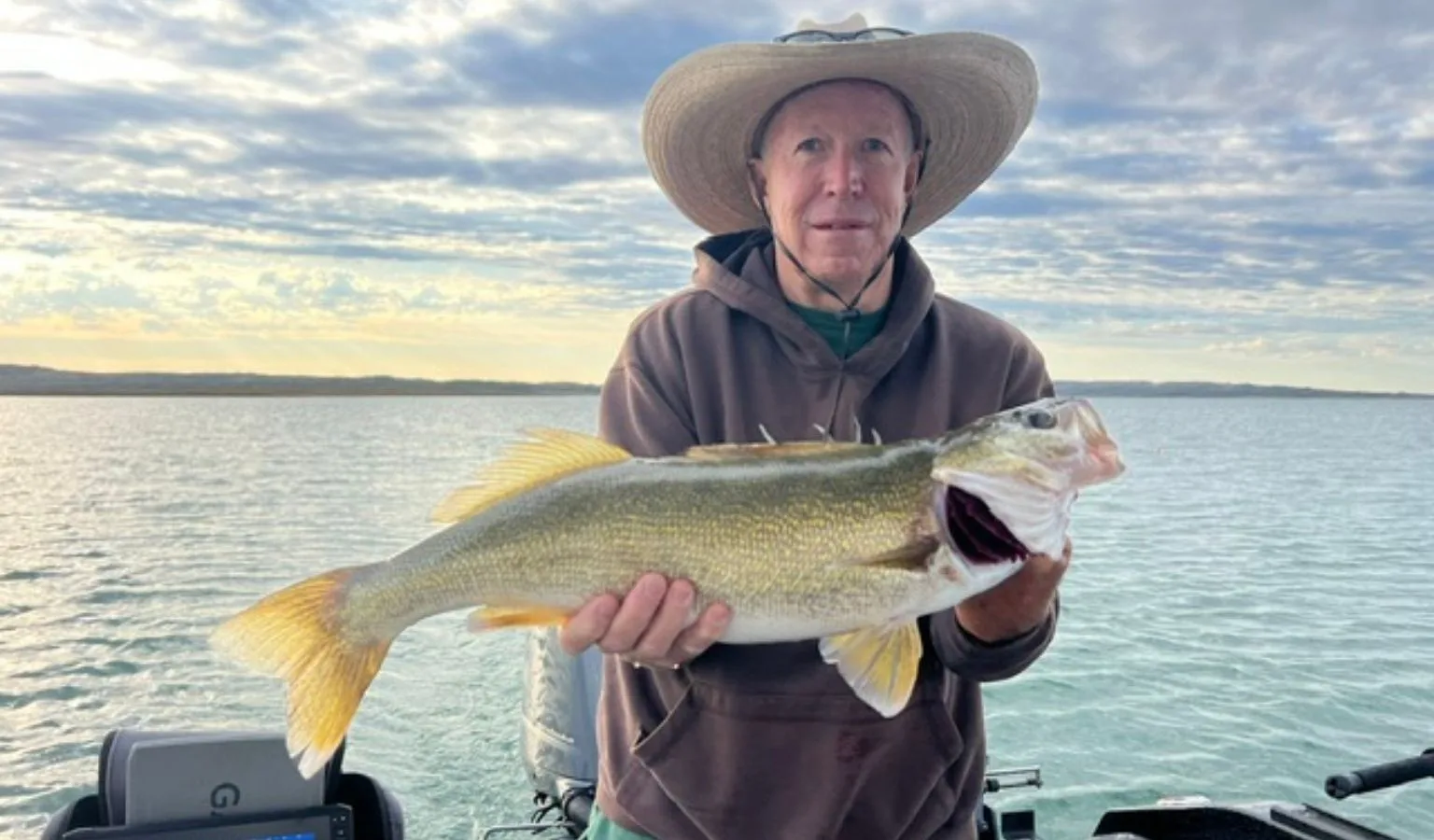
Fort Peck Reservoir in Transition: What Fall Means for Fishing
The fish are starting to act like they know fall is here, but they haven’t exactly agreed on a game plan. Some are shallow, some are deep, and a few seem determined to make you work for every bite. Water temps are cooling, patterns are shifting, and there are still plenty of good opportunities out there if you’re willing to hunt around a little. Here’s what Don Wilkins (406.407.6648) found this past week:

Fort Peck Reservoir in late September is one of northeast Montana’s most dynamic fishing windows. The massive 245-mile-long reservoir — the largest in Montana by surface acreage — starts shedding summer heat in earnest this time of year, and that temperature drop triggers movement across almost every species. Anglers who understand the transition, and stay flexible enough to adapt day to day, consistently put more fish in the boat than those locked into a single pattern. This week’s report from Don captures that transition perfectly.
Water Temperature: The Key Driver Right Now
Water temps around the main and west towards the Pines were 63-66 most of the week.
That 63–66°F range is a meaningful benchmark. As surface temps drop through the 60s, the thermocline that formed over summer begins to break down. Oxygen levels equalize throughout the water column, which gives fish much more freedom to roam vertically. That’s exactly why you’re seeing such scattered behavior this week — pike holding shallow, smallmouth going deep, lakers still nosing around the bottom, and salmon showing up in the bays. They’re all responding to the same environmental shift, just in species-specific ways.
Expect this transition to continue through October. Once surface temps consistently drop into the upper 50s, fall patterns will lock in more predictably. Until then, the angler who checks multiple depths and structure types in a given outing will have the advantage. Don’t abandon a spot after one or two drifts — lateral movement along a point or weed edge often reveals where the fish have repositioned since yesterday.
Pike Report
Pike — shallow weed beds with 6-10 FOW over the tops of them are holding some good fish. Casting 5/8 and 3/4 ounce spoons, and some top water lures have been working well the past week. We haven’t found many fish far back in the bays yet.
Fall is one of the best times of year to target northern pike at Fort Peck, and this week’s shallow bite is a classic early-fall setup. As water cools, pike become increasingly aggressive feeders, bulking up before winter. The weeds they’re using right now still have enough structure to hold baitfish, making those 6–10 foot flats productive ambush zones.
Tips for Working Shallow Pike Water
When casting spoons in the 5/8 to 3/4 ounce range, vary your retrieve speed. A stop-and-go or flutter retrieve often draws strikes that a straight burn won’t. Topwater lures remain viable as long as surface temps stay in the low-to-mid 60s — once the water drops into the upper 50s, subsurface presentations typically take over. Walk-the-dog style lures and prop baits have historically performed well on Fort Peck’s shallow pike.
Keep an eye on the weed edges rather than fishing the middle of the mat. Pike in early fall often cruise the perimeter of vegetation, intercepting baitfish moving in and out. Don’s note that fish haven’t pushed far back into the bays yet is worth remembering — covering open water adjacent to weed beds is likely more efficient than probing the back ends of coves at this stage of the season.
Smallmouth Bass Report
Smallmouth — most of the better fish we found are deep on main lake points with some rock structure nearby. Jigs and minnows or slip bobbers and minnows worked the best for us.
Fort Peck’s smallmouth population has grown into one of the reservoir’s most exciting fisheries, and fall is when those fish can really shine. The deep main-lake point pattern Don describes is a textbook fall smallmouth location — rock structure holds warmth longer than sandy substrate, and points funnel baitfish and concentrate predators.
Getting the Most from Jig and Minnow Presentations
When smallmouth are holding deep and their metabolism is beginning to slow with cooling temps, presentation cadence matters. A slower, more deliberate hop with longer pauses often outfishes a fast, aggressive retrieve. Jig weight selection is important too — use enough weight to maintain bottom contact in Fort Peck’s often-breezy conditions, but don’t overdo it. A 1/4 to 3/8 ounce jig is usually a good starting point for the 15–25 foot depth range where many of these points flatten out.
The slip bobber and minnow option Don mentions is an underrated technique for pressured or finicky smallmouth. Suspending a lively minnow a foot or two off the bottom lets the fish commit at their own pace without feeling tension on the line — particularly effective when fish are seen on sonar but reluctant to chase.
Lake Trout Report
Lakers — fish are deep still but moving around a lot now. Areas holding good amounts of fish one day will be a bust the next. The fish weren’t real aggressive for the most part and we had to work our jigs within 6-8 feet of the bottom to get any reaction.
Lake trout at Fort Peck are a unique fishery — not something you encounter at most Montana reservoirs. These fish are deep-water specialists, and the inconsistency Don describes right now is characteristic of the pre-spawn period. Fort Peck lake trout typically spawn in fall over rocky structure, and as they begin moving toward spawning areas, their daily positioning becomes less predictable.
Locating and Presenting to Roaming Lakers
The 6–8 foot off the bottom rule Don mentions is critical. Lake trout are bottom-oriented but rarely hug the substrate tight — they tend to suspend just above it. When jigging, bring your presentation down to the bottom, then work it upward in short lifts before letting it flutter back down. That falling action on a heavy tube jig or blade bait is often what triggers the strike.
Because these fish are roaming, electronics are your best friend. Mark a school, drop a waypoint, and note the depth and bottom composition. Even if that spot goes cold the next day, it tells you something about what kind of structure they’re using — information you can apply to finding the next productive location.
Salmon Report
Salmon — seems to be fish being caught everyday now in either the Fort Peck Marina or Duck Creek bays. Casting KO wobblers or similar spoons is catching some of them and some shallow running crankbaits as well.
The consistent salmon action in the Fort Peck Marina and Duck Creek bays is a welcome sign heading into fall. Landlocked chinook salmon — often called “kokes” locally — can provide fast-paced action when they school up in accessible areas like these. The spoon and shallow crankbait bite Don describes is typical of salmon that have moved into shallower water, likely following concentrations of small forage fish.
Tactics for Bay Salmon
KO wobblers and similar flutter spoons work well because they mimic a dying or injured baitfish — exactly what salmon key on. Cast beyond the school (if you can see fish on the surface or mark them on sonar near the edges of the bay) and retrieve through them rather than directly into the densest concentration, which can spook fish in clear, shallow water.
Shallow-running crankbaits in silver, white, or natural shad patterns are worth keeping rigged and ready. Salmon can be temperamental — some days they want a straight, steady retrieve, and other days a twitching, erratic action triggers more strikes. Start steady and experiment from there. Early morning and evening low-light windows have historically been the most productive for bay salmon at Fort Peck as fall progresses.
Planning Your Fort Peck Fall Trip
Fort Peck Reservoir is accessible via multiple boat ramps and recreation areas managed by the U.S. Army Corps of Engineers and Montana Fish, Wildlife & Parks. The Fort Peck area itself, the Pines Recreation Area to the west, and various access points along the north and south shores give anglers a range of options depending on which species and structure they want to target. Always check current FWP regulations before heading out, as size and possession limits for species like lake trout and salmon can be specific to Fort Peck.
Late September through October is genuinely one of the most productive and enjoyable times to fish this reservoir. Boat traffic is down compared to summer, the scenery of the Missouri River breaks in fall color is hard to beat, and the fish are feeding with purpose. As Don’s report makes clear, flexibility is the key — the angler willing to move, experiment with depth, and try different presentations will be rewarded.
For guided trips or more information, contact Don Wilkins directly at 406.407.6648. Check back each week for updated reports as fall patterns continue to develop across the reservoir.
Montana's outdoor week, in your inbox at 7am Friday.