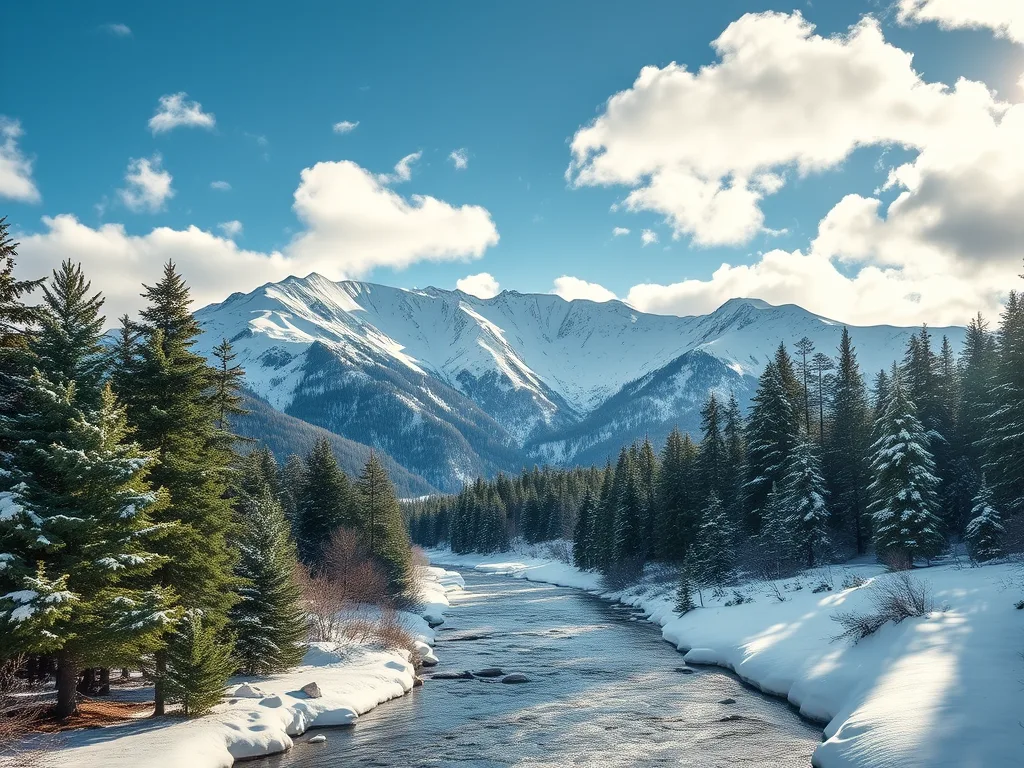
HELENA – The warm weather and lack of snow so far this winter is a little irritating to outdoor enthusiasts who enjoy the cold, and a bit concerning for anglers and other water recreationists. But according to a recent report from the Natural Resources Conservation Service, it’s not quite time to worry.
The NRCS report shows snowpack is above normal at high elevations, but below normal at lower elevations. Summer streamflow will depend on how the rest of the winter and spring unfold, according to the NRCS report.
“The good news is that it is early, and the state has observed above-normal snowpack conditions at higher elevations,” said Stephen Begley, Fish, Wildlife & Parks’ water rights and instream flow specialist. “However, I suspect that the unseasonably warm temperatures experienced in mid-January may have impacted that a bit.”
Begley also pointed out that climate outlooks for the next three months are favorable and suggest increased changes for below-average temperatures and above-average precipitation.
If the forecast of more precipitation and colder temperatures doesn’t pan out, it could have an impact on fish and fish habitat.
“Lower stream flows mean less habitat for fish to seek shelter, forage, and navigate rivers and streams,” Begley said. “Low stream flows may also influence stream temperatures resulting in additional stress to cold-water fisheries.”
Begley said this year’s snowpack conditions are similar to 2022, with the exception that there was a more balanced distribution of snowpack between higher and lower elevation SNOTEL sites.
“Snowpack statewide was also slightly higher percentage-wise than current conditions” Begley said.
-fwp-
Photo credit: Tom Fisk from Pexels
Montana's outdoor week, in your inbox at 7am Friday.