
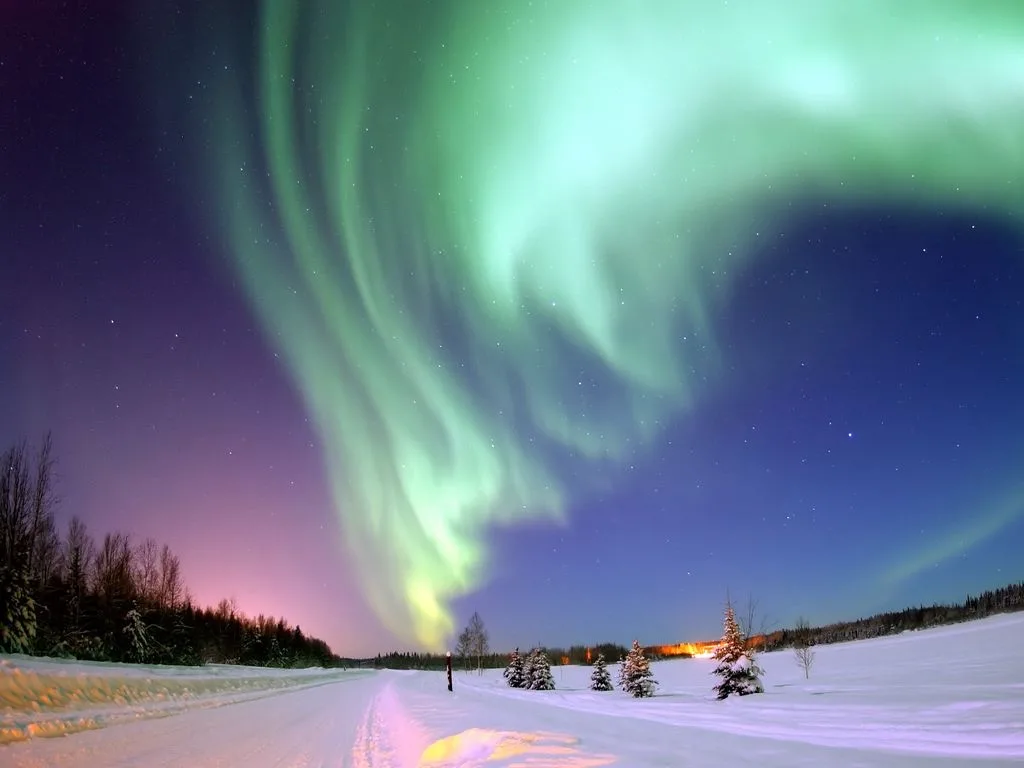
The Sun is currently in the waning stage of solar cycle 25, which reached its peak in late 2024. Researchers indicate that the periods right after a solar maximum tend to result in significant geomagnetic storms.
A recent prediction from the U.S. Space Weather Prediction Center (SWPC) indicates a G1 (minor) geomagnetic storm is expected on January 27–28, 2026. This event will allow the aurora borealis to be visible further south than usual.
According to Forbes, the SWPC’s aurora forecast suggests potential auroral sightings in as many as 11 U.S. states near the Canadian border, including Montana, Idaho, Wyoming, North Dakota, South Dakota, and Minnesota. The article highlights that due to ongoing solar activity, more significant auroral events are anticipated throughout 2026.
How Aurora Borealis Works
Charged particles from the solar wind collide with oxygen and nitrogen atoms high in the atmosphere. This happens when they are channeled along Earth’s magnetic field lines. These impacts cause the atoms to become excited. As they return to their normal state, they emit energy in the form of shimmering light.
The colors vary based on the gas involved. Oxygen emits green and red light. Nitrogen can produce blue or violet shades. The phenomenon becomes more pronounced when the interplanetary magnetic field dips southward, permitting increased solar plasma to enter Earth’s magnetosphere.
Best Times and Places to View the Northern Lights in Montana
Monitor Space‑Weather Alerts
Space weather predictions can be quite erratic, as they rely on the velocity of solar wind and the Bz component of the interplanetary magnetic field. Readers are encouraged to check the SWPC’s 30-minute aurora forecast. You can also use apps like Aurora Now, My Aurora Forecast, and SpaceWeatherLive for up-to-date solar wind information. When the Kp index, which gauges geomagnetic activity, hits 5 or above, the aurora oval typically stretches over Montana.
Choose Dark‑Sky Destinations
Aurora displays are diminished by light pollution. Forbes recommends looking for a dark northern horizon. Use resources such as the Dark Sky Place Finder and light pollution maps to find optimal viewing locations. Montana offers many dark-sky regions due to its sparse population and extensive public lands.
Wild Montana suggests a number of dark-sky locations that frequently offer views of the northern lights.
Advice on Timing
- The aurora is usually brightest between 10 p.m. and 2 a.m., but it can appear anytime after sunset during a geomagnetic storm.
- The forecast for Jan. 27–28 indicates a 68 percent-lit waxing gibbous moon will be visible. Moonlight can reduce contrast, but the aurora can still be photographed if bright enough. Readers are encouraged to observe the moon’s position, which will be just left of the Pleiades star cluster.
Photography and Viewing Tips
- Use Night‑mode on smartphones: Modern phones can capture faint aurora light. Enable Night Mode or Pro Mode. Use the main camera lens. Set a longer exposure, at least a few seconds. Stabilize the phone with a tripod or solid surface.
- Bring warm layers and a headlamp: Winter nights in Montana are cold. Dressing warmly ensures you stay outside long enough to see the show.
- Set up looking north: Position yourself with an unobstructed northern horizon. If you’re near mountains, find an elevated viewpoint.
- Capture foreground elements: Silhouettes of trees, cabins or mountains add scale and interest to aurora photos.
| Region | Dark‑Sky Destination (examples) |
|---|---|
| Central & South‑Central Montana | Ackley Lake State Park, Bannack State Park, Beaverhead Rock State Park, Helena–Lewis and Clark National Forest |
| Western Montana | Flathead National Forest, Glacier National Park, Thompson Chain‑of‑Lakes State Park, Painted Rocks State Park |
| Eastern Montana | Medicine Rocks State Park, Hell Creek Recreation Area, Upper Missouri River Breaks National Monument, Russell National Wildlife Refuge |
Another resource is Montana’s Trail to the Stars, a program that identifies over 45 stargazing locations across eastern Montana. The program highlights remote areas free of light pollution. It encourages visitors to experience a “different kind of nightlife” by stargazing.
Science and Safety Notes
Although Montana rarely experiences dangerous geomagnetic levels, we remind readers that solar storms do not pose health risks on the ground. Auroras are a natural atmospheric phenomenon. Increased activity is expected over the next few years as the Sun’s magnetic cycle declines.
Interactive Montana Northern Lights Map
Explore Montana’s Trail to the Stars interactive map to locate stargazing sites across eastern Montana. Use the map to zoom in on each location, learn about amenities, and plan your trip.
For real-time aurora forecasts, check the NOAA Space Weather Prediction Center’s Aurora 30‑Minute Forecast. The latest aurora oval forecast for the Northern Hemisphere is shown below:

The image updates throughout the day; click it to open the SWPC site for details and an interactive dashboard.
Conclusion
The increased solar activity expected through 2026 offers many chances to witness the northern lights over Montana. We hope this guide helps you plan your viewing adventure—enjoy the show!
Montana's outdoor week, in your inbox at 7am Friday.