
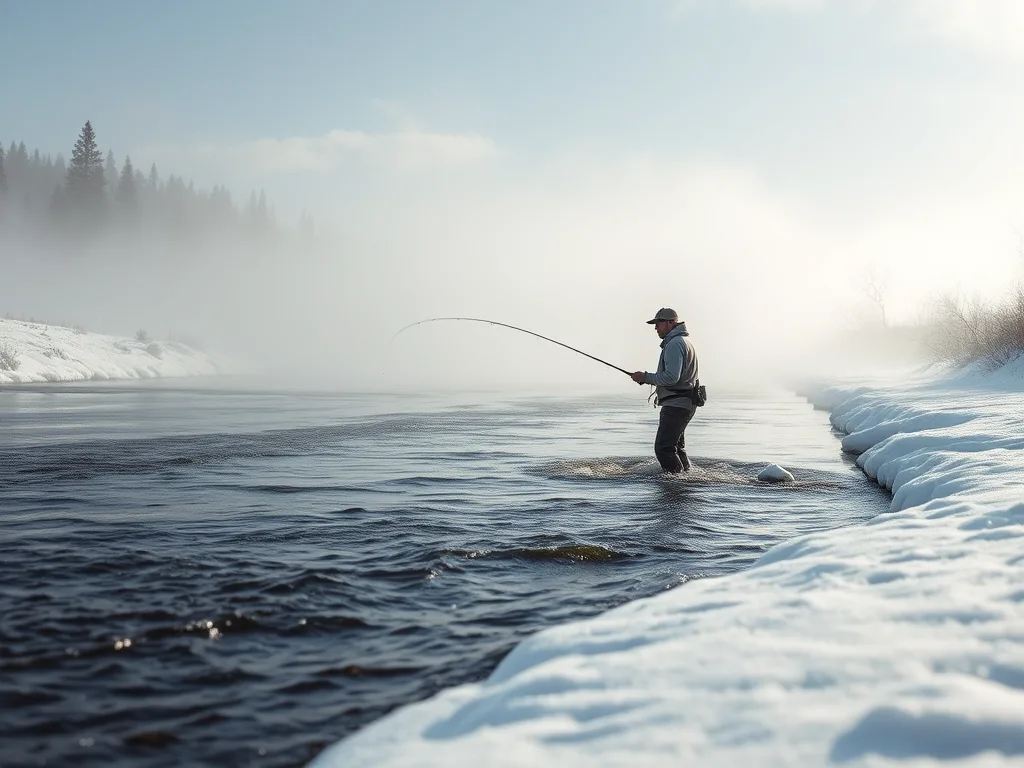
According to a recent fishing report for the Bighorn River by Fly Fish Food, winter tailwater fishing is still going strong, with the most consistent success coming well below the surface. Cold water has trout holding deep and moving slowly, so low-energy, subsurface tactics are the name of the game right now. Stable releases below Boysen/Afterbay mean clear water, defined seams, and good visibility, while winter temps (mid-30s to low-40s °F) keep fish glued to troughs, slots, and deep tails. Rainbows and browns are active but selective—stealth, depth, and patience matter.
Current Conditions & What’s Working
- Best tactics: deep nymphing (Euro/tight-line, indicator), drop-shot rigs, slow streamer presentations
- Flows & clarity: stable tailwater releases, clear water, well-defined seams
- Water temps: mid-30s to low-40s °F — fish are deep and conserving energy
- Weather & access: cold mornings, occasional mild afternoons; wading possible with caution (ice/hypothermia risk); boats/rafts great for deep seam access
- Target species: rainbows & browns, with larger fish sliding into troughs and tailouts
Hatches, Flies & Cold-Water Tips
- Primary food: midges (#18–24) all day; BWOs (#18–22) on milder, overcast afternoons
- Also important: sowbugs/scuds (#10–16), leeches/annelids for bigger fish
- Go-to approach: prioritize depth and drag-free drifts; tungsten/jig nymphs shine
- Nymphing: anchor with a heavier jig, trail a small midge or PT 12–30″ below
- Streamers: slow strips with long pauses in deep tails, undercut banks, boulders
- Rule of thumb: no action? Go deeper, slower, or smaller
- Safety reminder: studded boots, flotation, dry layers, and a partner—winter mistakes get serious fast
In short: get it down, slow it way down, and fish smart. Winter trout will eat—but only if you’re speaking their language.
Montana's outdoor week, in your inbox at 7am Friday.