
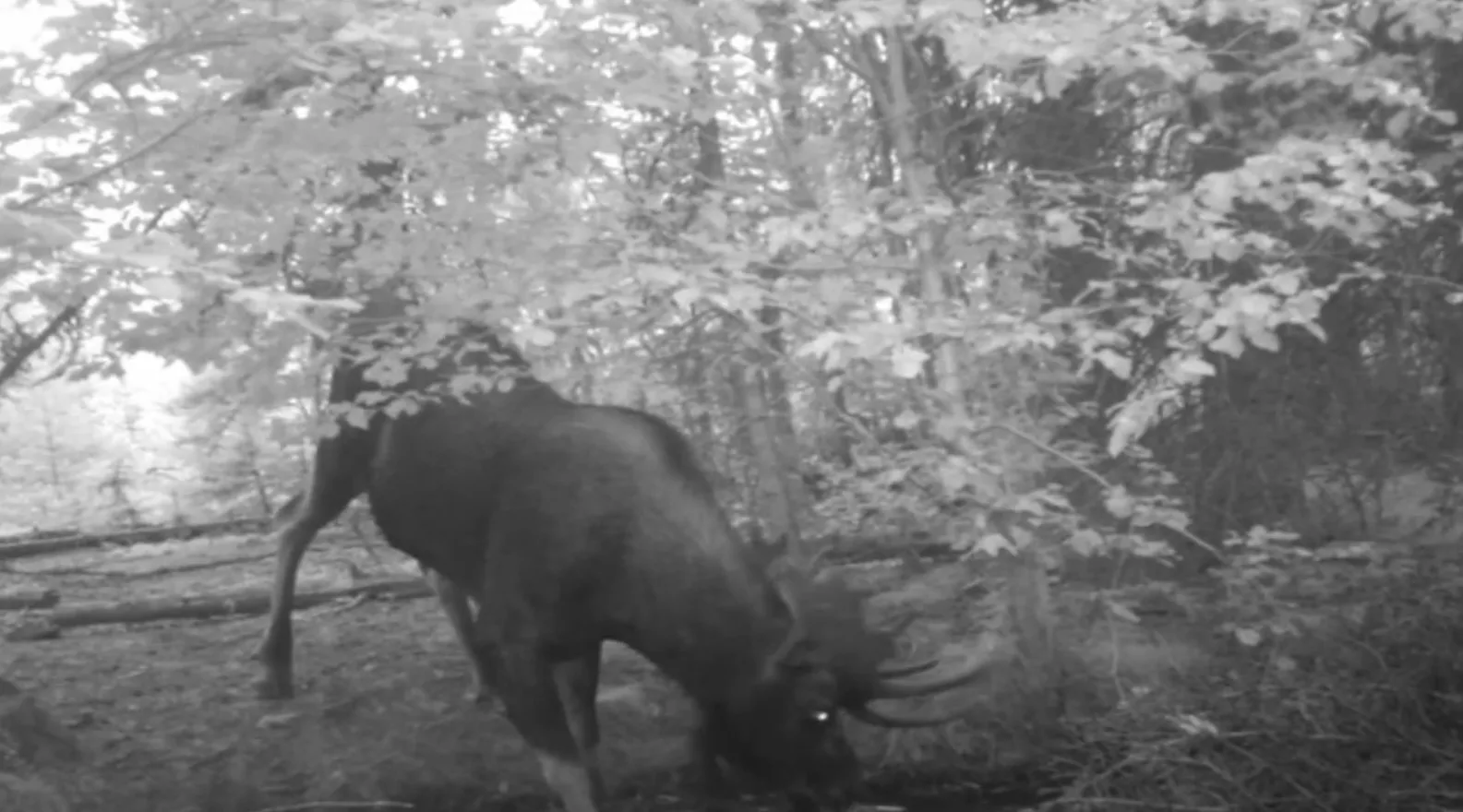
A year’s worth of backcountry trail cam footage from Montana doesn’t lie. The crew at Diaries of a Trailcam kept cameras rolling through every season — shoulder months, deep winter, the full grind of rut — and what they compiled will have you pulling up onX and circling units before the video’s even done playing.
Montana’s size is both the gift and the problem. Over 30 million acres of public land — BLM ground stretching across the eastern prairies, deep Forest Service wilderness in the Bitterroot and the Bob Marshall — gives animals enough room to disappear completely. A whitetail buck in the Missouri Breaks is working entirely different terrain logic than a bull elk bedding in the Scapegoat Wilderness. Mule deer in the Breaks and Judith Basin use rimrock and coulees as travel corridors in ways that take multiple seasons to start understanding. That’s exactly why a dedicated, year-round camera effort like this one is worth your two hours. Most of us pull our cameras after archery season. These guys kept rolling and captured behavior that the majority of Montana hunters never see firsthand.
What Year-Round Footage Actually Teaches You
There’s a real difference between running cameras during season and running them all twelve months. Summer velvet footage tells you where bulls are establishing home range before pressure changes everything. Early October clips show transition behavior — how a single cold snap pushes animals off high elevation faster than any forecast predicts. Late November footage, after the rut’s burned itself out, shows you where bucks go to recover and where they’ll hold until the season closes. All of that compressed into a single watch is genuine scouting intel, not just entertainment.
For elk hunters applying for limited-entry tags in districts like HD 680 out on the Sun River or HD 150 in the Elkhorns, understanding how bulls use terrain across seasons matters as much as knowing your draw odds. Montana Fish, Wildlife & Parks manages game across more than 300 hunting districts with varying season structures, and the behavioral patterns in footage like this — how elk funnel through saddles, how mule deer stage on south-facing slopes before drifting to winter range — repeat themselves across the state’s geography. Honestly, if you’re burning vacation days chasing elk in country you’ve never scouted, this kind of footage is the cheapest education you’ll find.
Practical Takeaways for Your Own Camera Setup
Watching a well-executed trail cam operation is also a reminder of what most of us are doing wrong with our own gear. Water sources in July and August are your best early investment — in a dry Montana summer, isolated springs and creek crossings in the Crazy Mountains or along the Rocky Mountain Front will concentrate animals better than almost any other setup. Don’t pull your cameras after archery season either. Some of the most useful footage comes out of November and December, when bucks and bulls are done rutting and locking into winter patterns. That’s the data that shapes where you focus next fall.
Mineral sites are legal in Montana for scouting purposes, unlike in some neighboring states, but placement still matters. Cameras over minerals in August can give you a solid inventory of what’s living in a drainage before you ever set boot in it during season. Beyond that, run cameras on travel routes — not just feed or water. Pinch points between drainages, ridge saddles, and creek crossings on public land in places like the Gallatin or Kootenai National Forests will capture animals that never show up at a static location. In my experience, the camera you put at a water hole gets you a photo count. The one you put in a saddle between two drainages gets you information.
- Best early-season investment: Water sources — isolated springs and creek crossings in dry years, especially in ranges like the Crazies or along the Front.
- Best late-season investment: Travel corridors — saddles, ridge pinch points, and creek crossings that connect summer and winter range.
A Reminder of What We’re Working With
Beyond the tactical value, footage like this is a gut-check reminder of how good we have it here. Trophy-class bulls in velvet, mule deer bucks slipping through rimrock at last light, whitetails ghosting along river bottoms in the Yellowstone Valley — this is Montana wildlife doing exactly what it’s built to do, in country that demands everything from them. We’re lucky to hunt it. Don’t take that lightly.
Hit play, clear your afternoon, then go dig out your onX maps. Spring green-up comes faster than you think, and the best camera locations on public land fill up with pressure early. Get yours in first.
Montana's outdoor week, in your inbox at 7am Friday.