
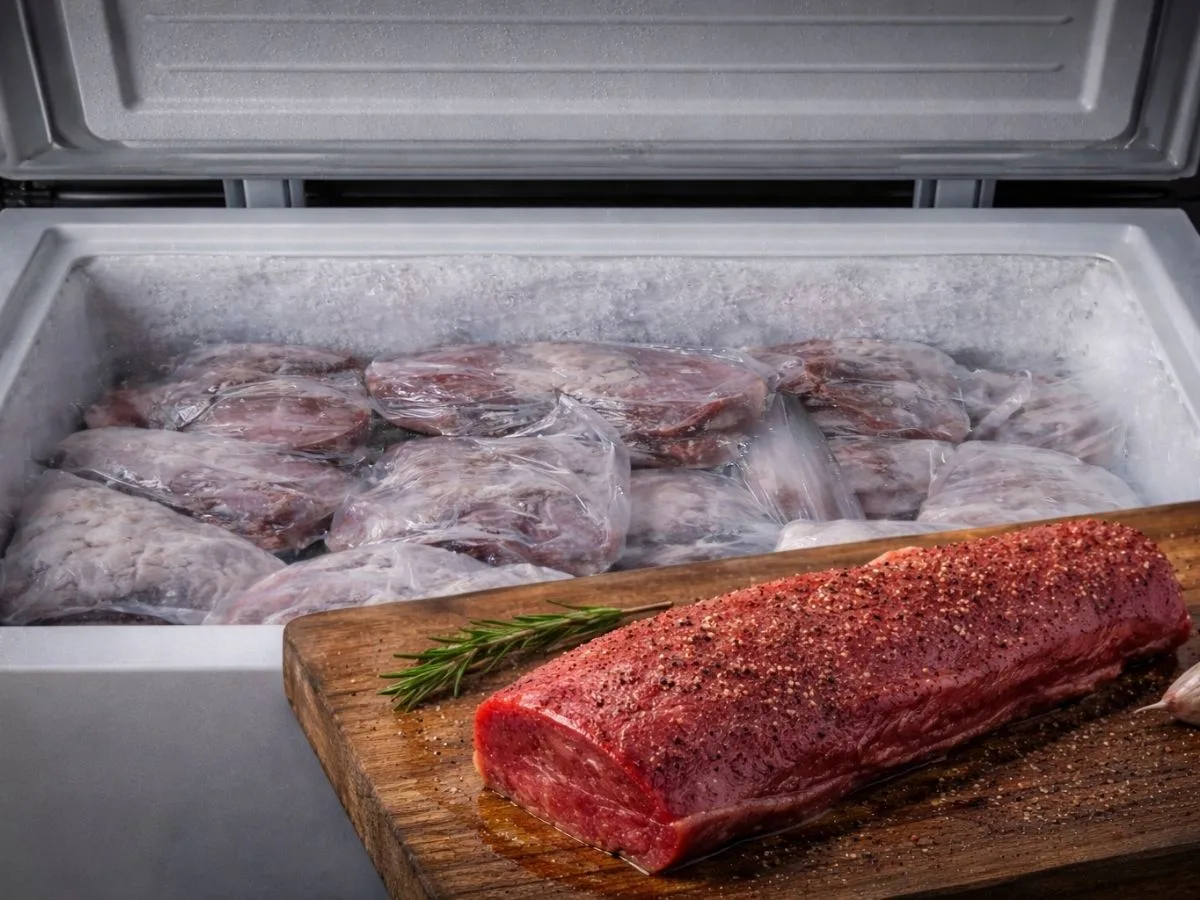
If you still have an elk tenderloin buried at the bottom of your shop freezer, stop what you’re doing. That cut has been waiting since the fall, and spring isn’t far off.
Hunters across Montana — from the Bitterroot Valley to the Bull Mountains east of Billings — are digging through their freezers right now, pulling out whatever premium cuts survived the winter. The tenderloin is the one you don’t want to find in June with freezer burn on it. That’s a bad day. Don’t let it happen.
Elk tenderloin is arguably the finest piece of meat that comes off any big game animal in the Northern Rockies. It’s tucked up tight against the inside of the spine, one per side, and on a mature bull taken in the high country west of Missoula or out in the Missouri Breaks, it might run two pounds per side. It never sees hard work. Doesn’t carry stress. That’s exactly why it’s so tender — and exactly why it punishes you fast if you’re not paying attention at the stove.
Start Before You Even Strike a Match
Good cooking starts in the field, as we know. If you punched your tag last season up in the Bob or whatever mountains and handled that carcass right — kept it cool, aged it properly for 10 to 14 days in the 34–38°F sweet spot — your tenderloin already has a head start. Dry aging tightens up flavor and breaks down muscle fibers in a way no marinade can replicate. No shortcut gets you there.
If your tenderloin came out of the freezer this morning, give it a full 24 hours to thaw slowly in the refrigerator. Don’t rush it under cold running water. Once it’s thawed, pull it out and let it rest on the counter for 30–45 minutes before it ever sees heat. Cold meat hitting a hot pan is one of the most common reasons hunters end up with an overcooked exterior and a cold center — and elk is lean, so there’s no fat buffer buying you extra time.
Pat it completely dry with paper towels. Season generously with kosher salt and cracked black pepper. If you want to add anything else, keep it simple: a little garlic powder, maybe some fresh rosemary if you’ve got it on hand. Honestly, this meat doesn’t need a complicated rub or a sauce designed to hide something. It really only needs respect and a hot pan.
The Cast Iron Sear: Simple, Reliable, Montana Classic
Ask any outfitter cook who’s fed elk hunters out of a wall tent camp near Augusta or Lincoln — they’ll all tell you the same thing. A ripping-hot cast iron skillet is the workhorse method for tenderloin. Get your pan screaming hot over high heat. Add a high smoke-point fat: refined avocado oil, beef tallow, or clarified butter. When it shimmers and just starts to smoke, lay that tenderloin in and leave it alone.
Sear hard on the first side for 2 to 3 minutes. Don’t touch it. You’re building a dark, caramelized crust, and you can’t rush that. Rotate and sear all sides. Then add a couple tablespoons of butter, a smashed garlic clove, and a sprig of thyme to the pan, tilt it slightly, and baste the tenderloin continuously with that foaming butter for another 60–90 seconds. Pull it when an instant-read thermometer hits 125°F for a medium-rare finish. Tent it loosely with foil and rest it at least 8 minutes — the internal temp will climb to 130–133°F on its own.
Target internal temp: 125–130°F pull temp. No higher. Elk is leaner than beef and dries out fast above 145°F. Medium-rare is the move. Full stop.
Reverse Sear: The Method for a Thicker Tenderloin
If you’ve got a thicker tenderloin — or you’re cooking for a crowd and want more control over the outcome — the reverse sear is worth the extra time. In my experience, it’s the most forgiving method for a big cut, and it’s gaining real traction with Montana’s field-to-table crowd for good reason. You get an even cook edge-to-edge before the final sear ever happens, which means no grey ring of overcooked meat running around the outside.
Preheat your oven to 250°F, season the tenderloin, and place it on a wire rack over a sheet pan. Roast it slowly until the internal temp reaches 115°F — usually 25–40 minutes depending on thickness. Pull it from the oven, rest it 5 minutes while your cast iron gets nuclear-hot, then sear on all sides for 60–90 seconds per side to build the crust. Rest again for 5–8 minutes and serve immediately.
For a tenderloin off a 700-pound bull that wintered in the Crazy Mountains, that edge-to-edge pink is worth every bit of the patience it takes to get there.
What to Serve It With
Keep the sides simple. Roasted root vegetables, an easy pan sauce built from the drippings and maybe even a splash of red wine, or just a compound butter — softened butter with fresh herbs pressed into it — melted over the top right before you serve. That’s all this needs. The animal did the hard work already. Your job is to not get in the way of that.
Spring is close. The last of your freezer elk is either going to become the dinner your family talks about until October tags go on sale, or it’s going to become a forgettable weeknight meal you cooked distracted with a cold pan. Pull it out, give it the heat it deserves, and eat well. Next season’s permit applications are already here with the deadline approaching!
Montana's outdoor week, in your inbox at 7am Friday.