
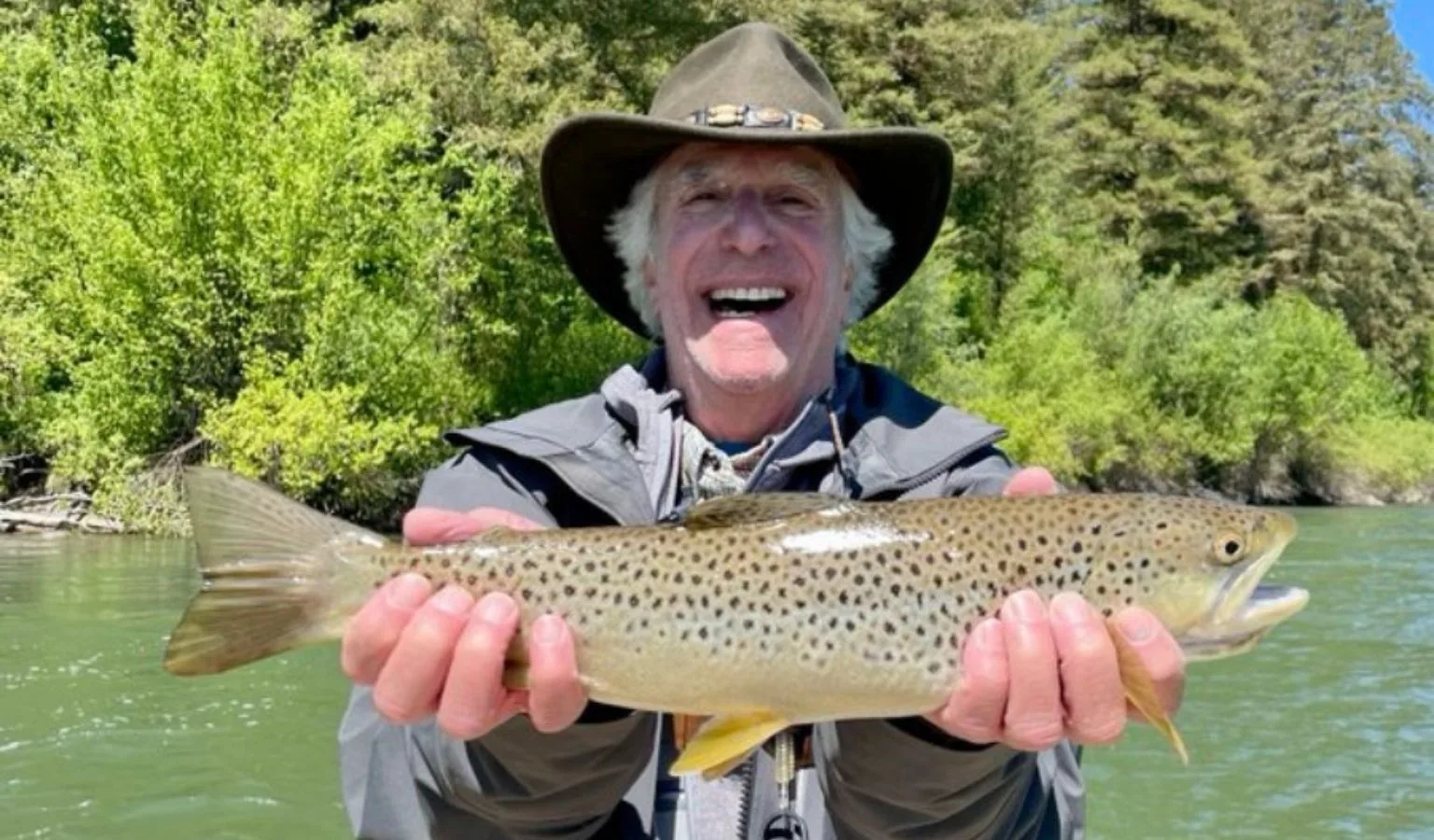
So, picture this…you’re standing knee-deep in a crisp, rushing Idaho river, hoping to land a nice rainbow trout. You hook one, bring it in, and as you’re about to reach for your camera, you notice something familiar. Is that… wait. Is that the Fonz?
Yep, Arthur “Fonzie” Fonzarelli himself—leather jacket swapped for waders—is standing in the water with a fly rod. But he’s not doing the “Ayyyy!” thing. He’s doing something way more wholesome.
According to a cool little piece from the folks over at Field & Stream, Henry Winkler has become a straight-up legend in the fly fishing world. He doesn’t just fish; he has a whole following happening because of fishing. When he catches a trout, he doesn’t just toss it back. He holds it up for a quick snap, plants a gentle kiss right on its little fishy forehead, whispers a sincere “thank you,” and sends it on its way back into the current.
Honestly, that is legendary behavior.
Winkler has been hitting the rivers in Montana and Idaho for decades, and he’s been super open about why he loves it. He calls fly fishing a “washing machine for the brain.” Which, honestly, makes total sense—if you’ve ever tried to keep track of a fly line, you know it’s basically impossible to stress about your email inbox at the same time. It’s all about slowing down and being right there in the moment.
Why Fly Fishing Hits Different
There’s a reason people describe fly fishing the way Winkler does. Unlike a lot of other forms of fishing, fly fishing demands your full and undivided attention. You’re reading the water, mending your line, matching the hatch, watching your drift—there is genuinely no mental bandwidth left over for whatever was stressing you out before you pulled on your waders. It’s active meditation, basically. The river does the rest.
The cast itself is part of the whole thing. A good fly cast is rhythmic and almost hypnotic to watch—the line rolling out in a tight loop, the fly settling softly on the surface like it just hatched naturally. Getting there takes practice, but even the process of learning it has a way of quieting the noise. Ask anyone who’s stood in a Montana river on a cool June morning with a PMD hatch coming off and a pod of rising fish ahead of them. They’ll tell you the same thing Winkler is telling you.
Montana and Idaho: The Rivers That Keep Calling Him Back
It’s not hard to understand why Winkler keeps returning to the Northern Rockies. Montana and Idaho together represent some of the finest trout water in the world, and the variety alone is enough to keep any serious angler busy for a lifetime.
In Montana, rivers like the Madison, the Gallatin, the Bitterroot, the Clark Fork, the Blackfoot, and the Missouri each fish differently and each offer something unique depending on the season. The Missouri below Holter Dam is a tailwater fishery that fishes well even into colder months. The Madison is a freestone river famous for its big browns and rainbows and its demanding currents. The Blackfoot—made famous to many by Norman Maclean’s A River Runs Through It—carries a certain mythology that draws anglers from everywhere.
Idaho’s renowned rivers, including the South Fork of the Snake and the Henry’s Fork, are just across the border and frequently come up in the same breath as Montana’s best. The Henry’s Fork in particular is considered one of the most technically challenging dry fly fisheries in the country, which makes it catnip for experienced anglers who want to test their skills. If Winkler’s been putting in decades on these kinds of rivers, he’s earned every fish he’s kissed.
Catch and Release: More Than a Ritual
The kiss-on-the-forehead move is charming, obviously, but it points to something more meaningful about how Winkler approaches fishing. Catch and release isn’t just a regulation in many of these waters—it’s a philosophy shared by serious anglers who understand that the resource has to be protected if future generations are going to have anything worth chasing.
Proper catch-and-release technique actually matters a lot. A few things worth keeping in mind any time you’re releasing a fish, whether it’s a cutthroat on the Blackfoot or a rainbow on the Henry’s Fork:
- Keep the fish wet. The less time a trout spends out of the water, the better its chances of surviving the release. Thirty seconds or less is a good general target for any photo you’re going to take.
- Wet your hands before handling. Dry hands strip the protective slime coat that keeps fish healthy.
- Support the fish horizontally. Holding a fish vertically by the jaw puts stress on its internal organs and spine.
- Let it recover. Hold the fish gently in the current facing upstream until it kicks away on its own. Don’t just drop it in and walk away.
- Use barbless hooks when possible. They cause less tissue damage and make for a faster, cleaner release—which is better for the fish and, honestly, easier for you too.
Whether or not you add a forehead kiss to the process is entirely up to you, but the rest of that list is non-negotiable if you care about these fisheries sticking around.

Project Healing Waters: Where the Sport Does Real Good
Beyond just doing it for his own peace of mind, he’s a huge advocate for Project Healing Waters Fly Fishing, a group that uses the sport to help out disabled veterans and active-duty military folks.
Project Healing Waters has chapters across the country, including in Montana, and the work they do is genuinely remarkable. The program provides fly fishing instruction, rod building, fly tying, and—most importantly—time on the water for veterans and active-duty service members dealing with physical and emotional wounds. The therapeutic power of standing in a cold river, focused entirely on the task in front of you, is something that’s hard to quantify but easy to see in the people who experience it.
Winkler lending his name and energy to this cause makes perfect sense when you understand what fly fishing has meant to him personally. He’s essentially saying: this thing that has brought me clarity and peace and joy—I want other people to have access to it too, especially the ones who’ve sacrificed the most. That’s a pretty hard thing to argue with.
If you want to support Project Healing Waters or get involved locally, their website has resources for volunteers, donors, and veterans looking to connect with a program near them.
You Don’t Have to Be Famous to Find Your River
Here’s the thing about what Henry Winkler represents in the fly fishing world: he’s not famous in fishing circles because he’s the Fonz. He’s respected because he shows up, he puts in the time, he treats the fish with care, and he uses his platform to give back to the sport and the people who need it most. That’s a template anyone can follow.
Montana has an incredible network of public access points, blue-ribbon fisheries, and rivers that are genuinely world-class. You don’t need to travel to New Zealand or Patagonia to find the kind of water that makes you understand why someone would call fly fishing a washing machine for the brain. It’s already here. It’s always been here.
If you’re newer to fly fishing and want to get started, a guided float or wade trip with a local outfitter is one of the best investments you can make—not just because you’ll catch more fish, but because a good guide will teach you to read water and understand the river in ways that will serve you for the rest of your fishing life. Always check current Montana FWP regulations for the specific water you’re fishing, since rules around gear, seasons, and catch limits can vary significantly from river to river.
So, somewhere out there in the wild, there are trout swimming around that have been personally smooched by Hollywood royalty. Whether you’re a fan of Happy Days or just a fan of catching fish, you’ve gotta respect the man’s game. He’s found his zen, he’s doing good work, and he’s out there keeping it cool one kiss at a time. Ayyyy.
Feature photo via Field and Stream
Montana's outdoor week, in your inbox at 7am Friday.