
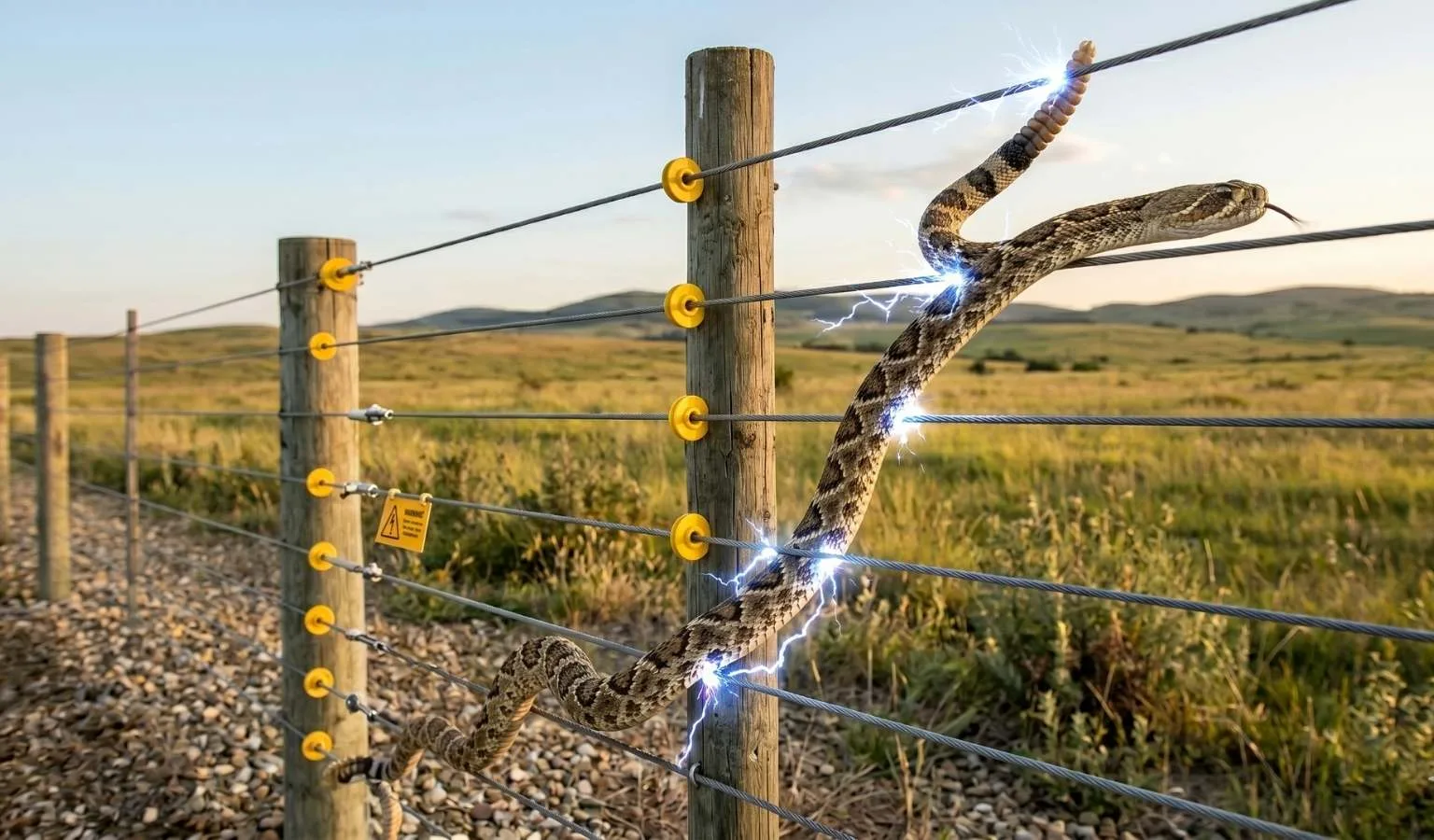
There is a misconception that snakes possess a magical bypass card when it comes to electric fences. The myth goes something like this: because they slide along the ground and don’t stand on two or four legs, they won’t complete an electrical circuit.
Well, the internet is full of viral reality checks proving that physics doesn’t care about your leg count. Snakes absolutely can and do get shocked by electric fencing.
Here is a quick look at why the “no-legs-no-shock” myth is completely busted, along with a few interesting truths.
To understand why a snake gets zapped, you have to look at how an electric fence works. The entire system relies on a power energizer sending a high-voltage pulse down a bare wire about once every second. Another terminal connects to a grounding rod driven deep into the earth, as detailed by Wikipedia’s breakdown of electric fencing.
When a standard livestock animal touches the wire, its feet are firmly planted on the ground, creating a bridge that completes the circuit. Boom — shock delivered.
For a snake, the principle is the same:
- The Bridge Effect: As a snake attempts to slide over or squeeze past a live wire, part of its body touches the bare, pulsing wire while another part of its long body is pressed firmly against the damp earth or a grounded metal post.
- The Circuit is Closed: The moment the snake touches both simultaneously, its body becomes the conductor.
A Few Facts
- Industrial Defense Systems Use It: Electric fences are so effective against reptiles that major utility companies use specialized versions to protect high-voltage power substations. Companies like TransGard Solutions manufacture specialized “premium snake panels” that deliver a humane but highly effective electric shock to prevent climbing snakes from causing catastrophic power outages.
- Standard Fences Aren’t Foolproof: While snakes can get shocked, standard cattle or horse fencing is rarely low enough to catch them. According to fencing experts at ProFence LLC, snakes easily slide right under standard high wires without ever hitting the circuit, meaning a fence has to be specifically designed close to the ground to act as a reliable deterrent.
- Instinct Works Against Them: When a mammal gets shocked, it typically backs away. Real-world observations show that when a snake gets zapped midway down its body, its natural flight instinct often triggers it to bolt forward instead of backward, sometimes leading it to take a second pulse before it figures out which way is clear.
So, while snakes are masters of stealth, they can’t outsmart basic electrical currents. If they touch the hot wire while grounded to mother earth, they are in for a very rude, very vibrant awakening!
To see a practical demonstration of how these systems are constructed to handle pests, you can check out this Electric Fence Setup Guide, which walks through the quick installation and humane deterrence mechanisms used for various property invaders.
Montana's outdoor week, in your inbox at 7am Friday.