
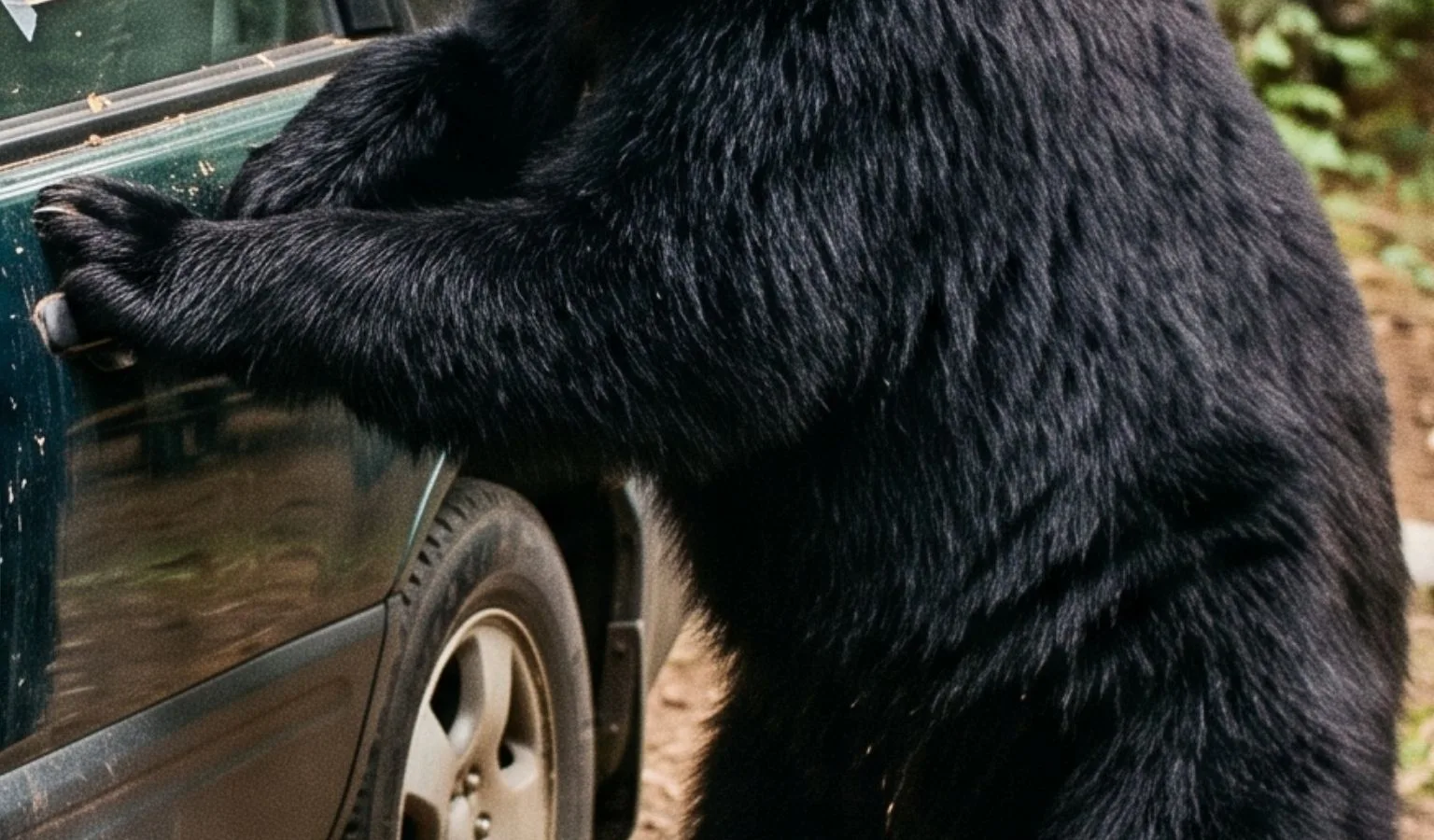
Why Bears Are Now Better at Opening Cars Than You Are
When taking a trip to Gatlinburg, Tennessee, the itinerary usually consists of scenic mountain views, pancake pantries, and maybe a gentle hike through the Great Smoky Mountains. What isn’t on the itinerary? Hosting an impromptu, non-paying carpooling service for local wildlife.
In a video captured by Mike McDermott and Wendy Bush, a routine stroll out to their parked vehicle turned into a wilderness negotiation. Sitting comfortably inside the car was a mother black bear accompanied by two of her cubs. The mama bear treated the family’s back seat like a drive-thru pantry, snagged a few snacks, and only cleared out after the father stepped in, raising a racket to scare them off.
Fortunately, as the video caption notes: “No bears, cars, children, or husbands were harmed during the making of this video.” But it raises a serious question for anyone visiting bear country: How are they opening doors so easily?
Fast Facts: Bears by the Numbers
- Dense Population: An estimated 1,900 black bears reside in Great Smoky Mountains National Park—a density of roughly two bears per square mile.
- Frequent Encounters: Over the last decade, an average of 339 negative human-bear encounters have been reported annually in the Smokies alone.
- Superhuman Noses: A black bear’s sense of smell is approximately 7 times stronger than a bloodhound’s, allowing them to detect food remnants hidden inside cars from long distances.
- Claws Built for Levers: Black bears possess short, curved claws (around 2 inches long) that naturally hook under standard lever-style car door handles with ease.
The “Smokies Effect”: How Bears Got So Smart
Black bears possess sharp spatial memory and highly developed problem-solving skills. In regions with heavy human tourism, black bears undergo a process known to wildlife biologists as operant conditioning:
- Lever Handles vs. Knobs: Modern vehicles frequently use horizontal lever door handles rather than flush pull tabs. To a 200-pound bear using its paws for climbing, hooking a claw onto a lever handle and pulling down is an intuitive mechanical motion.
- Associative Learning: Bears don’t know what a car is, but they quickly learn that these metal boxes hold french fries, granola bars, and half-eaten sandwiches. One successful attempt leads to a high-calorie reward, teaching the bear to systematically test handles.
- Passing Knowledge Down: When a sow learns how to raid vehicles, her cubs watch and replicate the behavior. You aren’t just dealing with one clever bear—you are dealing with generations of automotive-savvy wildlife.
How to Avoid Hosting a Bear in Your Backseat
A black bear entering a car isn’t just an inconvenience or a risk to your upholstery—it’s dangerous for the bear. Food-conditioned bears lose their natural fear of humans, which frequently leads to property damage and forces wildlife officials to euthanize them.
When visiting bear habitat, keep these safety precautions in mind:
- Click the Lock: Unlocked doors are an open invitation. Bears cannot pick locks (yet), so engaging the door lock is the single easiest defense.
- Purge the Odors: It isn’t just leftover takeout that attracts them—wrappers, lip balm, air fresheners, scented hand sanitizer, and empty soda cans all emit odors that entice a curious nose.
- Make Yourself Heard: If you spot a bear near your vehicle from a safe distance, do what the dad in the video did: make loud, unnatural noises. Clap, shout, or bang objects together—black bears are naturally risk-averse and will usually flee.
Locks are cheap, bodywork is expensive, and keeping wild animals wild is priceless. Next time you park near the mountains, make sure your key fob gets the final say.
Resources & References
- National Park Service: Black Bears in the Great Smoky Mountains
- BearWise® Program: Official Bear Safety Basics & Coexistence Rules