
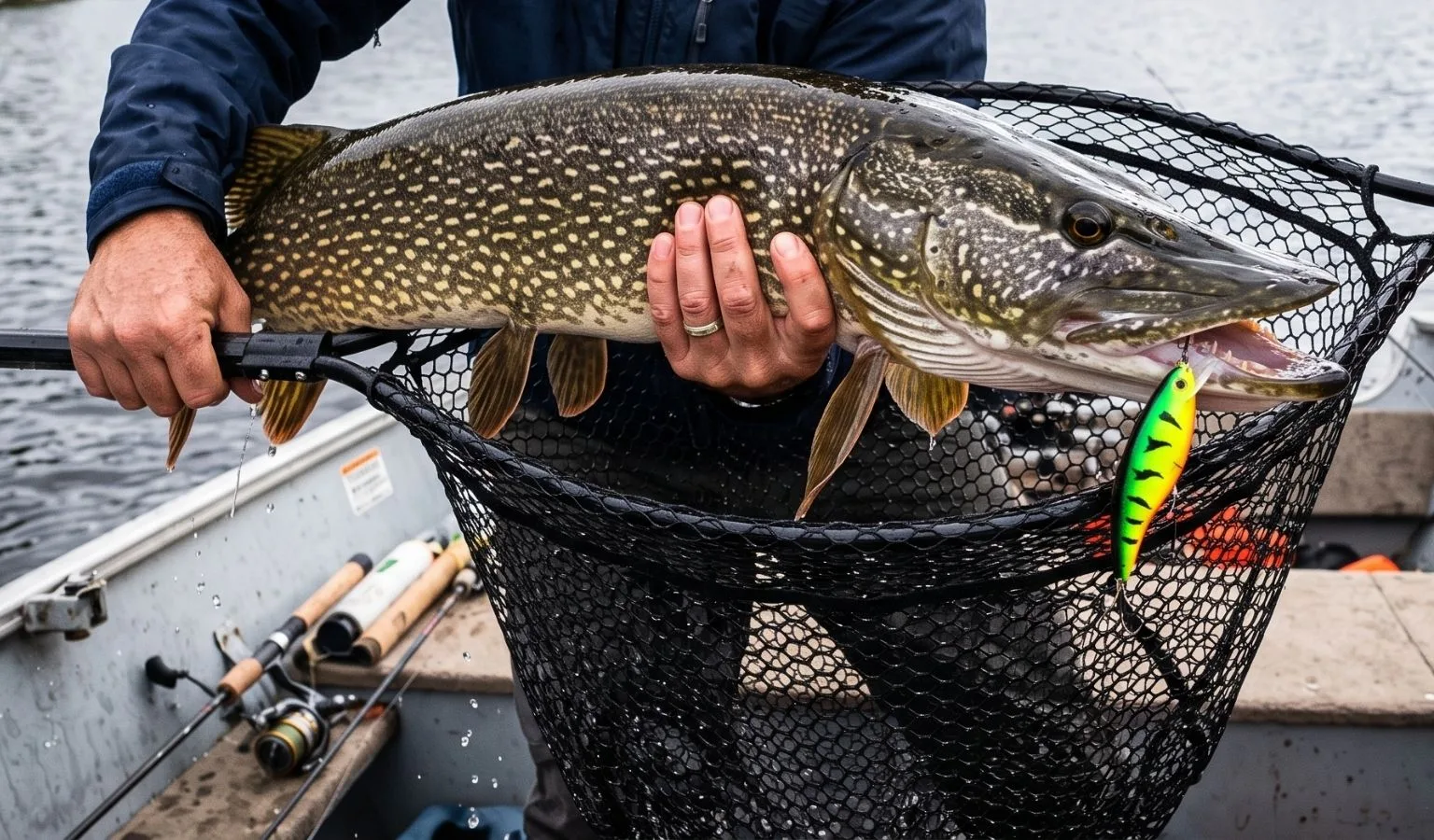
We all know pike and muskies are tanks. With their sharp teeth and aggressive attitudes, they seem virtually indestructible. But according to Freelance Writer Kristine Fischer, in an article published via Outdoor Life, these freshwater bad boys are actually total snowflakes when it comes to the heat.
Fischer takes us back to July 2017 on Nebraska’s Lake Wanahoo. While guiding a group of kayak anglers, she didn’t find a hotspot—she found a graveyard. Bloated, 40-inch trophy pike were floating belly-up by the dozens. The culprit was the main lake had cranked up to a whopping 90 degrees, forcing the fish to cram into a slightly cooler creek. Combined with anglers accidentally hooking them on light tackle, the stress was simply too much. Within a few years, the lake’s trophy pike fishery completely collapsed.
The science behind it is pretty simple: the Esox genus needs cold water to survive. Fischer points out that multiple studies—from West Virginia University to Muskies Canada—all agree on one golden rule: when the water temperature hits 75 degrees or higher, pack up the muskie gear.
Even if a fish looks fine and swims away, Fischer warns of “delayed mortality.” In warm water, oxygen levels drop, and a long, exhausting fight leaves the fish too depleted to recover. They might look like they’re swimming off to fight another day, but many end up dying 24 to 48 hours later.
So, what should you do if you accidentally hook into one of these fragile giants during a summer bass or walleye trip? Fischer lays out a few clever ways to save the day:
- Drop the ego, skip the photo: Keep the fish in the water. Avoid pulling it into the boat for measurements or heavy handling.
- Wrap it up fast: Don’t “play” the fish. Reel it in as quickly as possible so it doesn’t burn through its final oxygen reserves.
- Cut the cord: If it’s hooked on light tackle, just snip the line close to the bait and let it go.
- Nurse it back: Hold the fish right-side up by the tail until it swims off under its own power. And whatever you do, don’t pump it back and forth—their gills don’t work like that!
Ultimately, Fischer reminds anglers that protecting the fishery means knowing when to give these predators a break. If you see someone target-casting for muskies in the dead of summer, politely tell them to cool it—or just tell them the tragic tale of Lake Wanahoo.
Montana's outdoor week, in your inbox at 7am Friday.