
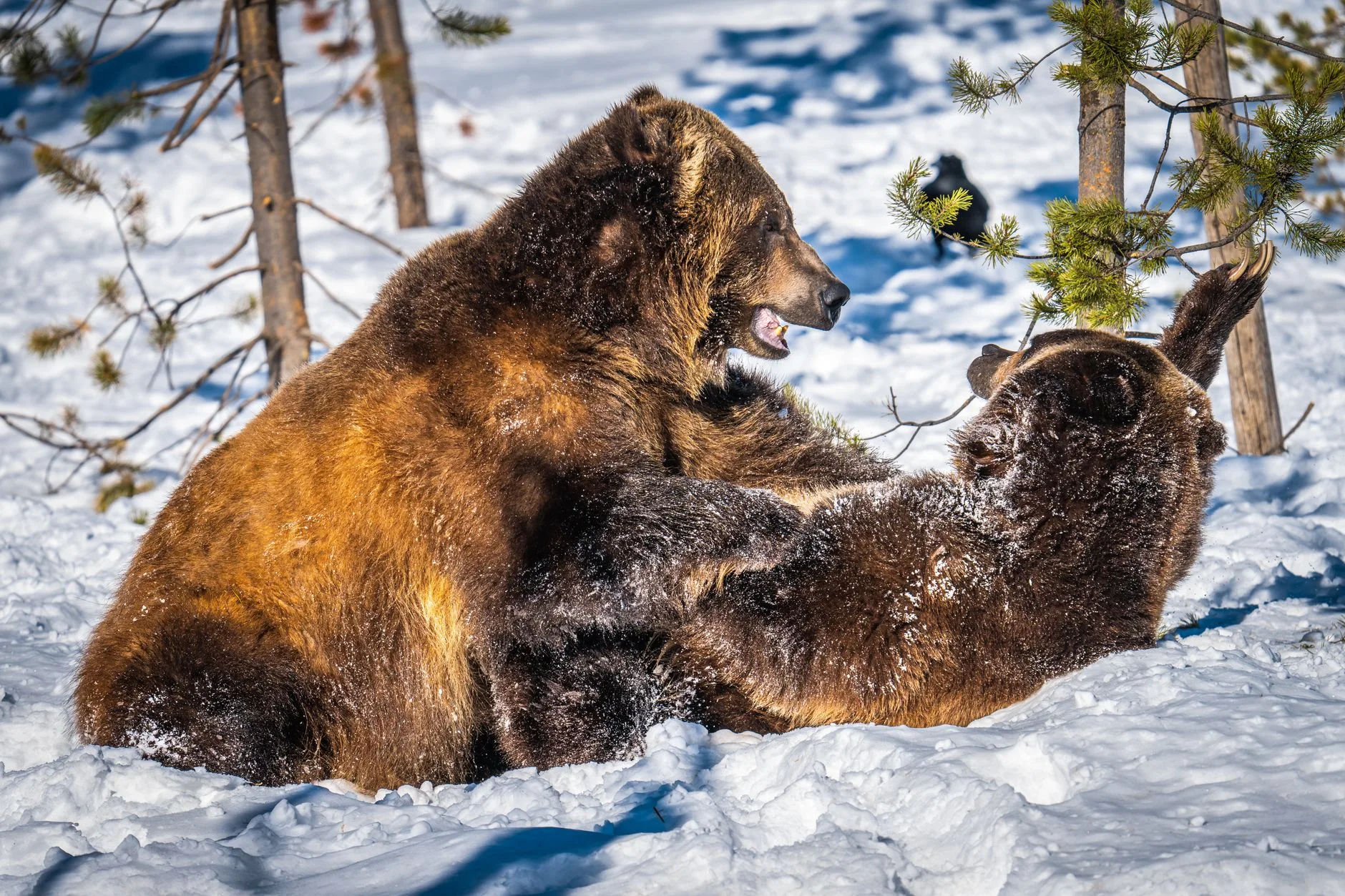
If you’ve spent any serious time in Montana’s backcountry — whether you’re packing into the Bob Marshall Wilderness, glassing the high country above Marias Pass, or just hiking Glacier’s northern reaches — you know wolverines are out there. You probably haven’t seen one. Most people never do. But this new documentary from Bravion Wild puts you right in their world, and what it captures in Glacier National Park is worth every minute of your time.
Here’s the hook: a female wolverine — maybe 25 pounds soaking wet — causes a grizzly to back off a kill. Not by fighting it. By being smarter than it. Wolverines have developed a caching strategy built entirely around Montana’s deep snowpack. They bury food in snow at specific depths and locations, essentially building a natural freezer that keeps meat fresh for weeks or months. The snow preserves the cache, masks the scent from competitors, and gives the wolverine a caloric lifeline through the brutal high-elevation winters that would drop most predators to their knees. It’s not brute strength — it’s strategy. And watching a predator this calculating operate in terrain most of us only see for a few days a year puts a whole different lens on what’s living out there year-round.
For Montana hunters and backcountry users, this matters beyond just the cool factor. Wolverines are a federally designated threatened species as of 2023, and their survival is directly tied to persistent spring snowpack — the same snowpack that determines runoff into the Flathead, the Blackfoot, and the Missouri headwaters. When wolverine biologists talk about snowpack loss, they’re not talking abstractly. They’re talking about a species whose entire food storage system depends on snow being present at specific elevations through late spring. FWP has been monitoring wolverine populations in the Glacier and Bob Marshall ecosystems for years, and the data isn’t encouraging. Fewer than 300 wolverines are estimated to live in the contiguous U.S., with Montana holding the largest share of that population.
What Bravion Wild pulls off here is rare — genuine field footage of wolverine behavior that most wildlife researchers only capture on remote cameras, if at all. It’s the kind of documentary that rewards the people who already care about these landscapes, because you’ll recognize the terrain, understand the conditions, and appreciate exactly how hard it is to film an animal that covers 15 miles a day across some of the most rugged country in North America. Give it a watch. Then the next time you’re skinning up a ridge in Glacier’s backcountry and you cut a wolverine track in the snow, you’ll know exactly what that animal was doing — and why it matters that it’s still out there doing it.
Montana's outdoor week, in your inbox at 7am Friday.