
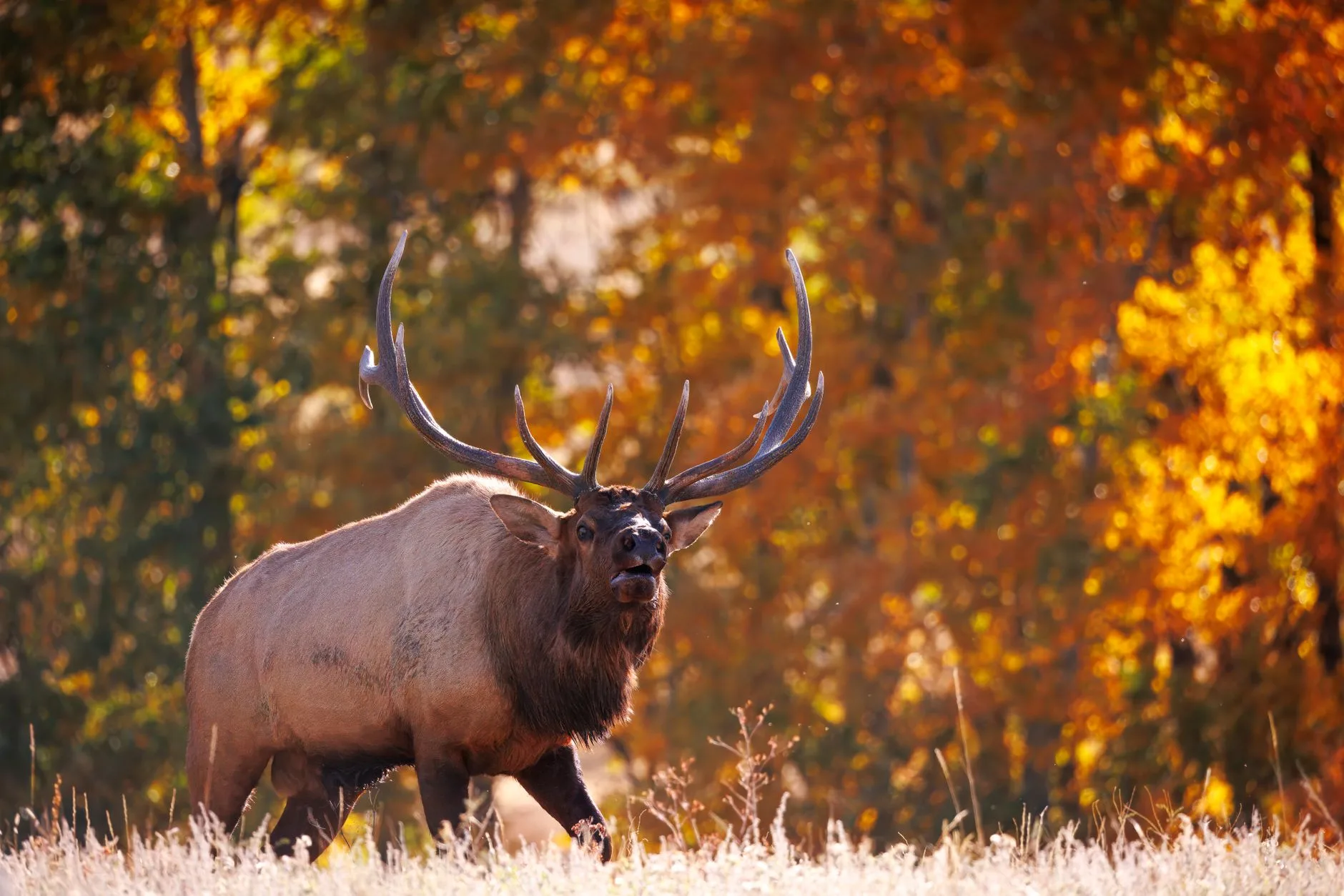
Most elk hunters blow their best chance of the year before 8 a.m. on opening weekend. They bugle too loud, too often, and from too far out — and by the time you’re reading this, the bulls in the Bob Marshall, the Bitterroot drainage, the Beartooths, and every scarred stretch of lodgepole and burned timber in between have already had a graduate-level education in what a hunter sounds like. Six-point bulls are still running cows. They’re still answering bugles. But they’re doing it on their terms now, not yours.
Why Public Land Bulls Go Quiet — And What to Do About It
Here’s the problem every Montana public land archer faces in early September: bulls that were vocal before the opener go tight-lipped the moment boot pressure increases. They haven’t stopped being interested in cows or territory. They’ve just been educated. A bull that answered three bugles on opening weekend and got a face full of hunter scent is going to be a different animal by the time you read this. He’s not call-shy forever — but he requires a different approach than the aggressive sequences that light up YouTube videos filmed on private ranches in New Mexico.
The first adjustment is to scale back your calling volume and frequency. On public land in the Bitterroot or the Missouri Breaks, blasting a full challenge bugle every five minutes is a great way to push pressured bulls in the wrong direction. A mature bull that’s been burned once will circle downwind and evaporate rather than commit. Start with soft cow chirps and mews to locate interest before you escalate anything. Let him come to you on his terms.
The Locate-Then-Commit System
One approach that consistently produces on public land is what experienced Montana bowhunters call a locate-and-commit system. You’re not trying to call a bull to you from a half mile out. You’re closing the distance first — using terrain and thermals to get inside two hundred yards — then letting him know a cow is there.
In the mornings, thermals in Montana’s mountain drainages pull uphill as the day warms. Use that. Work up the north-facing timber toward where bulls are bedding after a night of feeding in the parks below. Get above them when you can. When you hear a bull bugle or rake timber, resist the urge to bugle back immediately. Wait. Let him define his position. Then slip to within a comfortable shooting distance before you make a single sound.
At that range, a soft cow call is devastating. It sounds like a cow that wandered off his harem — not a hunter standing in the timber with a diaphragm in his mouth. A pressured bull that won’t chase a bugle a hundred yards will often walk into a soft cow call at fifty. I’ve seen it happen more times than I can count, and it never gets old.
When to Go Aggressive
Passive calling is not always the answer. There are specific situations on public land where you should throw the playbook out and get loud. If a bull is already fired up and moving away — bugling, raking, walking in the wrong direction — a hard challenge bugle combined with aggressive antler raking on a nearby tree can flip him around. You’ve got nothing to lose at that point, and his ego may do the rest.
The midday lull on warm September days is another spot where aggressive calling pays off. Hunting pressure typically drops between ten and two as hunters drift back to camp. That’s when a dominant bull, now with some peace and quiet, may answer a bugle sequence he’d flat-out ignore at first light with hunters crowding every ridge. Honestly, some of my best encounters have come between eleven and one, when everyone else was eating lunch.
Thick burned timber deserves its own mention. Places like the 2017 Lolo Complex burn areas or portions of the Kootenai give bulls confidence to approach because they can’t see far. Calling aggressively into that kind of cover can produce close, fast encounters — the kind where you’re ranging a bull through blowdowns at thirty yards before you’ve even fully processed what’s happening.
Wind, Scent, and the One Variable You Can’t Fake
No calling tactic on public land — passive or aggressive — survives a wind mistake. Montana’s mountain thermals are notoriously unpredictable in the transition hours around sunrise and sunset. Valleys that pull cool air downhill before dawn will reverse direction as the sun heats the slopes. If you don’t know when that thermal shift happens in the drainage you’re hunting, you will get winded. Period. The Elk Creek drainages off the Beartooth Front behave differently than the west-facing slopes above Darby, and no article is going to teach you what an hour of pre-hunt scouting will.
Carry a wind checker and use it constantly. When a bull goes silent after responding enthusiastically, your first assumption should be that he smelled you — not that he lost interest. Relocate before you call again.
The Mental Game on Pressured Ground
The hunters filling elk tags on Montana public land in September aren’t necessarily the best callers. They’re the most persistent and the most patient. They’re willing to sit in a cold creek bottom for three hours waiting for a bull to feed into range rather than covering ground and burning their scent across every approach route. If you ask me, patience is the single most underrated skill in elk hunting — and it’s the one most people abandon by day three.
Slow down more than feels comfortable. Make fewer calls than you think you need to. Get closer before you commit to a setup. Those three adjustments, applied consistently in the Bitterroot, the Blackfoot, or the Crazy Mountains, will put more bulls in front of you than any sequence you can run on a call.
The rut window you’re hunting right now is one of the best of the year. Don’t waste it by hunting the way everyone else is hunting. Check current season regulations and any area-specific closures with Montana FWP before you head out — then get in there and stay in there. The bulls are talking. Go listen.
Montana's outdoor week, in your inbox at 7am Friday.