
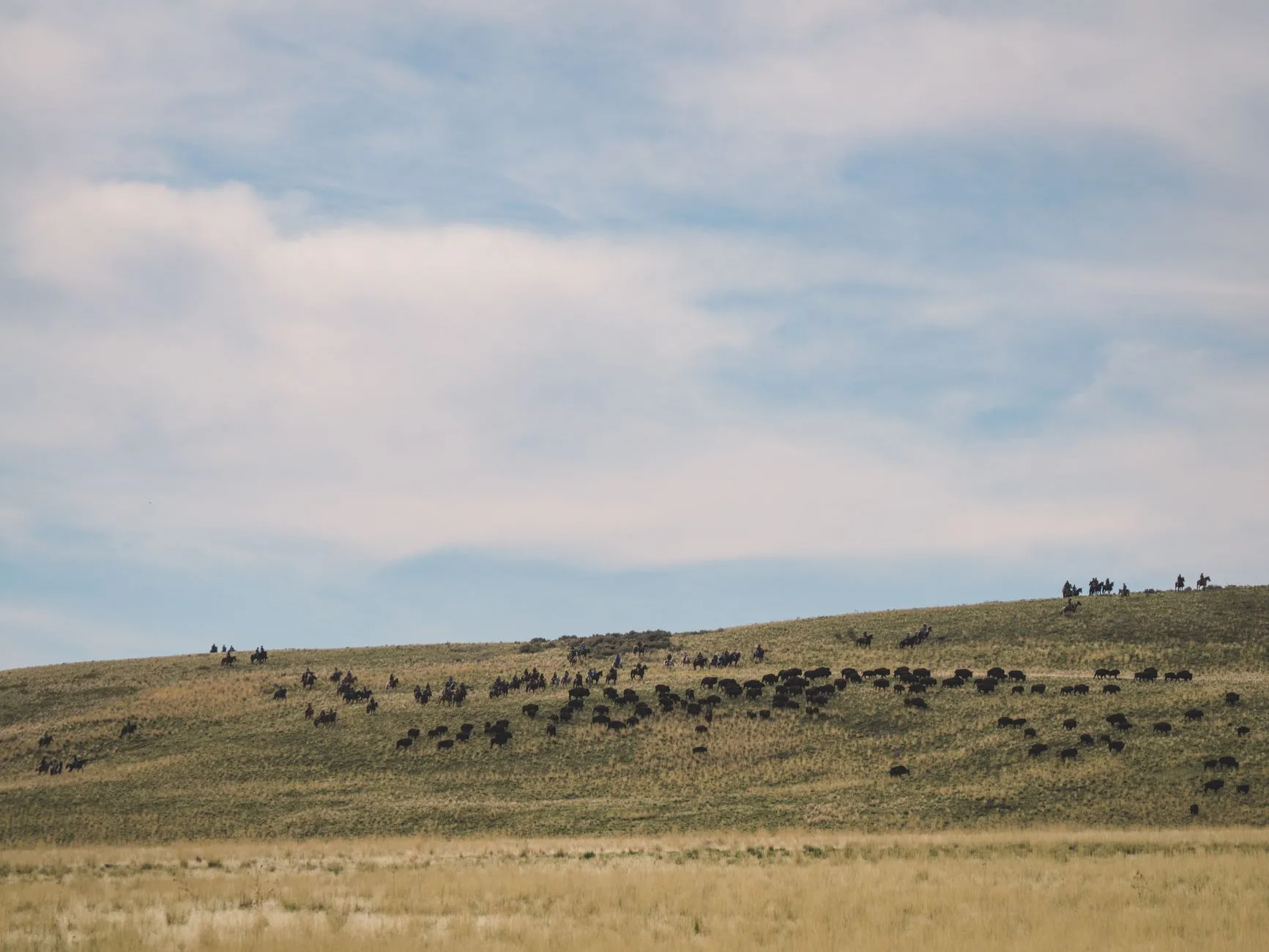
Back in 1989, when Ted Turner bought the Flying D Ranch outside Bozeman and started replacing cattle with bison, plenty of Montanans thought he’d lost his mind. Ranchers rolled their eyes. Neighbors grumbled. Fast-forward to today, and Turner’s original gamble has grown into one of the largest private bison restoration efforts on earth — roughly 45,000 animals across nearly 2 million acres spanning multiple states, with Montana sitting right at the center of it. A new short documentary from The Recovery Atlas digs into how that happened and what it means for the land, the animal, and the people who live alongside both.
For hunters and wildlife watchers in Montana, the bison question has never been simple. These aren’t the half-domesticated, fence-to-fence commercial bison you see on a hundred smaller operations. Turner’s herds — anchored at the Flying D near Gallatin Gateway and the Ladder Ranch down in New Mexico — are managed to behave as wild animals, which means they move, they graze hard, and they reshape the land around them. If you’ve ever driven through the Gallatin Valley and watched a few hundred of them push across a hillside like a slow brown wave, you understand why people are paying attention. The ecological argument for bison on the Northern Plains is as strong as it’s ever been, and this film makes that case without pulling punches.
Where it gets interesting for Montana sportsmen is the ripple effect. Wild bison management intersects directly with the ongoing battles over Yellowstone bison hazing, the state’s evolving bison hunting framework on public lands near the park, and — unavoidably — the American Prairie project and its own push to rewild the Missouri Breaks country. Montana Fish, Wildlife & Parks has been carefully expanding bison hunting opportunity in recent years, including tags in the upper Yellowstone corridor, and the larger the private conservation footprint gets, the louder those conversations become. Turner’s operation and American Prairie are different animals politically, but to a rancher in Meagher County or a hunter trying to draw a bison tag near the CMR, they’re part of the same pressure front.
Whether you think large-scale bison restoration is the best thing to happen to Montana grasslands in a century or a well-funded outsider’s experiment playing out on land that used to run cattle, this film is worth your 15 minutes. It’s put together well, it’s honest about the scale of what Turner built, and it raises questions that aren’t going away anytime soon. The bison are back — in serious numbers — and Montana is going to keep sorting out what that means for ranchers, hunters, and the landscape itself for a long time to come.
Editor’s note: Corrected a geographic description: Montana's wild bison hunting occurs on public lands near Yellowstone, not 'east of the park' (which is in Wyoming).
Montana's outdoor week, in your inbox at 7am Friday.