
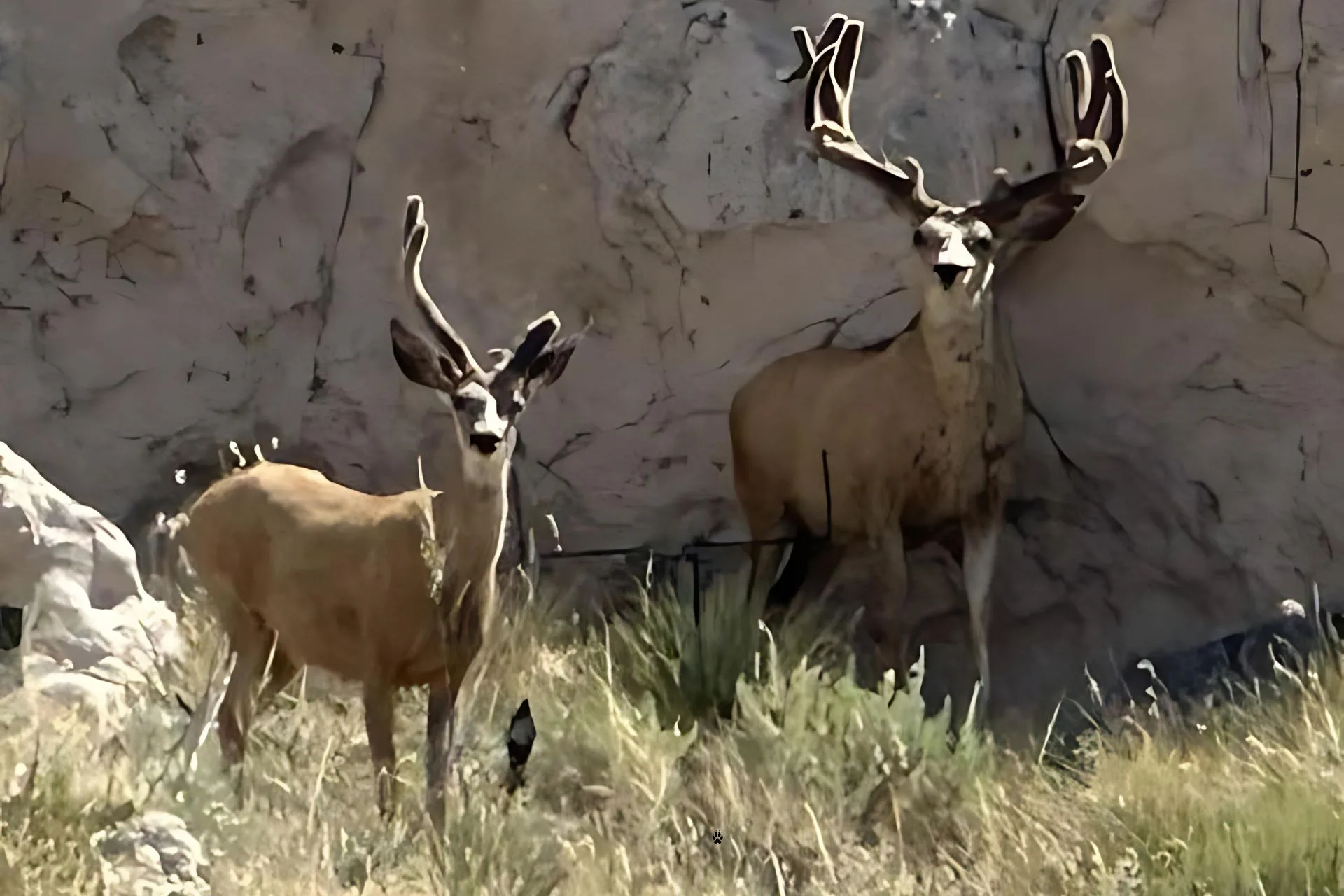
Now is when Velvet is at its peak. I am not talking about the framed velvet pictures of Elvis Presley, or the name my wife gave to her royal blue Malibu. I am talking about the membrane that covers new grown elk and deer antlers. This nutritious membrane feeds the bone that forms antlers. Velvet is brown or tan in color, unlike the song’s description when “she wore Blue Velvet”!
Elk, moose, and deer will have Velvet. The Bulls and Bucks will have their annual antlers covered in Velvet as the antlers grow. Antlers are bones that is nourished by this vascular and nerve filled material. Velvet is full of nutrients and blood that is pre-calcified. As the inner layers of bone hardens, the Velvet continues to enrich new layers of bone to grow.
During the quality days of Summer, antlers can grow 2-3 inches a day. Older and larger males with good genetics and food will become trophies. This antler cycle occurs each year.
Antelope, goats, and sheep do not have antlers or Velvet. They have Horns which are a form of Keratin or hair. They keep their Horns during their entire life. Antelope shed a husk from their Horns. They look like hairy cones when they are found.
The length of daylight or photo period determines when hormones will stimulate Velvet growth and when to cut the blood off. Usually, mid-August is when the Velvet begins to dry up and antler growth stops. Most hunting for bucks happens after the Velvet has been shed but some states allow for earlier deer hunts which could help hunters encounter bucks or bulls with Velvet antlers. It is also possible to tag a hermaphrodite bull or buck that will have velvet. These infertile deer can’t reproduce and have characteristics of males and females.
Once shedding begins, the dry material may tear off in hours or days. The bloody, gory shreds of velvet look awful. It is not uncommon for deer to eat the fuzzy membranes. Blood will stain the white antlers. This usually happens in bachelor groups, where males have been living together since the Spring. Once the Velvet is shed, these groups dissolve and bucks/bulls begin battling for does, during the Rut.
You may begin finding Velvet hanging from rubs or on bushes. This just says that antlered critter was nearby and lost their velvet. It is not a predictable, patternable clue of where the critters will be later.
Native people used Velvet for medicinal needs. The material was used in poultices and as band aids, or dried and mixed with teas.
Antlers grow from a skull base called a Pedicle. As soon as the entire antler is shed, usually in the early Spring, new antlers will begin to grow and will be covered with fresh Velvet. When new antlers form, they are soft and pliable. After 7-8 years, the bucks antlers will begin to grow smaller each season.
If the deer becomes injured or bends the soft antler, it can take on unique shapes. Insects like wasps also lay eggs in the Velvet which can leave holes and cause drop tines, or other unique characteristics. If a deer was injured from fighting other bucks or hit by a car, or wounded on one side, that side will be degraded. The antler will be shorter, thinner, or unusual, since body healing will require much of the deer’s nutrition to heal.
Once the Velvet has fallen off, the antlers are done growing. They will be stained with blood and gore until the stain weathers away. Busks will begin marking their territory and fighting with other bucks. The reproductive process will go on once again.
Nature is amazing!
Montana Grant

Montana's outdoor week, in your inbox at 7am Friday.