
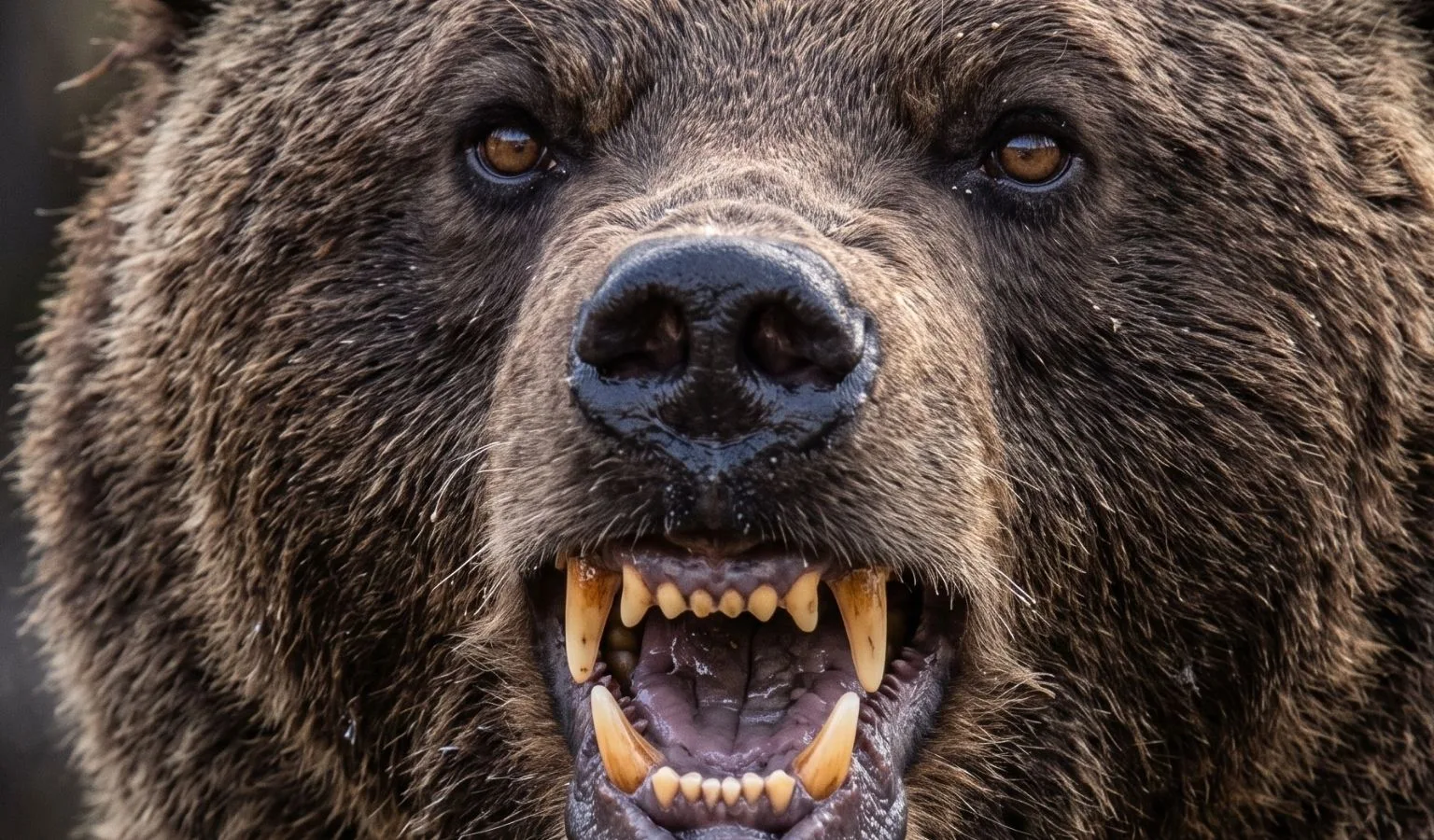
If you’ve ever tried reading the Federal Register, you know it’s usually a cure for insomnia. But hidden beneath the standard mountain of bureaucratic jargon, Uncle Sam just dropped a massive update on one of North America’s most iconic heavyweights: the grizzly bear.
The U.S. Fish and Wildlife Service published a Supplemental Notice of Proposed Rulemaking regarding how grizzlies are listed and protected under the Endangered Species Act in the lower-48 states.
Why This Moment Matters for Montana
Montana sits at the center of this entire conversation. The state is home to the two largest and most-studied grizzly bear populations in the contiguous United States: the Greater Yellowstone Ecosystem population, anchored in the southwest corner of the state, and the Northern Continental Divide Ecosystem (NCDE) population, which blankets the Bob Marshall Wilderness, Glacier National Park, and the Rocky Mountain Front. Together, these two populations represent the backbone of grizzly recovery in the lower-48, and any federal rulemaking directly shapes what life looks like for the hunters, ranchers, outfitters, and backcountry travelers who share that ground every single day.
This isn’t some abstract Washington D.C. policy debate. It’s a rules change that determines whether a rancher on the Rocky Mountain Front can legally run off a bear raiding his chicken coop, whether a bow hunter in the Bob Marshall can carry bear spray as his only legal defense, and whether state wildlife managers get more or less flexibility to handle nuisance bears before they become dangerous bears. The stakes are very real, and very local.
The Bears, the Bureaucracy, and the 4(d) Rule
This isn’t just a simple “Are they endangered or not?” question. The government is fine-tuning what’s known as a Section 4(d) rule.
In plain English: while the Endangered Species Act provides a blanket safety net, a 4(d) rule acts like a custom-tailored jacket. It allows wildlife managers to create highly specific exceptions to the normal “do not touch” rules so that local states, tribes, and ranchers can actually handle living alongside an apex predator.
The newly proposed rule tweaks how things like “incidental take” (accidental harm or disruption) are managed. It covers everything from what happens when a grizzly wanders into a trap meant for a different animal, to how researchers can safely move bears around to keep their gene pools healthy.
A Quick Primer on the Endangered Species Act Framework
For those who don’t spend their lunch breaks reading wildlife law, here’s a fast breakdown of how the ESA actually works in practice. When a species is listed as threatened or endangered, it receives automatic federal protections — most importantly, a prohibition on “take,” which legally includes not just killing an animal, but harassing, harming, pursuing, hunting, shooting, wounding, trapping, capturing, or collecting it. That’s an extremely broad umbrella.
The problem is that a one-size-fits-all prohibition can be almost impossible to live with when the animal in question is a 600-pound apex predator wandering through your elk hunting unit or your cattle pasture. That’s where the 4(d) rule becomes a critical tool. Rather than applying the full weight of the ESA to every conceivable scenario, a 4(d) rule lets regulators carve out specific, legally defined situations where otherwise-prohibited activities are allowed — providing they don’t jeopardize the species’ recovery. Think of it as giving wildlife managers the flexibility to be practical without throwing conservation goals out the window.
What’s Actually Changing?
The rule splits management into a two-tiered system to handle different geographic populations cleanly. Here is a quick cheat sheet of what the government is trying to balance:
- Deterrence & Safety: Clear guidelines on what counts as legally defending yourself or your property without accidentally violating federal law.
- Scientific Moving Days: Giving agencies a smoother green light to relocate bears for “population augmentation”—basically playing matchmaker by introducing new bears to isolated groups to prevent inbreeding.
- The Clock is Ticking: The government opened up a public comment period, giving everyone from conservationists to local ranchers until August 17, 2026 to weigh in on the fine print.
It’s the ultimate balancing act: trying to ensure the survival of an animal that can weigh 700 pounds, while making sure the humans living next door don’t bear the brunt of rigid regulations.
The Two-Population Framework Explained
The two-tiered geographic split is arguably the most significant structural change in the proposed rule, and it deserves a closer look. By treating the Greater Yellowstone Ecosystem population and the Northern Continental Divide Ecosystem population as distinct management units, federal regulators are acknowledging what Montana wildlife managers have long known: these bears don’t all face the same pressures or live in the same landscape.
The GYE population has historically been the more isolated of the two, surrounded by a mix of national park land, wilderness, and private agricultural ground. The NCDE population, centered around Glacier and the Bob Marshall, has seen more documented expansion in recent years, with bears regularly showing up in areas outside their traditional range — including agricultural valleys along the Rocky Mountain Front where conflict potential is high. Managing them under the same blanket rules was always a blunt instrument. The two-tiered approach gives managers more precision.
What This Means for Hunters and Backcountry Users
If you’re an elk hunter heading into the Bob Marshall, a deer hunter working the Rocky Mountain Front, or a backcountry angler floating remote drainages in northwest Montana, grizzly bear regulations aren’t background noise — they’re something you need to understand before you go.
The self-defense provisions within a 4(d) rule are particularly important for hunters to pay attention to. Federal law has long allowed individuals to kill a grizzly bear in defense of human life, but the legal lines around what constitutes an immediate threat versus a startled encounter have historically been murky. Clearer guidelines under the new proposed rule could help hunters and backcountry travelers better understand where they legally stand if they ever face a worst-case scenario.
That said, the single best thing any backcountry user can do is make the encounter avoidable in the first place. Carry bear spray and know how to use it — studies consistently show it’s the most effective deterrent in a close-range encounter. Make noise while traveling through dense cover, hang or properly store food and scent attractants, and be especially cautious during archery season when you’re operating in low-light conditions and moving quietly through country that grizzlies share.
For hunters who are packing out an elk or deer carcass, the risk profile changes significantly. A gut pile or a boned-out quarter hanging in a tree is exactly the kind of attractant that brings grizzlies in quickly. Knowing the rules around carcass management in grizzly country — and checking current Montana FWP regulations for any specific requirements in your hunting unit — is not optional. It’s basic preparation.
The Ranching and Livestock Angle
No group has more skin in this game on a day-to-day basis than Montana’s agricultural community. Ranchers along the Rocky Mountain Front and in the Blackfoot Valley have lived alongside grizzly bears for generations, and the frustration with federal regulations that limit their ability to protect livestock is longstanding and legitimate.
The proposed 4(d) rule attempts to give ranchers clearer legal cover for non-lethal deterrence actions and, in defined circumstances, for defending property. Programs like livestock protection initiatives run by state and federal agencies — which can include things like range riders, electric fencing assistance, and livestock guardian animals — operate in this same space. Whether the new rule expands or simply clarifies existing flexibility for ranchers is one of the key questions that the public comment process is meant to address.
If you’re a rancher or you represent agricultural interests in Montana, the August 17 comment deadline is the most direct lever you have to influence how these rules are written. Specific, on-the-ground accounts of how current regulations affect your operation carry real weight in the formal rulemaking process.
The Bigger Picture: Grizzly Recovery and What Comes Next
It’s worth zooming out for a moment. The entire reason a 4(d) rule is necessary is because grizzly bear recovery in the lower-48 has, by most biological measures, been a genuine conservation success story. Bear numbers in both the GYE and NCDE have grown substantially since the species was listed in 1975. That recovery creates its own set of challenges: more bears means more conflict, more range expansion into areas that haven’t seen grizzlies in decades, and more pressure on communities and land managers to adapt.
The long-running debate over delisting — removing the grizzly from ESA protection entirely and returning management authority to states like Montana — runs as an undercurrent through all of this. The proposed rulemaking isn’t a delisting action, but it reflects an ongoing federal effort to modernize the management framework in a way that acknowledges where grizzly populations actually stand today versus where they were fifty years ago. Whether you think that’s overdue progress or a slippery slope depends a lot on where you stand, which is exactly why the public comment process exists.
How to Make Your Voice Heard Before August 17
The public comment period is open to everyone — hunters, ranchers, conservationists, tribal members, outfitters, hikers, and anyone else with a stake in how grizzly bears are managed in the American West. Comments submitted through the official Federal Register portal become part of the formal administrative record and must be considered by the agency before a final rule is issued.
The most effective comments are specific. Rather than simply saying you support or oppose the rule, describe how grizzly bear management affects your specific situation — your hunting access, your livestock operation, your safety in the backcountry, or your community. Agencies are required to respond to substantive comments, so the more concrete and detailed your input, the more weight it carries.
CLICK HERE to submit your official comment!
Montana's outdoor week, in your inbox at 7am Friday.