
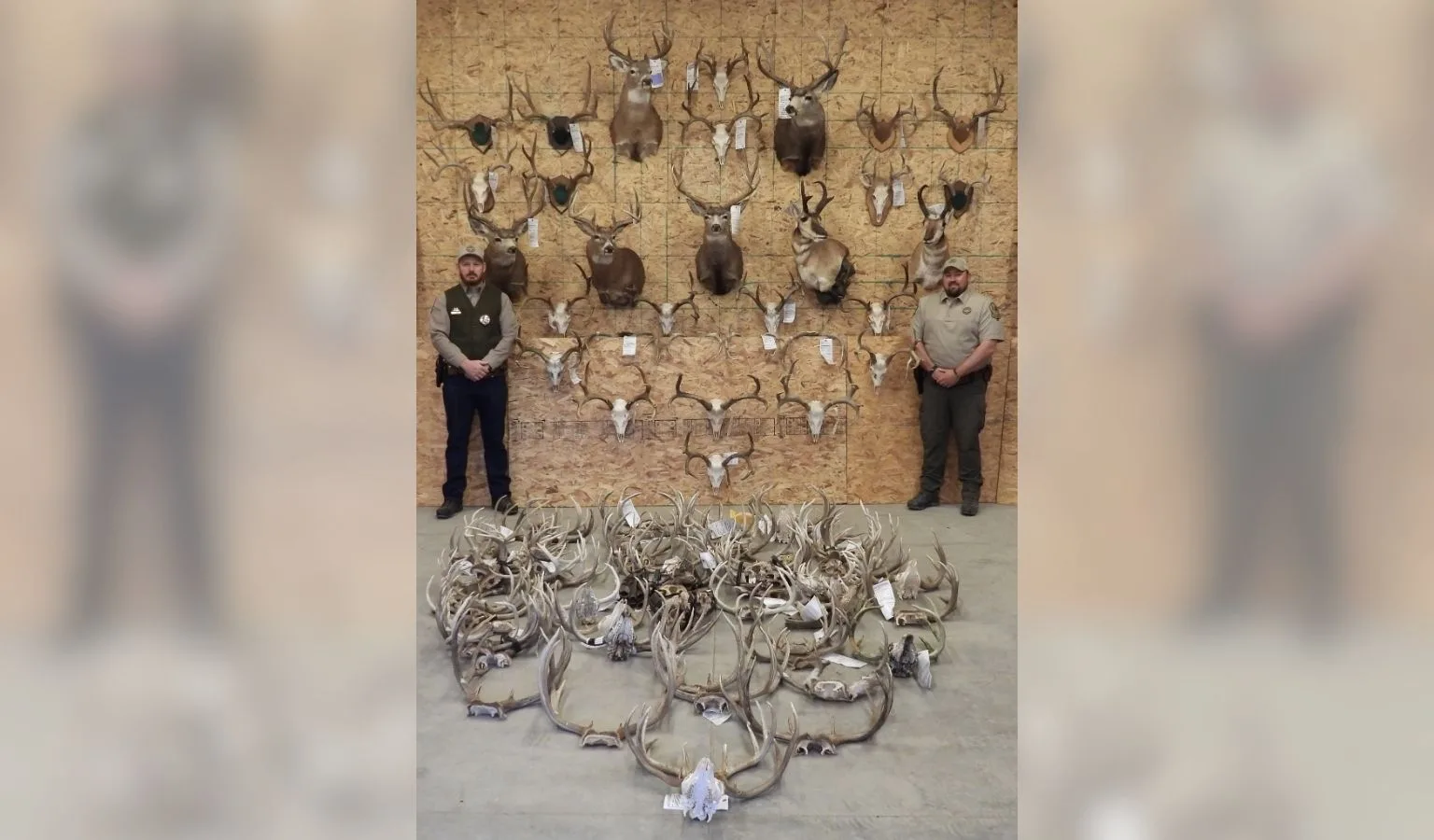
Montana Fish, Wildlife & Parks game wardens recently completed a multi-year investigation into the illegal killing of deer, antelope, and upland game birds in McCone County, resulting in over 100 seized animals, thousands of dollars in fines, and decades of lost privileges.
A Major Poaching Case in Eastern Montana
The McCone County case stands out as one of the more significant poaching investigations FWP has completed in eastern Montana in recent memory. When wardens talk about “multi-year” investigations, that language matters — building a case of this scale requires patience, meticulous documentation, and a sustained commitment from game wardens who are often working vast, sparsely populated districts largely on their own. The fact that this investigation resulted in over 100 seized animals speaks to the sheer scope of the illegal take involved.
McCone County sits in the Missouri River country of northeastern Montana — classic mule deer and whitetail habitat mixed with rolling prairie that holds some of the best antelope hunting in the state. Upland bird hunting, particularly for pheasant and sharp-tailed grouse, is also a major draw in that part of Montana. It’s exactly the kind of country where wildlife populations can absorb legal, regulated harvest well — but where persistent poaching can quietly put real pressure on local herds and flocks over time.
Warden Ben Morin (L), and John Huberty (R), with seized mounts, antlers, and horns from this case.
What the Penalties Look Like
The consequences handed down in this case — thousands of dollars in fines and decades of lost hunting privileges — reflect how seriously Montana courts and FWP take wildlife crimes. Montana law allows for substantial civil and criminal penalties for poaching, and in cases involving large numbers of animals or aggravating factors, those penalties stack up quickly.
Here’s a general sense of how Montana’s poaching penalty structure works:
- Criminal fines: Poaching charges in Montana can carry misdemeanor or felony-level criminal fines depending on the species involved and the circumstances. Multiple violations compound those totals rapidly.
- Restitution values: Montana assigns restitution values to illegally taken wildlife. Trophy deer, antelope, and certain upland birds all carry set dollar amounts that violators must pay in addition to any criminal fines. Over 100 animals at restitution value adds up to a serious financial penalty.
- License revocation: Montana participates in the Interstate Wildlife Violator Compact, meaning license revocations don’t just apply in Montana — they can follow a convicted poacher across participating states. Decades of revoked privileges is a severe consequence that effectively ends a person’s hunting career.
- Seized property: As illustrated by the photo of Warden Morin and John Huberty with seized mounts, antlers, and horns, any trophies, equipment, or other property associated with the illegal take can be forfeited.
For anyone tempted to cut corners, this case is a clear reminder: the penalties are real, they are serious, and FWP wardens are willing to work for years to bring a case to conclusion.
How Multi-Year Investigations Work
Poaching investigations of this scale don’t happen overnight. Game wardens in Montana typically cover enormous geographic districts — sometimes hundreds of square miles — and they rely on a combination of field observation, trail camera evidence, interviews, tips from the public, and coordination with county attorneys and prosecutors to build airtight cases.
Multi-year investigations are often necessary when poaching activity is ongoing, when building a prosecutable case requires documenting a pattern of behavior, or when multiple individuals are involved. Wardens must balance the need to gather sufficient evidence with the reality that every additional illegal kill represents another animal taken from Montana’s wildlife resource.
This kind of long-game investigative work is among the most demanding aspects of wildlife law enforcement. Wardens in rural eastern Montana counties often work with limited backup, cover remote terrain in all weather conditions, and must be skilled not just in field craft but in the legal and procedural requirements that make a case hold up in court. The successful conclusion of the McCone County investigation is a testament to that dedication.
Why Poaching Matters for Legitimate Hunters
It would be easy to dismiss poaching as a victimless crime, or to assume that the wide-open spaces of eastern Montana can absorb the loss. That thinking misses the bigger picture. Every animal illegally taken is one less animal available to hunters who play by the rules, purchase licenses, and support wildlife management through Pittman-Robertson funds and tag fees.
Beyond the numbers, poaching undermines the social license that hunting depends on. Public support for hunting in America is largely built on the premise that hunters are conservationists who respect wildlife and follow the law. High-profile poaching cases — especially ones involving large numbers of animals — chip away at that reputation and give ammunition to those who would prefer to see hunting restricted or eliminated entirely.
For the legitimate hunters of McCone County and the surrounding region, cases like this one are personal. These are local deer herds, local antelope populations, and local upland bird coveys that belong to everyone — the resident hunter who’s worked the same draws for thirty years, the nonresident who drives hundreds of miles for a once-in-a-lifetime mule deer hunt, and the next generation of hunters just getting started.
The Role of Public Tips in Catching Poachers
FWP game wardens are talented and dedicated, but they can’t be everywhere at once. Public tips are an absolutely critical piece of the wildlife law enforcement puzzle, and they play a role in the majority of significant poaching cases. If you see something that doesn’t look right in the field — vehicles parked in suspicious locations at odd hours, gut piles that don’t add up, someone handling more animals than their tags should allow — reporting it could be the piece of information that breaks a case open.
Anyone with information about crimes involving fish, wildlife or park regulations can visit tipmont.mt.gov to provide details, call the FWP violation reporting hotline at 1-800-TIP-MONT (1-800-847-6668), or get in touch with their local warden. Folks providing information may be eligible for a cash reward of up to $1,000.
The TIP-MONT system allows for anonymous reporting, so there’s no excuse not to make the call. Rewards of up to $1,000 are available for tips that lead to a conviction — a meaningful incentive on top of the simple satisfaction of knowing you did right by Montana’s wildlife.
McCone County: Prime Wildlife Country Worth Protecting
It’s worth taking a moment to appreciate what’s at stake in this particular corner of Montana. McCone County and the broader region along the Missouri River breaks and the prairies of northeastern Montana represent some of the most productive and least-pressured wildlife habitat remaining in the Lower 48. Mule deer bucks in this country can grow to impressive size. Antelope hunting on the open prairie is fast-paced and challenging in a way that’s uniquely satisfying. And the upland bird hunting — whether you’re chasing pheasants along creek bottoms or sharp-tails on the native grasslands — is the kind of experience that keeps hunters coming back year after year.
Protecting that resource means enforcing the rules consistently and holding violators accountable. The conclusion of this investigation does exactly that.
Hats Off to Montana’s Game Wardens
Hats off to all our wardens for the tough job they do! The hard work and commitment to challenging cases such as this is impressive.
Montana’s game wardens operate in some of the most remote and demanding conditions imaginable. They work long hours, often far from backup, in country that doesn’t forgive mistakes. They are wildlife officers, investigators, educators, and ambassadors for conservation all rolled into one. Cases like this McCone County investigation — years in the making, resulting in real accountability — are proof that the system works when dedicated professionals are willing to put in the effort.
If you want to read the full official FWP release on this case, you can find it here: https://fwp.mt.gov/…/1029-multi-year-mccone-county…
Know the Rules Before You Go
The best way to support Montana’s wildlife resource — and to make sure you never find yourself on the wrong side of a warden — is to know and follow the regulations before you head afield. Always check the current FWP hunting regulations for the specific district, season dates, legal shooting hours, bag limits, and licensing requirements that apply to your hunt. Regulations can change from year to year, and what was legal last season may not be this season. When in doubt, call your local FWP office or visit fwp.mt.gov for the most current information.
Responsible hunters who follow the rules are the backbone of wildlife conservation in Montana. Cases like this one remind us why those rules exist — and why enforcing them matters.
–fwp–
Montana's outdoor week, in your inbox at 7am Friday.