
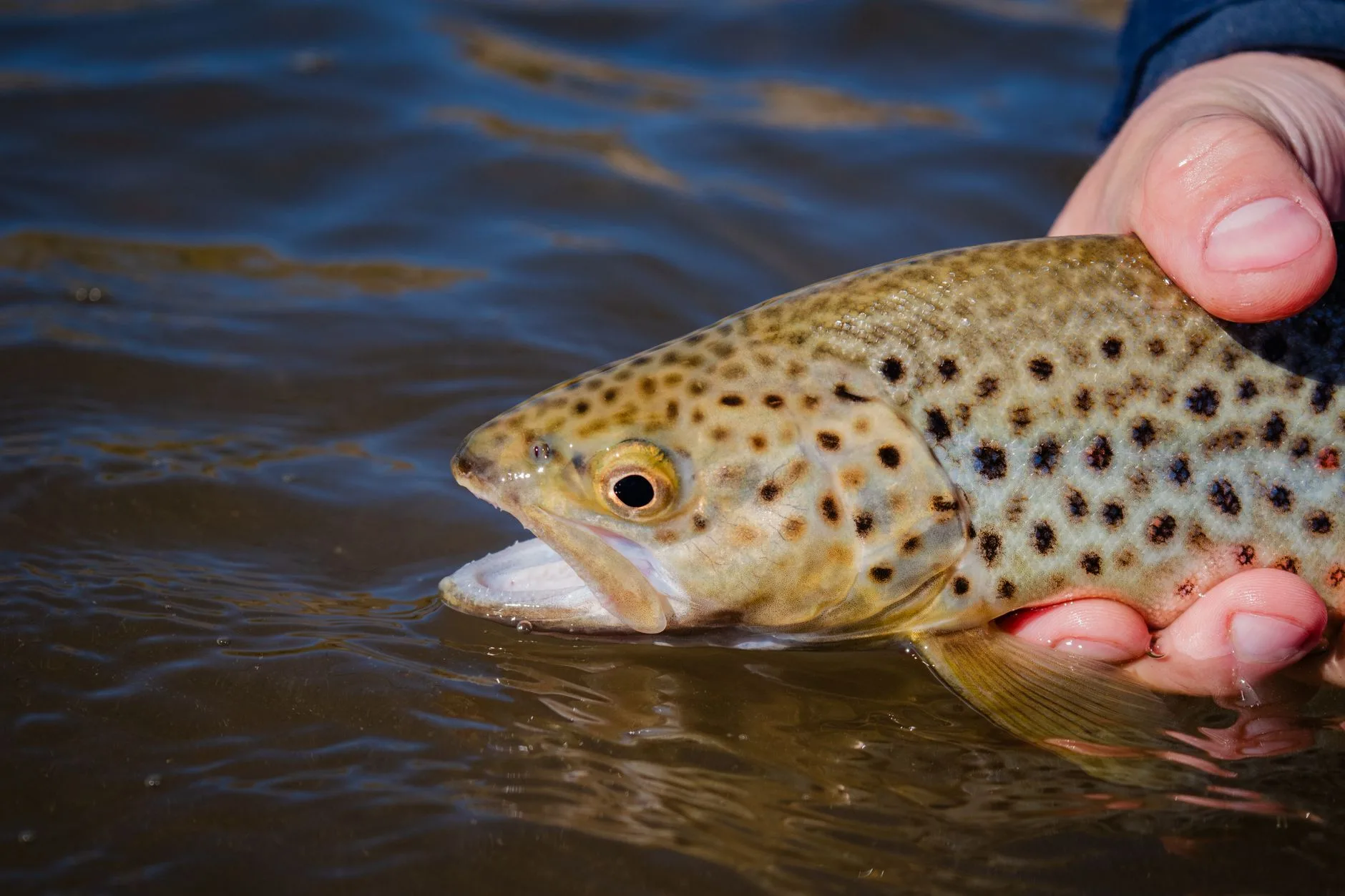
Thirteen miles. That’s all you get below Yellowtail Dam on the Bighorn — thirteen miles of cold, clear tailwater that might hold more trophy brown trout per mile than any comparable stretch of river in the Lower 48. Not bad for a short float out of Fort Smith.
The Bighorn isn’t a secret. Hasn’t been for decades. Fly fishers from Europe, South America, and both coasts book guides and rent cabins in Fort Smith year after year, all chasing the same thing: heavy-shouldered browns with hooked jaws and teeth, the kind of fish that smash streamers and test every knot in your backing. If you’ve fished Montana long enough, you’ve either been to the Bighorn or you’ve thought hard about going.
What keeps anglers coming back isn’t novelty. It’s consistency. The Bighorn delivers.
Big Water, Big Browns, Big Rods
Float access runs from the Afterbay down through 3 Mile and 13 Mile. Most anglers float and wade, anchoring off islands and working the soft tailouts, rocky runs, and undercut banks that hold fish year-round. This is streamer country. Six- and seven-weight rods are standard, and for good reason — browns here don’t sip. They chase, they compete, and come fall, they’re flat-out aggressive as spawning season and dropping temperatures sharpen their appetites.
Cutbanks along island edges are prime ambush zones. Deep dredging with sinking lines and long, articulated streamers produces the kind of fish worth framing. Doubles — two fish hooked in quick succession from the same lie — are common enough that you should expect them. Browns are territorial and competitive, and where conditions stack up right, more than one fish is watching your fly swing through.
Keeping a heavy brown out of the dense weed beds once you’ve got it hooked is half the fight. The river grows thick mats of vegetation that provide ideal habitat for scuds and sow bugs, both of which are year-round staples in the Bighorn diet. Sow bug imitations, especially in flashier colors, have earned a permanent spot in most Bighorn fly boxes. Honestly, it’s one of the few places where I’d fish a sow bug pattern with full confidence from January through December.
Not Just Streamers
The Bighorn is rightly known as a streamer paradise, but don’t overlook midday dry fly action — it can be exceptional under cloud cover. Nymphing stays productive throughout the day regardless of conditions. Rainbows are present, but make no mistake, this is overwhelmingly a brown trout fishery. Bring a full range of tactics. Nymphs, dries, and streamers all have their windows here, and the angler who shows up married to one method is leaving fish unbothered.
Warm weather extends those windows. Mild conditions in the Fort Smith area have been pushing insect activity and surface feeding opportunities later into the season than you’d expect. The Bighorn offers something for every style of fly fisher, which is a big part of its enduring appeal.
Iconic Water, Earned Reputation
Spots like the Suck Hole, Aquarium, Last Chance, Meat Hole, Bay of Pigs, and Drive In have appeared in enough magazine spreads and Instagram feeds to qualify as hallowed water. These aren’t just photogenic bends in the river. They’re proven producers — the kind of named runs that carry real weight in guide conversations and trip reports, not just hashtags.
The Bighorn has hosted legends of the sport and earned its place on bucket lists around the world. That reputation isn’t hype. It’s built on decades of consistent fishing, public access, and the kind of trout that make you check your tippet twice before the next cast.
Respect the River
This is big water. The Bighorn doesn’t throw serious whitewater, but it demands respect all the same. Wear a life jacket. Know your rowing skills before you push off, or hire a guide who does. Get familiar with the access points, the shuttle logistics, and the weather forecast before you launch. The river is forgiving in a lot of ways, but complacency on unfamiliar water is a mistake no angler should make — and the Bighorn has seen its share of both.
Why It Still Matters
In my experience, Montana anglers are about as spoiled as they come. We’ve got spring creeks, freestones, backcountry lakes, and blue-ribbon rivers within an hour of most towns. The Blackfoot, the Madison, the Clark Fork in late May — the options don’t quit. But the Bighorn occupies its own category. It’s a tailwater with the reliability of a managed fishery and the wildness of a freestone, somehow rolled into the same thirteen miles. Accessible, consistently productive, and packed with fish that have seen every pattern in the Umpqua catalog — and still eat.
Haven’t made the trip to Fort Smith yet? Put it on the calendar. Already have? Then you already know why you’ll go back.
Source inspiration: https://www.vaildaily.com/sports-and-outdoors/salomone-bighorn-river-is-a-dream-trip/
Montana's outdoor week, in your inbox at 7am Friday.