
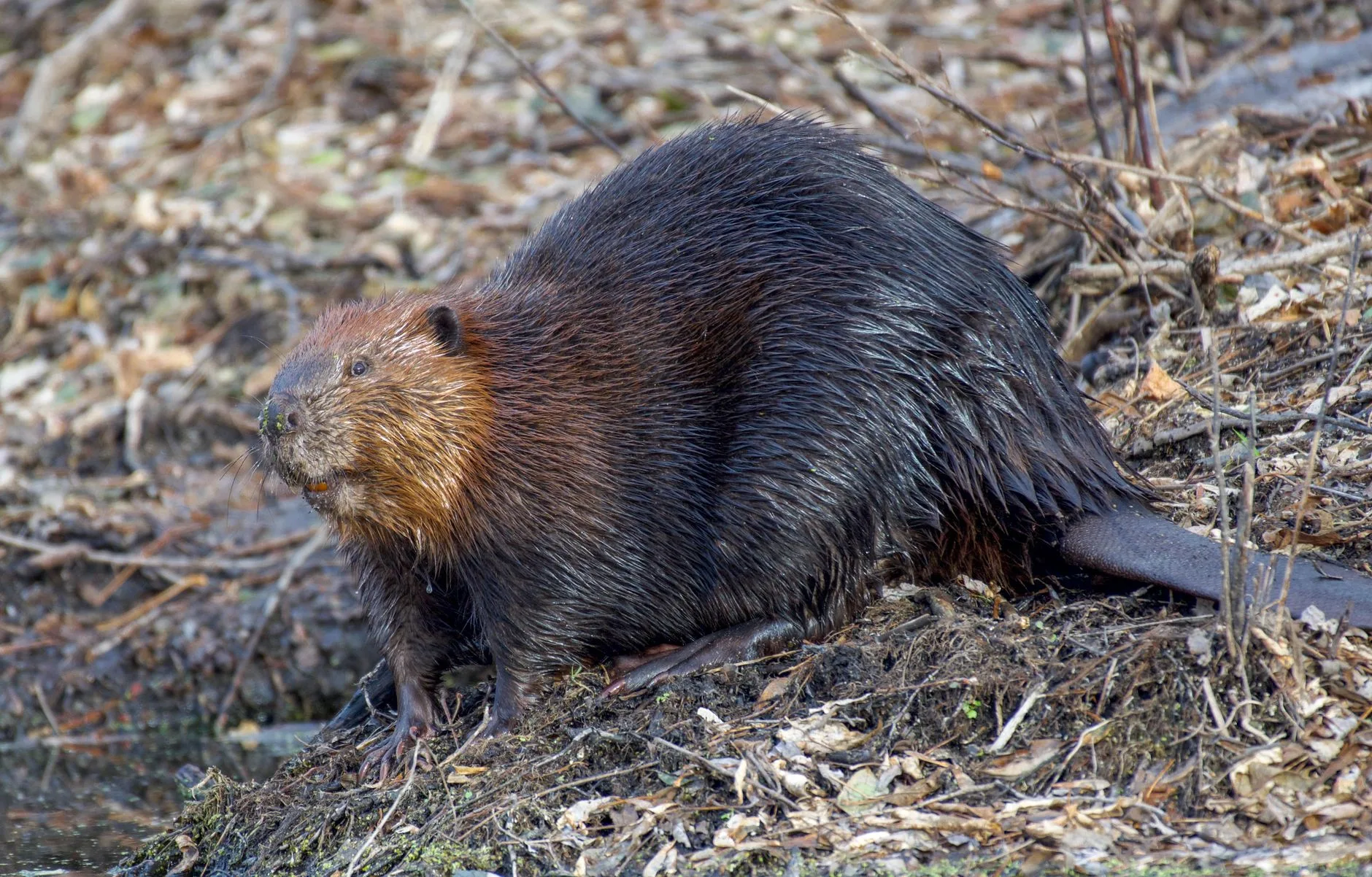
Twelve thousand acres. That’s how much degraded Montana wetland has come back to life — not because of a government engineering contract or a fleet of excavators, but largely because beavers showed up and got to work.
A new video from the channel Hidden Percent documents how streams that had stopped flowing year-round and marshes that had slowly collapsed over decades got a second life. First through intentional human restoration work, and then through something nobody fully planned for: beavers moving in and finishing the job.
If you’ve spent any November mornings in a cattail blind on the Hi-Line or worked the backwater sloughs along the Missouri River breaks, you already know how much a healthy wetland matters. These landscapes live and die by water retention. When the marshes dry up, the birds move on — simple as that. That’s exactly what had been happening for years across chunks of Montana’s wetland country before this restoration effort took hold. Seasonal potholes stopped filling. Cattail stands thinned out. Wildlife that depended on that habitat either shifted ranges or flat-out disappeared from areas where older hunters remember it being thick. This wasn’t some abstract conservation problem. It showed up in empty skies during duck season, and anyone who’s hunted the Flathead Valley over the past couple decades felt it.
The beaver angle is what makes this story worth your time. Wildlife managers have been experimenting with beaver-assisted restoration — sometimes called “beaver dam analogues” — on trout streams across Montana for several years now, with solid results on smaller scales. The mechanics aren’t complicated: when beaver activity raises the water table and slows stream velocity, you get cooler water temperatures, more riparian vegetation, better spawning habitat, and deeper pools that hold fish through the brutal late-summer low flows on the Blackfoot or upper Bitterroot. Those are exactly the conditions that struggling cutthroat and brown trout populations need on smaller drainages — the kind that never get the attention a blue-ribbon fishery does, but quietly matter just as much to the overall picture.
The scale documented here is something different, though. Twelve thousand acres isn’t a pilot project. Honestly, it reframes the whole question — not whether beaver-assisted restoration works, but how much of Montana’s degraded watershed country could look like this if given the same chance. That’s a question worth sitting with.
Montana Fish, Wildlife & Parks has increasingly leaned into habitat work as a lever for game populations, and projects like this represent exactly the kind of long-game investment that pays off for hunters and anglers years down the road, even if it doesn’t show up in the regulation booklet right away. In my experience, the stories that actually move the needle for wildlife in this state rarely make headlines when they start — you only notice them years later when the ducks are back and the cutthroats are holding in water that used to run dry by August. This looks like one of those stories. If you’ve got any interest in where Montana’s wetlands, waterfowl numbers, and cold-water fisheries are headed, give this video 15 minutes of your evening. It’s worth it.
Montana's outdoor week, in your inbox at 7am Friday.