
BRETT FRENCH | bfrench@billingsgazette.com
It’s surprising how a whitewater rapid looks so different from above, compared to when standing downstream.
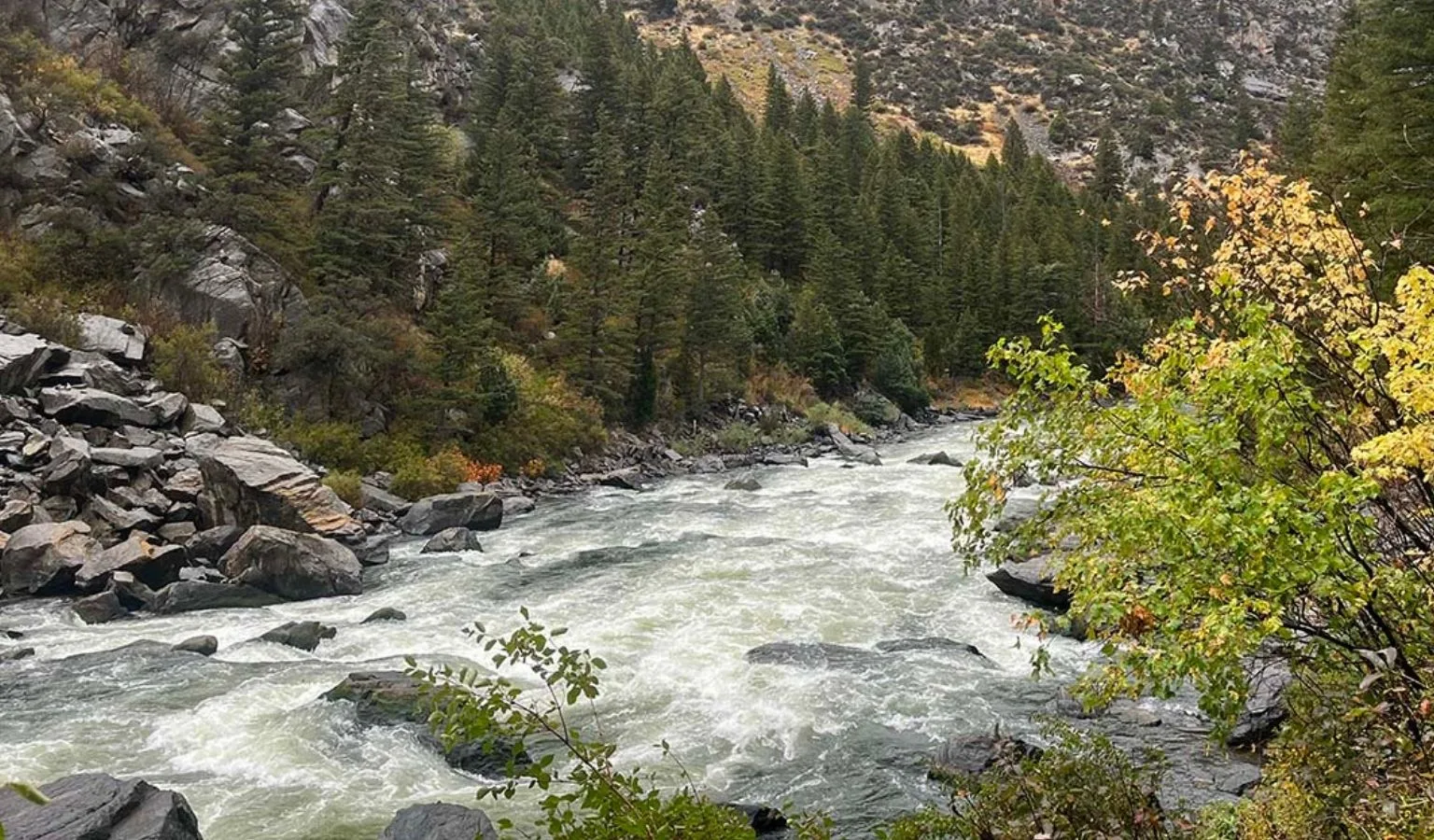
While scouting the Kitchen Sink, a Class IV rapid on the Madison River, the maneuvers seemed logical as a former rafting guide pointed out the line to take.
“I like to start river right,” he suggested.

Scouting the rapid
We were standing on a brush-lined trail carved into the steep canyon walls of Bear Trap Canyon. Some people use the trail to walk around the technical whitewater. Kayakers, on the other hand, were using it to hike their boats back upstream to run the rapid again and again, wide smiles spread across their still wet faces.
The rapids are in the Lee Metcalf Wilderness Area, which limits commercial traffic to just two outfitters. Last year, they hauled 370 people through the rapids.
Foolhardy floaters like us just have to register at the put-in. I’ve been through the canyon at least three times before, twice in a 13-foot raft and once in a packraft.
On the July Fourth day we launched, it was all fellow Montanans who were captaining crews. In 2025, 126 other private boaters registered, according to the Bureau of Land Management, which oversees this section of the river.
The right route through the Kitchen Sink rapid is difficult to understand since guides have names for different rocks.
Our expert pointed out a pyramid shaped rock to line up on for the first drop, a large boulder with water pouring over the top. That’s Herb’s Rock.
Stay right, he suggested, or you could get pushed into a sharp rock known as Jim’s Snag. The place where, unfortunately and soberingly, Jim was killed.
“It’ll break your ribs,” our trailside adviser noted.
After that came a humped rock looking like a camel, a large boulder that pushes boats right or left, left being the preferred line, he suggested. This portion of the rapid is known for flipping boats.
Pull in your oars so they don’t catch on the rocks lining the rapid, the veteran rafter suggested.
His last piece of advice: If you fall in, don’t try to immediately swim to shore. Stay in the middle and ride it out.
The technicality of the rapid prompted me to walk my boat around it on my past trips.
Right, then left
Once my buddy and I walked upstream to figure out the moves, the river looked completely different. There was no site of the pyramid shaped rock, so evident from below. So we decided to follow our new leader in hopes that might help.
The problem with this scenario is that once you’re in the water, looking ahead to see where he was going and trying to manage where I was going in the 10-foot self-bailing raft proved difficult.
Then everything went to hell. My oar popped out of the oarlock going past the pyramid-shaped rock. We got pushed towards Jim’s Snag. Whitewater frothed and clamored around us as I tried to row with the oar out of the oarlock. Then came Camelback.
Awkwardly trying to fit the oar back into its brass cradle while rushing toward the final drop failed. We missed the center line, got pushed off the boulder to the left and I slipped off my cooler-seat perch while yelling “High side!” It was a command for the others in the boat — my one friend — to throw his weight at the high side of the raft to keep it from flipping over.
He later told me he went “spider monkey” in the front of the boat, spread out flat and low. It worked.

I swam the Kitchen Sink
After a good dousing — gurgle, gurgle — I popped up from the bubbling seltzer-like water with my floppy hat still tied down and another wave directly ahead. After swallowing a bit of that wave, I saw our new friends downstream yelling at me to swim to shore on river right. Grabbing onto the front of their raft, they towed my soaked spirit to the riverbank.
My buddy had amazingly ridden the rapid fine, and paddled it to shore 100 yards downstream. He was grinning from ear to ear.
Our new navigator said he had seen boats flip on the rapid and completely shear the oar locks off the frame.
My buddy and I joked about getting T-shirts. One for him saying, “I ran the Kitchen Sink,” and one for me saying, “I swam the Kitchen Sink.”
Tough education

As humbling as the experience was for me, it was a reminder of all the swimming I unwilling did in my early days of learning to canoe. My wife and I repeatedly swam rapids on the Blackfoot River while refining our navigation, communication and paddling skills.
Although one time, on Roundup Rapid, we managed to get to shore with water inside almost all the way to the gunnels. Dang, that boat was heavy to paddle, but we didn’t flip.
Upon graduating to a 13-foot raft when children arrived, swimming became less of a concern but waves crashing over the bow and dousing everyone was more likely.
This year, an investment in a smaller, 10-foot self-bailing raft felt like the right move for an aging boater whose main bailer was tired of removing water from our old, leaky bucket-floored boat.
Our inaugural whitewater run this spring on the upper Stillwater River proved the little boat could quickly shed water, but we remained just as wet as, if not more than, the old raft. Rower error may be part of the problem, as I am struggling to adjust the oarlocks, oars and frame to feel comfortable. Adding Velcro to my seat and shorts may be a way to keep me from pitching out of the raft again.
More than 40 years after buying that first Coleman canoe — some assembly required for a discount — floating rivers and navigating whitewater remains a fun challenge. And although I’ve gotten pretty good at navigating rapids, when things go wrong and the original plan is shot, you just revert to instinct and hope that muscle memory gets you through, even if it does mean a short swim.
Montana's outdoor week, in your inbox at 7am Friday.