
BRETT FRENCH | bfrench@billingsgazette.com
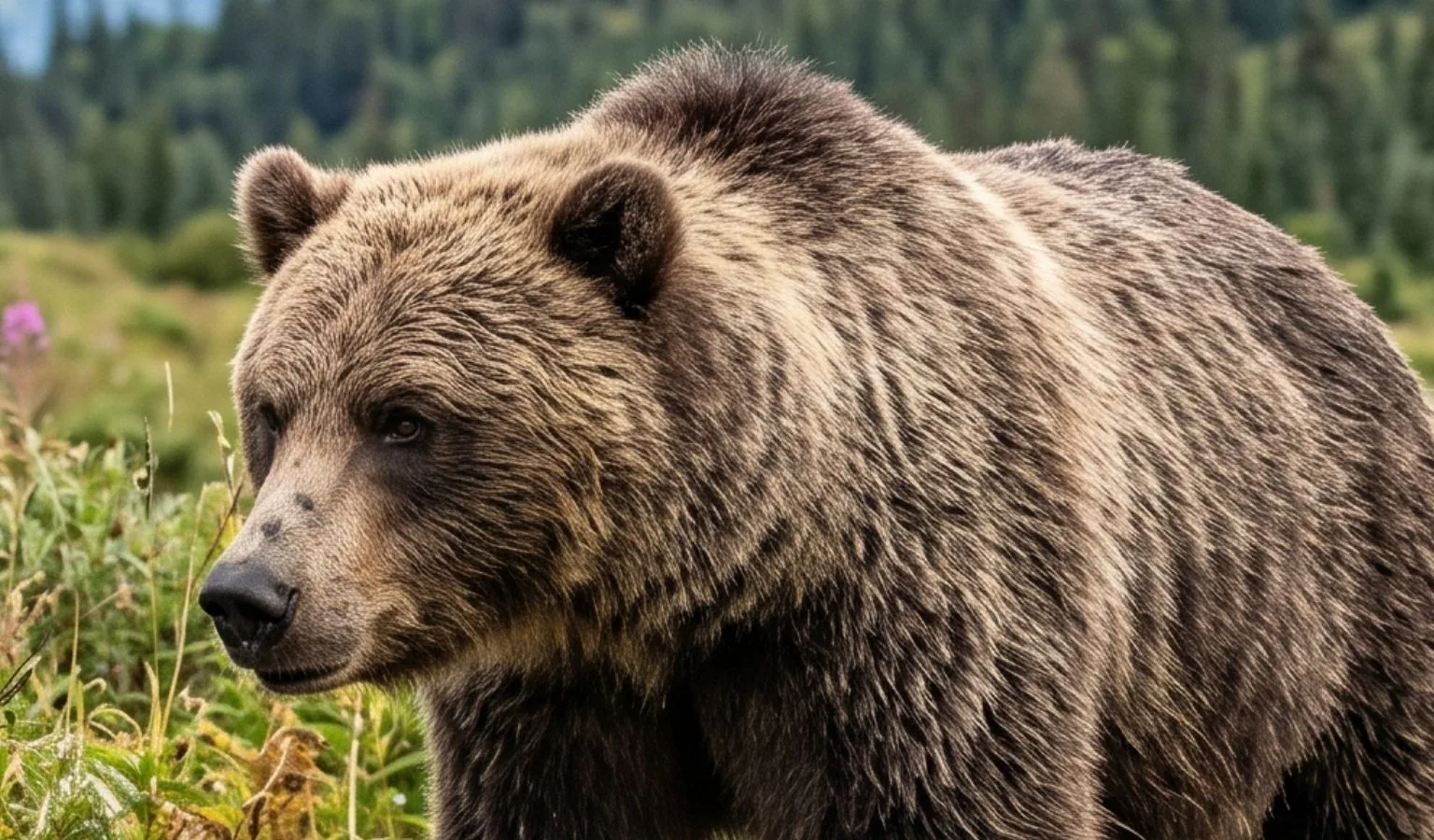
No grizzly bear hunt has been held in the Canadian province of Alberta since 2006, yet this year 10 grizzlies have been legally shot by members of the public under a new program.
Called the Grizzly Bear Management Authorization, or more commonly known as the responder program, the Alberta Ministry of Forestry and Parks authorizes hunters to shoot bears the agency would otherwise euthanize for conflicts like killing livestock.
“Then they get to keep it as though it were a legal harvest,” explained Paul Frame, a carnivore biologist for the ministry.
Frame spoke during the Interagency Grizzly Bear Committee’s July 21 online meeting of its executive committee. The group was formed in 1983 to help coordinate grizzly bear management between state and federal agencies.
Grizzlies were designated a threatened species in Alberta in 2010. In 2018 the western population was designated a species of special concern under Canada’s Species at Risk Act. Since listing, the bear’s population has climbed from around 700 to more than 850 animals.
Changes for threatened species
The Albertan wildlife manager’s talk came a week after Secretary of the Interior Doug Burgum announced at a Big Sky press conference a proposed rule change that would allow states to ease into grizzly bear management before the animals are removed from the Endangered Species List.
“It makes a ton of sense to give the states the flexibility to manage this,” Burgum told members of the press, governors of three western states, invited politicians and agency officials who gathered in a windy field north of Yellowstone National Park.
“It’s not often you have a federal government coming and making an announcement how we’re going to give up power at the federal level, but that’s exactly what’s going on today,” Burgum added.
In the Greater Yellowstone and Northern Continental Divide ecosystems, “the proposed rule would give Montana management authority of bears as long as the state follows the population objectives and mortality thresholds outlined in the (state) management plan,” according to a Fish, Wildlife & Parks’ press release. “This means more latitude for dealing with conflict bears and being more responsive to livestock conflicts.”
This latitude must be outlined in memorandums of understanding between Montana, Wyoming, Idaho and tribes with the U.S. Fish and Wildlife Service outlining exceptions for additional “take” of grizzly bears.
For grizzly bears in the Bitterroot and Cabinet/Yaak ecosystems, where bears haven’t reached population objectives and are considered “experimental” and “nonessential” by the Fish and Wildlife Service, “management would largely remain what it is currently,” FWP said.
Written comments on the proposed changes are being accepted by the U.S. Fish and Wildlife Service until Aug.17.
Recovering a species
Grizzly bears were listed as a threatened species under the Endangered Species Act in 1975. At the time, their population in the lower 48 states was estimated at around 700 to 800 animals. Current estimates put the population, much of it contained in the Northern Continental Divide Ecosystem, surrounding Glacier National Park, and Greater Yellowstone Ecosystem at almost 2,000 bears.
Under the Endangered Species Act, the Secretary of Interior has an “infinite number of options available” regarding regulations to protect threatened species, referred to as 4(d) rules, according to the U.S. Fish and Wildlife Service’s proposed rule posted in the Federal Register.
Among the changes proposed, grizzly bears killed by trappers seeking other species, like a wolf, may be allowed. This is called incidental take. Currently, Montana bars wolf trapping in grizzly bear habitat until the animals den. Trappers have complained it cuts into their season.
The Fish and Wildlife Service is also proposing two tiers of other exceptions for incidental take by federal, state or tribal agencies “once management plans and conservation strategies are finalized.”
“We do not expect take to rise to a level that would have a negative impact (i.e., would have only de minimis impacts) on the species’ conservation,” the Fish and Wildlife Service wrote.
Bear spray petition
The last two years have seen a record high number of grizzly bears killed, the majority by humans and often by hunters who shoot the animals citing self-defense. Last year, Montana saw 61 grizzlies killed.
That’s prompted 19 Montana groups and 46 individuals to petition Montana Fish, Wildlife & Parks to require all hunters and trappers recreating in grizzly bear habitat to carry bear spray, a proven nonlethal method to deter bear attacks.
“Just as wearing hunter orange is required to prevent serious injuries and death, bear spray serves the same purpose,” the Flathead-Lolo-Bitterroot Citizen Task Force contended in its press release.
Montana Gov. Greg Gianforte said at the Big Sky press conference there will be no hunting of grizzly bears under the proposed 4(d) rule changes.
Fish, Wildlife & Parks did not return a request for information on how the proposed rule changes might affect wildlife management in the state.
So far this year FWP’s grizzly bear conflict dashboard has recorded 114 incidents. Nine grizzlies have been euthanized for killing livestock.
Decision tree
Alberta uses a decision tree to decide whether to dispatch a resident to kill a depredating bear, Frame said.
“If it was a mauling or something, we’re not going to send a hunter in to try and remove a bear that just attacked someone,” he said.
A grizzly mother with cubs would also require a different management action, he added. Where a livestock depredation occurs is also considered. Frame said the agency wouldn’t “turn a hunter loose” in a suburban area with a bunch of ranchettes.
The biggest hurdle has been getting landowner buy-in, Frame said. The first year of the program, few were willing to agree. That’s changed in the second year, with more landowners signing up. When that occurs, the agency goes through its list to find a hunter who can respond within 24 hours. So far, all the bears shot have returned to a carcass they’ve killed.
“We don’t know how this is going to go over in the public or in the media, as the number of removals continue to go up,” Frame said. “But our minister has got us, you know, continuing to use this program.”
Montana's outdoor week, in your inbox at 7am Friday.