
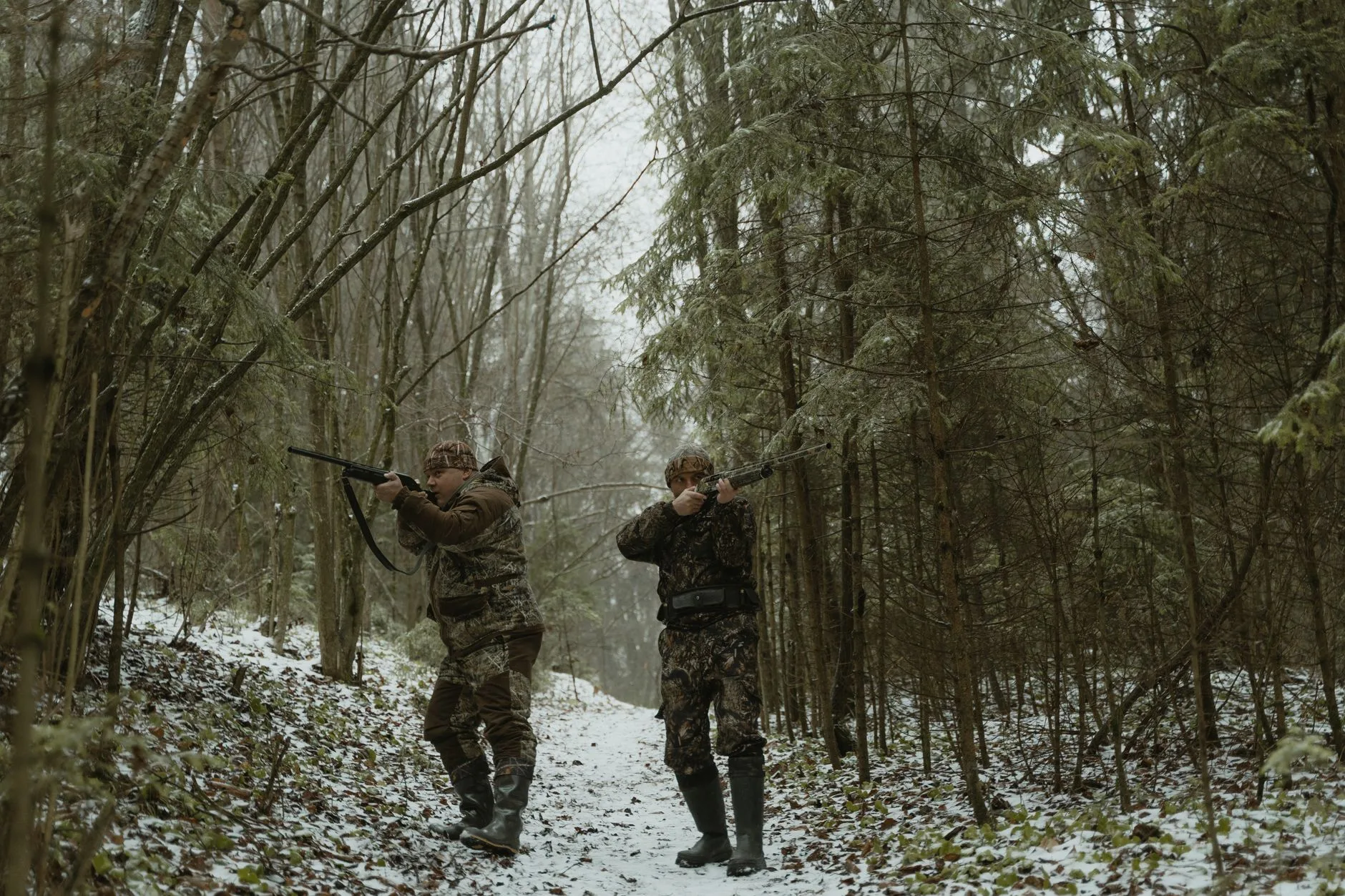
Snow changes everything. A bull that was bugling at shadows and running himself ragged three weeks ago is now a completely different animal — quiet, worn down, and locked onto one priority. Food. If you’re still hunting him like it’s mid-October, you’re wasting what little season you’ve got left.
General rifle season is burning down fast. If you’re sitting on a tag, the next two to three weeks are your window. Here’s how to think about where bulls are right now — and how to get in front of them.
Read the Snowline, Not the Map
The single most useful tool you have right now isn’t a topo or an onX layer — it’s the weather forecast. Early November snowfall in the high country is the great elk relocator. When winter hits the Bob Marshall Wilderness, the Beartooths, the Absaroka-Beartooth corridor, or the high drainages above the Bitterroot Valley, elk don’t just drift lower. They move with purpose and they move fast.
Watch the snowline. When the high country above roughly 7,000 feet takes a serious dump and the temperature doesn’t recover, you’ll see elk in places they haven’t been since late March. South-facing slopes at mid-elevation — think 5,000 to 6,500 feet — become magnets. The snow is shallower, the grass is accessible, and the thermal advantage is real. These are the benches and sidehill parks that look boring on a summer hike but hold elk like a bathtub in November.
Region by Region: Where to Focus This Week
Southwest Montana (Regions 2 and 3)
The drainages feeding into the Bitterroot River, the upper Clark Fork tributaries, and the country around Dillon and Lima are classic late-season elk funnels. When snow locks up the Anaconda Range or the Pintler Wilderness, bulls pile into the lower timber and river-bottom cottonwood edges. Honestly, the Pioneer Mountains between Dillon and Wisdom deserve serious attention right now — that mid-elevation transition zone between lodgepole and sagebrush is exactly where post-rut bulls tank up before winter sets in hard.
Central Montana (Region 4)
The Missouri River Breaks country is a different animal entirely. Down here, elk don’t have the luxury of dramatic elevation change, so their movement is more lateral — pushing from the high benches into the deeper coulees and creek-bottom willows as pressure and cold combine. The Smith River country and the Judith Mountains both tend to hold bulls longer into November than hunters expect. If you have access to private ground near grain fields in the Judith Basin, now is when that access pays off.
Southeast Montana (Region 7)
The Powder River country and the Rosebud drainages see post-rut bulls gravitating toward winter wheat fields and unharvested corn edges when access permits. Public land hunters should key on the pine breaks above these ag valleys — bulls will bed in dark timber all day and drop into the flats at last light. The Custer Gallatin National Forest units south of Miles City and near the Wyoming border are worth the drive if you haven’t punched a tag yet.
Northwest Montana (Region 1)
The Flathead drainage, the Swan Valley, and the country around Lincoln are all seeing classic late-season elk compression right now. When snow locks up the Swan Range or the Mission Mountains Wilderness, elk funnel down through the timber corridors toward the valley floors. The river bottoms along the North Fork and Middle Fork of the Flathead become travel routes. Glass the open burns and old clearcuts at first and last light — post-rut bulls need calories, and those regenerating areas offer browse that mature timber flat-out can’t match.
Tactics That Work When the Rut Is Done
Stop calling, start glassing. A bugle or cow call that would have pulled a bull on a string in October is likely to push a tired, pressured post-rut bull the other direction. Set up with optics on feeding areas and work the wind. In my experience, patience earns more tags in November than elk talk ever will.
Hunt feeding, not wallows. Wallows are a summer and early-fall feature. Right now, put your energy on south-facing parks with dried grass, any unharvested agricultural edges near public ground, and creek-bottom meadows where elk can get to forage without digging through deep snow.
Work migration corridors. If you’ve identified where elk are feeding and where they’re bedding, the trail between those two points is gold. Set up in the timber edge along that travel route in the last hour of shooting light. This is where the majority of late-season bulls get tagged — not at the destination, but on the commute.
- Get mobile: Don’t burn days on a cold camp. If you’re not seeing fresh sign, cover ground until you find the elk, then slow down and commit.
- Verify your season dates: General deer and elk seasons vary by hunting district. Confirm your specific HD’s close date with Montana FWP before you head out — don’t assume all districts run the same schedule. A new six inches of snow overnight can also change everything — that drainage that looked empty Monday may be full of tracks by Wednesday morning, so check conditions daily before you commit to a plan.
The bull you’ve been hunting all fall is out there, beat up and hungry, gravitating toward the lowest, warmest, most food-rich ground he can find. He’s more predictable right now than he’s been all season. That’s your edge. Use it before the snow buries your last chance until next fall.
Montana's outdoor week, in your inbox at 7am Friday.