
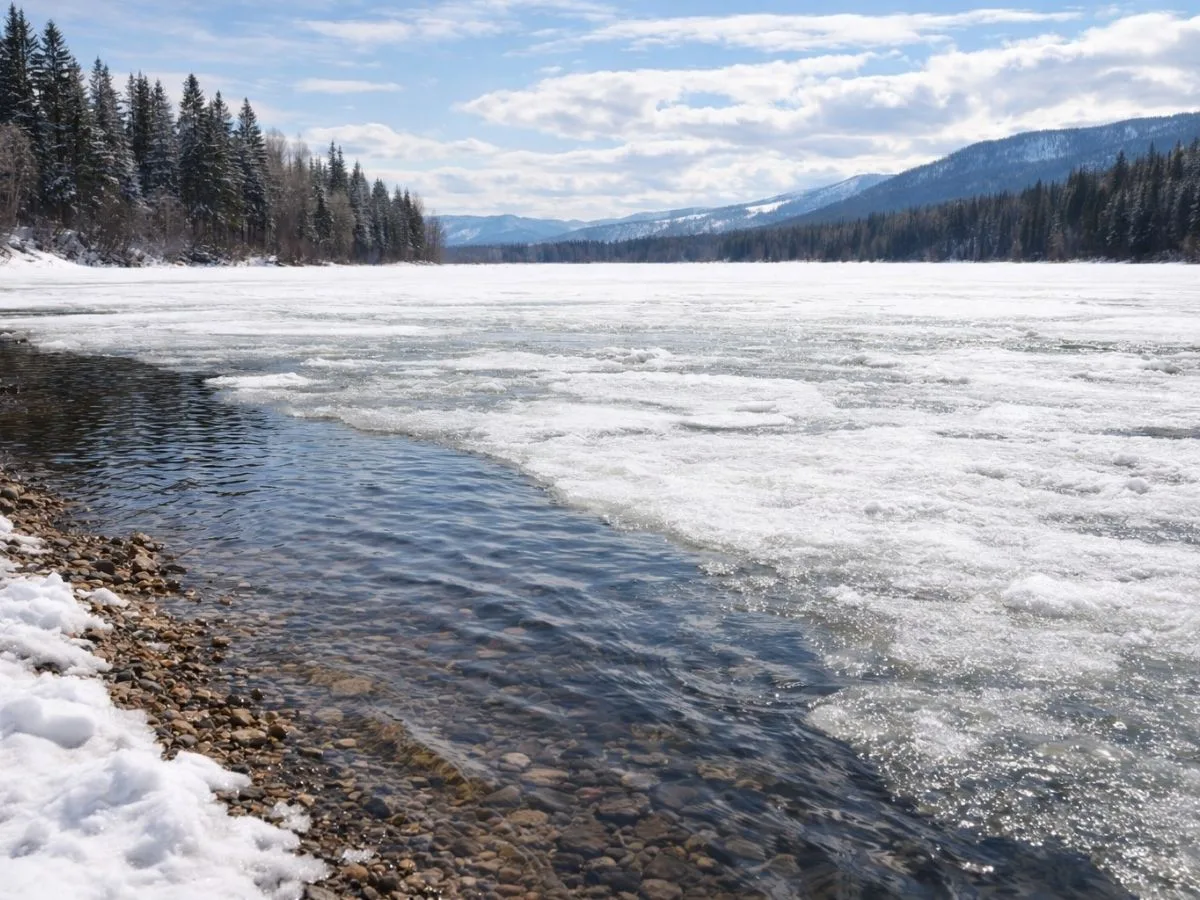
Recent reports from local anglers suggest the ice conditions on the north end of Seeley Lake are beginning to deteriorate as warmer weather moves in.
Key Takeaways
- Anglers report the north end of Seeley Lake is seeing deteriorating ice conditions.
- Ice is reportedly melting away from the shoreline, creating a widening band of open water near shore.
- One drive-by observation earlier this week described roughly 3–4 feet of open water along the edge.
- The remaining ice farther out was reported as not appearing to be in good shape even a few days ago.
- Use caution if you’re planning to go out—conditions can change quickly when ice pulls away from shore.
According to observations, the ice is starting to melt away from the shoreline, creating a growing band of open water near shore. One person who drove by earlier this week noted roughly three to four feet of open water along the edge, and the remaining ice farther out did not appear to be in good shape even a few days ago.
Anyone planning to head out should use caution, as conditions can change quickly when the ice begins pulling away from shore.
Photo AI generated
Related Reading
- Ice Safety Basics: How to Spot Weak Ice and Stay Safer
- Ice Fishing Checklist: What to Pack Before You Go
- Winter Weather Updates and Outdoor Advisories
- Montana Fishing Reports: Conditions, Access, and Updates
- Outdoor Safety Guides: Cold-Weather and Water Hazards
- Seeley Lake Coverage: News, Access, and Local Updates
FAQ: Seeley Lake Ice Conditions
Are ice conditions deteriorating on Seeley Lake right now?
Based on recent reports from local anglers, the ice on the north end of Seeley Lake is beginning to deteriorate as warmer weather moves in.
Where are the changing conditions being reported?
The reports referenced here are specific to the north end of Seeley Lake.
What does it mean when ice “pulls away from shore”?
In this context, it refers to ice melting back from the shoreline, leaving open water between the shore and the remaining ice sheet.
How much open water was observed near the shoreline?
One person who drove by earlier this week reported roughly three to four feet of open water along the edge.
Is the ice farther out still safe?
The observation shared said the ice farther out did not appear to be in good shape even a few days ago. Conditions can vary and change quickly, so caution is advised.
Why can conditions change quickly during warm-ups?
When temperatures rise, ice can weaken and separate from shore, creating unstable transitions and variable conditions even over short periods.
What’s the main risk when there’s open water along the edge?
A widening band of open water near shore can make access to the main ice sheet more dangerous, especially as the ice edge becomes less stable.
What should anglers do if they’re still planning to head out?
Use caution and be prepared to change plans if you encounter open water or visibly weakened ice. The report emphasizes that conditions can change quickly once ice begins pulling away from shore.