
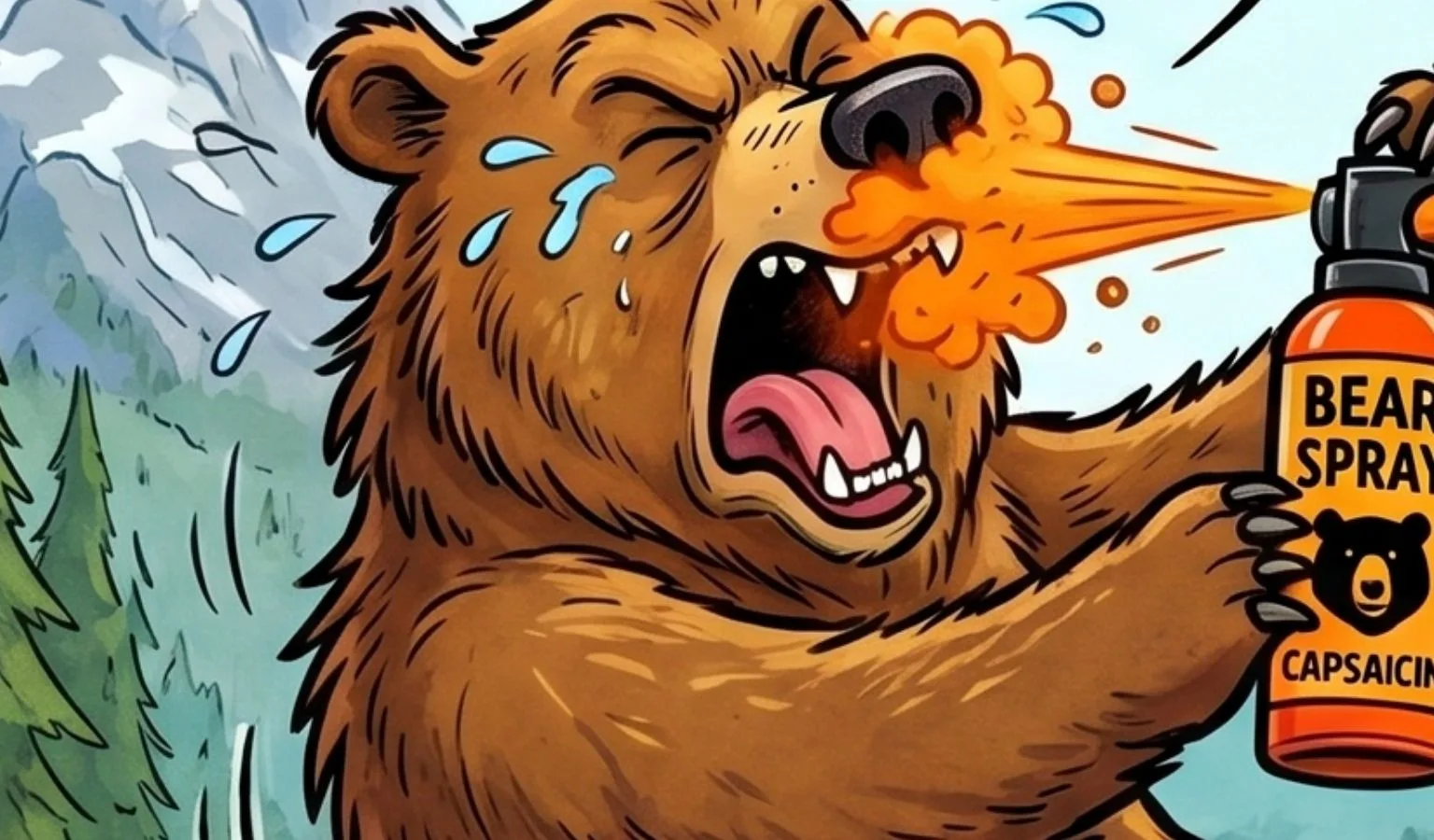
If you’ve ever doubted the sheer potency of a can of pepper spray, you should ask the female grizzly that roamed the Grand Teton National Park back in 2024. She gave it a solid one-star review, but only because it worked exactly as advertised—right into her own face.
In a bizarre twist on wilderness survival, according to an article from May of 2024 by NPR, a 35-year-old hiker from Massachusetts survived quite the encounter on Signal Mountain not because he deployed his deterrent, but because the bear accidentally deployed it for him.
According to an official park statement, the hiker didn’t even have time to fire a warning shot or aim his canister. He stumbled into a smaller bear (likely a cub), and before he could react, the mama bear charged from his periphery. He dropped, laced his fingers behind his neck, played dead, and held on for dear life. The grizzly bit him several times, but her final mistake was sinking her teeth directly into his canister of bear repellent. The can burst, a cloud of capsaicin exploded into her jaws, and she immediately decided she was no longer hungry.
Packing Heat vs. Packing Pepper
This wild story highlights a massive debate among backcountry enthusiasts: Guns vs. Bear Spray.
If you are hiking through the territory of the Greater Yellowstone Ecosystem’s roughly 1,000 grizzlies, carrying a high-caliber firearm is a completely reasonable safety measure. But seasoned outdoorsmen will tell you that treating it as an either/or choice is a rookie mistake.
Here is why you should always carry both:
- The Margin for Error: Shooting a moving, 600-pound wall of muscle charging at 35 mph requires incredible composure and perfect accuracy. A firearm requires hitting a vital organ to stop a charge instantly. Bear spray creates an expansive, dense cloud of agonizing mist. You don’t have to aim perfectly; you just have to create a wall between you and the apex predator.
- The Aftermath: If you shoot a grizzly bear, you are entering a world of federal investigations, forensic ballistics, and immense legal scrutiny due to their protected status under the Endangered Species Act. If you spray a grizzly bear, the bear runs away, you go to the hospital (or home), and the park service generally lets the bear go about its day.
Because this specific grizzly “behaved naturally after being surprised,” park officials announced they would not track, capture, or kill her.
Even when you do everything right—this hiker was reportedly making noise to alert wildlife—grizzlies are unpredictable. As Brigham Young University bear expert and professor Tom Smith noted in an NPR Illinois report, you need a definitive boundary. Smith states plainly:
“You have no business going into bear country if you have no way to tell them ‘no!’”
Whether that “no” comes from the barrel of a snub-nose .454 Casull or a 10-ounce cloud of weaponized habanero, you need a backup plan. In the case of our incredibly lucky Massachusetts hiker, his backup plan was entirely accidental—proving that even when a bear attack goes completely wrong, a can of spray can still save your life.
The hiker made a full recovery, and the grizzly likely learned a very valuable lesson about spicy food.
For a deeper look into surviving a close-range encounter and how these dynamics play out in the wild, this grizzly survival recount video details the terrifying speed of a charge and what it takes to endure an emergency response situation in Grand Teton.
Montana's outdoor week, in your inbox at 7am Friday.