
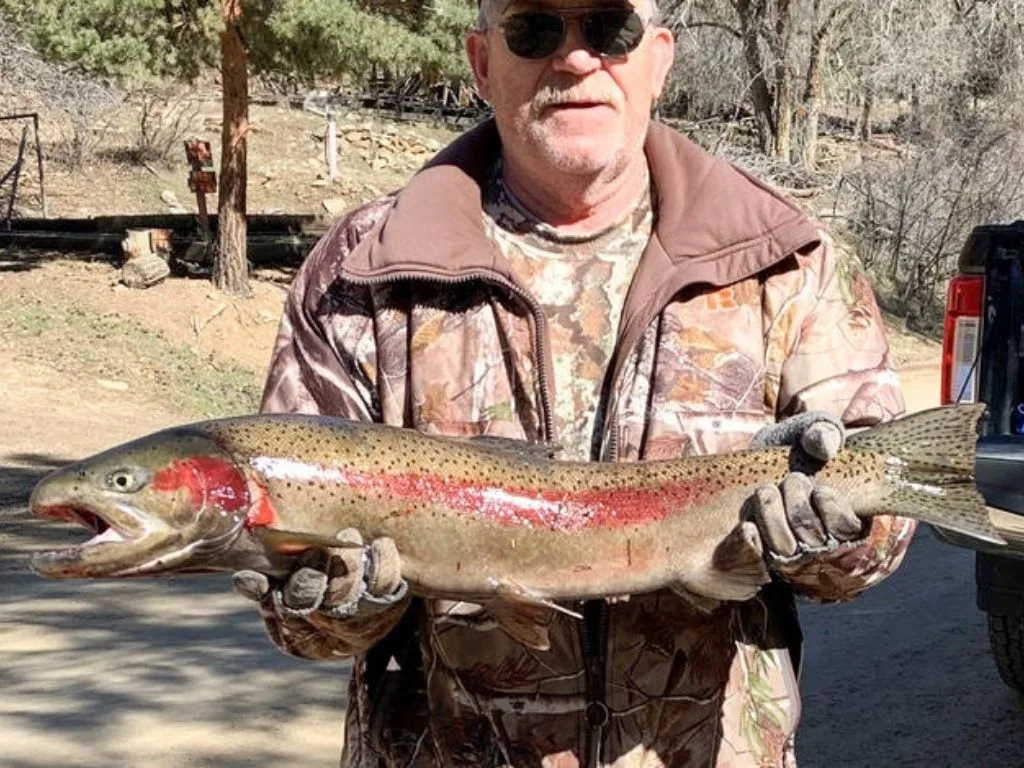
This week’s Upper Salmon River steelhead fishing report covers data collected February 11–15, 2026, and reflects an unusually mild winter that has influenced both river conditions and fish movement. Warmer water temperatures and a shorter-than-usual ice jam have allowed steelhead to move farther upstream than typically seen by mid-February. Angler effort was strong, catch rates were good across most monitored areas, and river conditions remained generally favorable, with stable flows and improving visibility expected with cooler weather ahead.
Here’s the latest report from Brent Beller with Idaho Fish and Game:
Hi everyone, this is the Upper Salmon River steelhead fishing report for February 18, 2026. The data discussed in this report were collected between Wednesday, February 11 and Sunday, February 15.
As many of you know, this winter has been a mild one. River temperatures in Salmon, ID did not drop to 32°F for the first time last fall until just before Christmas, and the Deadwater ice jam was only in place from mid-January until it opened up on February 10. Due to these warmer water temperatures, the steelhead run has progressed farther upstream by this point than we typically observe.
IDFG personnel began interviewing anglers throughout the Upper Salmon River last week, and steelhead were being caught at good rates in all monitored areas, especially during the middle of the week. Angler effort was high for mid-February, with moderate effort in all areas between the Middle Fork Salmon River and Challis, ID. Most boat anglers were observed near Salmon, Ellis, and Challis.
Only two anglers were interviewed downstream of the Middle Fork Salmon River in location code 14 on Saturday, and they averaged 9 hours per steelhead caught. Anglers interviewed downstream of North Fork in location code 15 averaged 4 hours per steelhead caught, and anglers interviewed downstream of the Lemhi River in location code 16 averaged 6 hours per steelhead caught. Anglers interviewed between the Lemhi and Pahsimeroi rivers in location code 17 also averaged 6 hours per steelhead caught, and anglers interviewed between the Pahsimeroi and East Fork Salmon rivers in location code 18 averaged 4 hours per steelhead caught. Creel surveys were not conducted upstream of the East Fork Salmon River last week. The two interviews reported for location code 19 were from anglers interviewed near Challis who had fished upstream earlier that morning.
River conditions last week were generally good (especially for mid-February), with clear to cloudy visibility in all areas. The river’s visibility downstream of Salmon, ID did worsen over the weekend due to consecutive nights with above-freezing temperatures, but it should improve quickly with the colder weather forecasted for the upcoming weekend. Flows were stable, and water temperatures near Salmon ranged from the upper 30s to the low 40s throughout the week.
The last item we would like to include in this week’s report is that the boat ramps at Bobcat Gulch, North Fork, and Deadwater are currently unusable due to ice left behind from the ice jam. All ramps upstream of Bobcat Gulch are open and usable. The IDFG ramps (Bobcat and North Fork) will be cleared of ice once we are confident that the river will not freeze back up.
Salmon River water temperatures at USGS gage nr Shoup from 01/18/26 to 02/17/26.Salmon River flows at USGS gage in Salmon from 02/10/26 to 02/17/26.
Before the license year ends on February 28, note that mountain lion and wolf hunting continue, along with some trapping seasons. E-tags will deactivate, so consider obtaining an offline license.
At Fort Peck, open water is prevalent amid remaining ice, with more shorelines exposed. Cold weather has arrived, bringing snow and a wind chill of -16°. Safety is crucial.
The Smith River Permit lottery results are available. Super Permit chances for failed applicants cost $5 until March 15. Floaters must pack out waste and register via phone before launching.
Due to popular demand, last week’s insightful podcast episode on Flathead Lake’s dam and its extensive impact on ecosystems and communities will be available for another week. Tune in to explore these connections.
The Montana Outdoor Podcast features an insightful discussion with Brian Lipscomb about the history and significance of the Séliš Ksanka Ql̓ispé Hydroelectric Project and its impact on Flathead Lake.
This week’s Montana Outdoor Podcast features hosts Dale, George Bumann, and Jenny Golding discussing the upcoming online Yellowstone Summit, featuring over 30 expert speakers from February 19th to 22nd.
Skijoring evolved from a survival technique in Central Asia to a thrilling sport in America, especially in Montana, blending speed, skill, and culture while maintaining its historical roots.
Elk generally avoid humans, but they can be dangerous during the fall rut or when cows are protecting calves. Respect their space to ensure a safe encounter.
Bald Eagles engage in a dramatic courtship ritual called “cartwheeling,” where they lock talons and freefall, testing their compatibility and strength to ensure only the most committed pairs breed.
A striking black bear mount on a loft railing showcases expert taxidermy craftsmanship. This art form has evolved, capturing lifelike motion and personality, blending biology and sculpture since the 1800s.
Minnesota ice angler Beau Rochel shared a clever DIY hack for a multi-ice hole cover that keeps feet warm while fishing. It’s lightweight, easy to transport, and uses simple materials like landscaping fabric and adhesive.
Bear, an AKC purebred Anatolian Shepherd from Wild Rooster Farm, will move to South Africa to join the Cheetah Outreach Trust, aiding farmers in protecting livestock and conserving cheetahs.
Before the license year ends on February 28, note that mountain lion and wolf hunting continue, along with some trapping seasons. E-tags will deactivate, so consider obtaining an offline license.
The Smith River Permit lottery results are available. Super Permit chances for failed applicants cost $5 until March 15. Floaters must pack out waste and register via phone before launching.
Kokanee Quinn presents a unique elk skillet lasagna recipe that elevates comfort food with layers of ground elk, three cheeses, and no-boil noodles, all in one pan for easy cleanup.
As hunting season approaches, families can utilize leftover venison by making cheesy venison bombs, a simple and flavorful dish combining ground venison, cheese, and bacon for a delicious meal.