
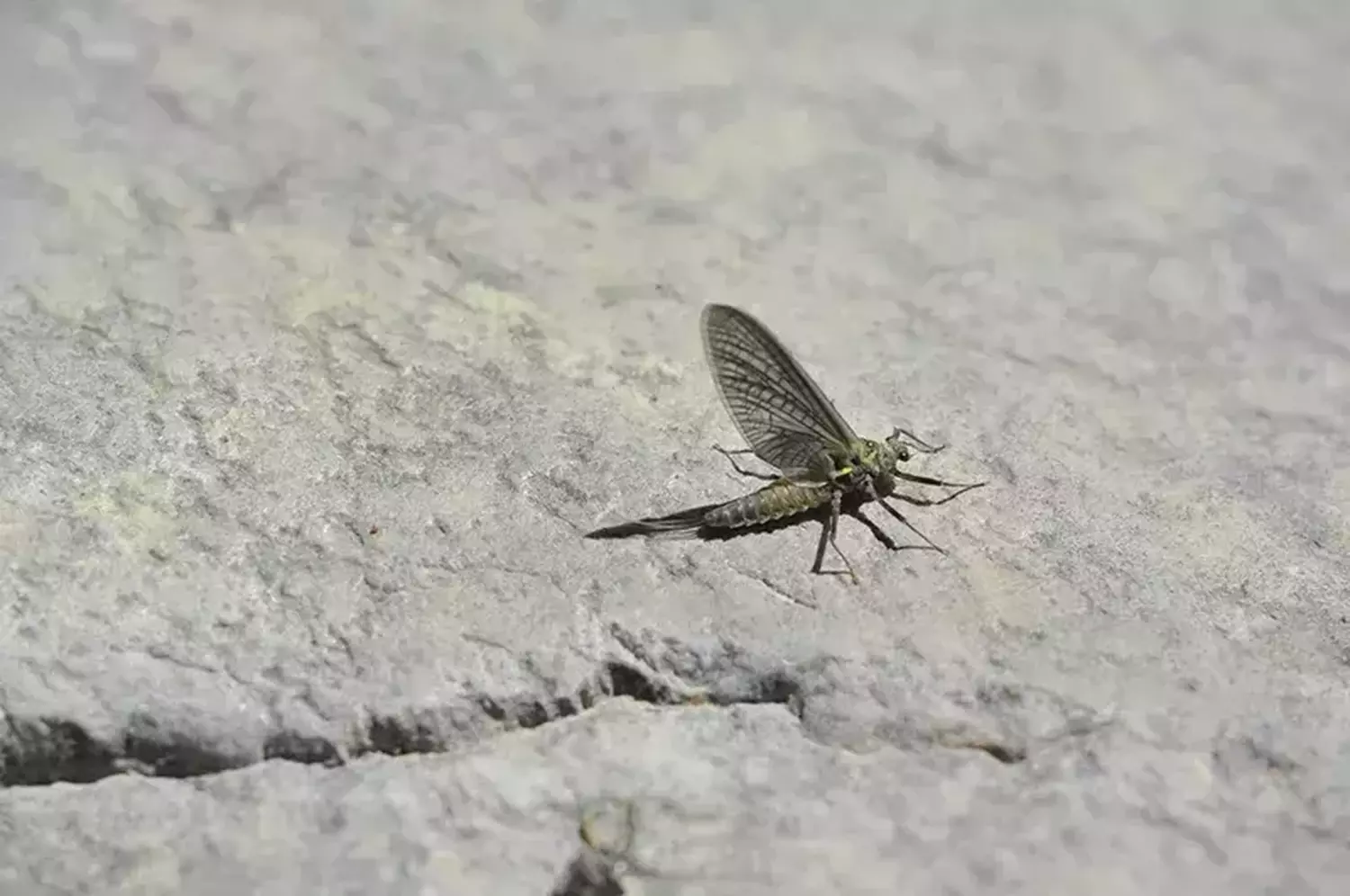
The Corwin Springs gauge has been dropping all week. If you’ve been waiting for your moment on the Yellowstone, stop waiting — it’s right now. The green drake hatch is firing, the river is clearing, and the big browns in Paradise Valley are looking up. Here’s how to make the most of it before the window slams shut.
Why the Timing Matters So Much This Year
The Yellowstone’s green drake hatch — primarily Drunella grandis, the western green drake — is notoriously flow-dependent. A heavy snowpack year like 2025-26 pushed the peak later than average, and that’s exactly what happened. Runoff out of the Absaroka and Gallatin ranges kept the river blown out and chocolate-brown well into early June. But flows have been falling steadily, and we’re sliding into the sweet spot right now — somewhere between 2,500 and 4,500 cfs — where the hatch fires hard and trout start rising with real aggression.
Don’t sleep on this window. The green drake hatch on the Yellowstone typically runs mid-June through early July, but the prime two-week peak is compressed and can shift fast. Once water temps push consistently above 65°F in the afternoon, hatch activity moves earlier in the day and fish get more selective. The conditions are in your favor right now. That won’t last.
Best Stretches from Gardiner to Livingston
The Yellowstone from Gardiner down to Livingston gives you roughly 50 miles of prime trout water, but it doesn’t all fish the same during the drake hatch. The upper stretch from Gardiner down through Yankee Jim Canyon runs cold and fast, fed straight out of Yellowstone National Park. The canyon is technical — tight access, serious wading, not a place to be casual about — but the cutthroat and rainbow density up there is exceptional. Because of cooler water temps, the hatch tends to fire a bit later in the morning on this stretch. You can get in off Highway 89.
From Yankee Jim down to Emigrant is where a lot of guides want to be during the drake hatch, and honestly, I don’t blame them. The river widens and braids, creating the kind of foam lines and current seams where big browns stack up when bugs are on the water. Carbella and Tom Miner Bridge give you solid float and wade options. Expect company on weekends — this is not a secret — but the fish population earns the crowds.
Then there’s Paradise Valley, Emigrant down to Livingston. The classic. Open ranchland, sweeping bends, and some of the largest brown trout in the entire river system. The green drake hatch here is an event. Most of the banks are private, so you’ll need landowner permission to get off the water, but FWP access sites at Grey Owl, Loch Leven, and Mallard’s Rest give you solid entry points for wading or launching a drift boat.
Reading the Hatch — What to Watch For
Green drakes are big mayflies — size 10 to 14 — and trout eat them with confidence. But the hatch doesn’t always look how you’d expect. Early on, you’ll see subtle sipping rises rather than explosive takes, fish feeding on emergers just under the surface film. As the hatch intensifies — usually 10 a.m. to 2 p.m. on overcast days, or late afternoon into evening when it’s bluebird — the rises get more aggressive and deliberate.
Watch the foam lines. During a heavy drake hatch on the Yellowstone, trout lock into feeding lanes and won’t move more than a few inches for a fly. That means accuracy and a drag-free drift aren’t just helpful — they’re the whole game. Run the longest fluorocarbon tippet you can manage, typically 12 to 14 feet of leader total, and approach your fish from downstream. One blown presentation and that fish is done with you.
Proven Fly Patterns for the Yellowstone Drake Hatch
Keep your box simple. Lawson’s Green Drake is the gold standard here — Mike Lawson’s tie nails the silhouette and wing profile that selective Yellowstone browns want. Carry sizes 10 and 12 in both standard and parachute versions. In my experience, the parachute version earns its keep on broken water where you need to track the fly, while the standard tie shines on slower runs where fish have more time to look it over.
When fish are being picky in flat water, reach for a Comparadun. No hackle, low-riding, sitting flush in the film — it matches the natural about as well as anything you can tie. Don’t overlook the emerger game either. A Sparkle Dun or floating nymph with a trailing shuck fished just in or below the surface film will flat-out outfish dry flies when trout are keying on bugs that haven’t fully hatched. Rounding out the box, a size 12 Parachute Adams is your confidence fly when drakes are mixed with other insects or visibility gets tough in broken water. Never leave it at home.
Regulations and Access Reminders
The Yellowstone from Gardiner to Livingston is catch-and-release only for cutthroat trout, and you’ll need a standard Montana fishing license. Pull up current FWP regulations before you head out — some tributaries have restrictions in place during summer low-water periods. The Yellowstone is a navigable waterway, so you can float it, but respect private land above the high-water mark. Several outfitters out of Gardiner and Livingston are running guided drake hatch trips right now if you want someone local in the boat who knows exactly where the fish are holding this week.
The Yellowstone’s green drake hatch doesn’t wait on anyone. The river’s dropping, the bugs are coming off, and the fish are looking up. Get out there.
Montana's outdoor week, in your inbox at 7am Friday.