BRETT FRENCH | bfrench@billingsgazette.com
A family floating/camping trip down the Smith River when she was 5 hooked Wendy Weaver on river recreation.
“It’s still burned into my mind,” she said. “It was an incredible experience.”
Growing up in Missoula — running whitewater in the Alberton Gorge, North Fork Flathead and Blackfoot rivers with her father, along with tubing the Clark Fork and Bitterroot rivers — further cemented her love of water-based recreation as she grew older.
“My dad was a big whitewater guy,” Weaver said. “So rivers are very ingrained into my upbringing.”
Educating river users
Weaver is now a Livingston resident who lives only five minutes from the Yellowstone River. As executive director of the nonprofit Montana Freshwater Partners, she has taken it upon herself to pilot the Yellowstone River Ambassadors program.
Launched on Wednesday, June 18, the goal for Weaver and her partners is to interact with and educate river users along the upper Yellowstone River.
“We’re going to be out there with a table with different materials and trying to share information on proper river etiquette and fish-handling and fishing etiquette,” Weaver explained. “And I have a number of different messaging or educational pieces that we’re going to be talking about.”
Popular Paradise
The upper section of the famed stream begins at Gardiner, about 50 miles south of Livingston, and flows through the rapids of Yankee Jim Canyon before spilling into the Paradise Valley, fringed to the east by the Absaroka Mountains and to the west by the Gallatin Range.
The ambassador program, which will run through August, will target Mayor’s Landing, Carter’s Bridge, Loch Leven and Grey Owl fishing access sites this summer.
Weaver has several goals.
“I think some of the high points are … sharing practical information on responsible river recreation, trying to engage with folks on conservation and stewardship, trying to create a community consensus around collaborative river management and educate people on best practices,” she said. “A big one is that most people do not know that they need a conservation license to use fishing access sites.”
One of the educational pieces that may not be front of mind for many river recreationists is pet etiquette.
“One of the things I’m most excited about is we’re going to prototype doggy groovers,” Weaver said, referencing old ammunition cans early boaters used for human waste. “So we’re going to try to get people to start thinking about how when they have dogs on their boats, or they’re out on the river, to clean up after their dogs instead of leaving dog poop out there. Because when we did our river cleanup last summer it wasn’t cans and bottles we were finding and trash, it was dog poop. So dog poop is becoming one of the biggest issues, and it’s a pretty significant water quality issue as well.”
Weaver also envisions a demonstration station for how to haul off human waste.
In conjunction with the program, a website has been launched highlighting issues, offering links to more information and explaining the reasoning behind the program.

River use analysis
In an online presentation last spring, Whitney Tilt, a project leader for the Upper Yellowstone Watershed Group, highlighted some of the challenges the Yellowstone River is facing.
Based on river surveys between 2021 and 2023, as many as 1,600 people launched a drift boat, raft, paddle board or some other craft on the busiest summer day. That’s almost double the average weekend count of about 800 people in 330 watercraft.
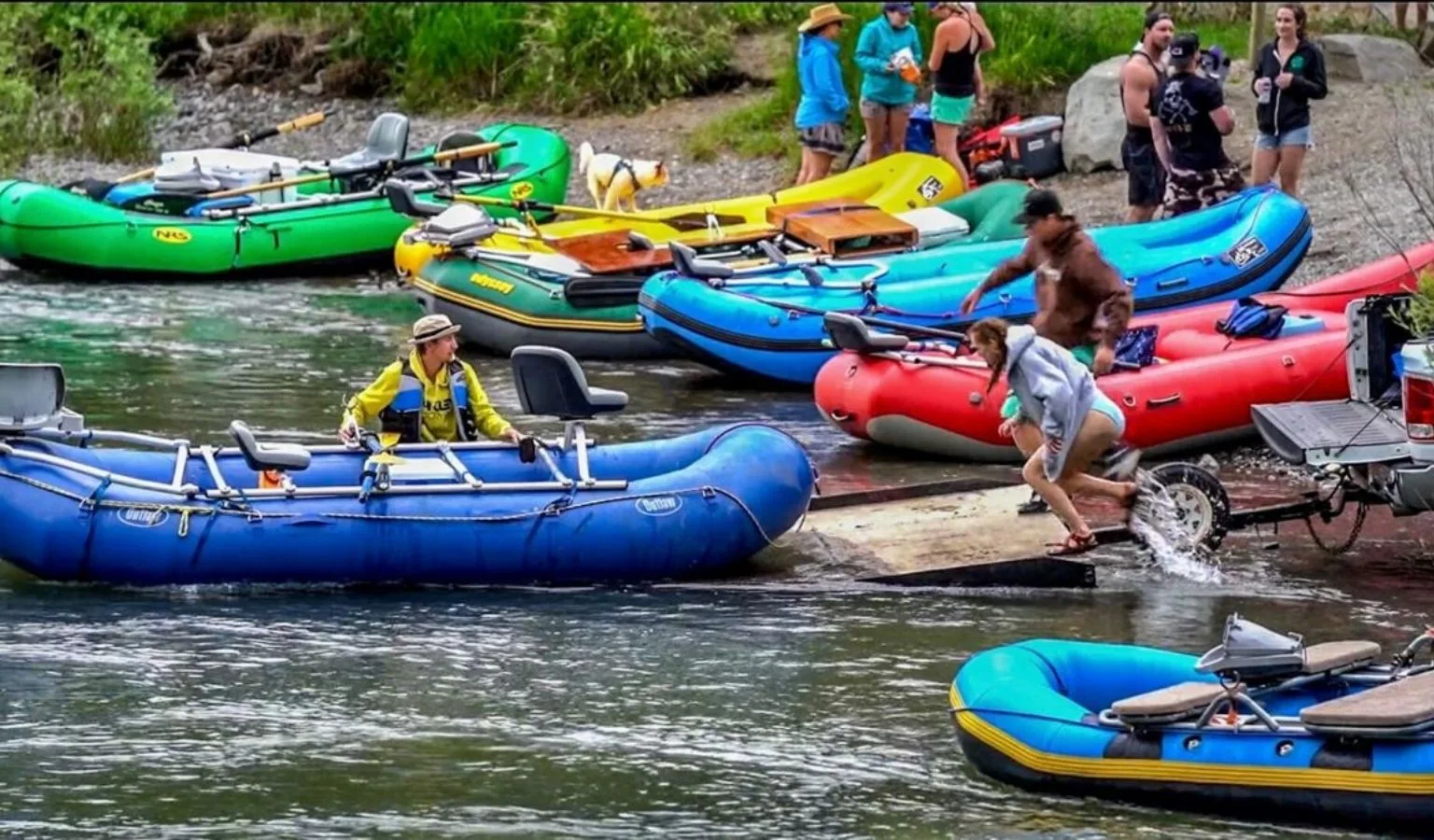
All of those people need a place to park, sometimes creating unsafe conditions along stretches of roads or at bridges when parking overflows from fishing access sites.
Tilt said there’s a synergy to high-use days such as warm, clear weather and clear water that lead to crowding, particularly on holidays like the Fourth of July.
“If you want to be by yourself, you might not want to go on the July Fourth weekend,” he said.
Despite the chaos that can occur at crowded boat launches, overall river users have said they are pretty happy with their float. Of the problems that were cited, the majority said there were too many people on the river, some of which displayed poor river etiquette like blasting music or leaving trash on beaches.
Most upper Yellowstone River users are Montanans (81%), according to a study published in 2020 by the University of Montana Institute for Tourism and Recreation Research. Forty-four percent were from Livingston with the other half mainly from the Bozeman area.
Tourist floats are concentrated closer to Gardiner where rafting companies are based just outside the North Entrance to Yellowstone National Park.
“It’s obviously a very busy corridor as the gateway to Yellowstone National Park,” said Mark Filonczuk, recreation manager for Fish, Wildlife & Parks in southwestern Montana’s Region 3.
He added the ambassador program will be key to protect the river corridor amid the exponential growth he’s seen across the region in just the last three years.
Pilot program this year
Weaver is starting out small before growing the program, partly because she has to fundraise to underwrite the effort.
“We don’t want to be everywhere,” she said. “We want to do this in a really thoughtful way, to really understand how people are receiving it and if it’s making a difference.”
Several groups are sponsoring the effort, including Montana Fish, Wildlife & Parks, the Park County Environmental Council and the Joe Brooks Chapter of Trout Unlimited.
Filonczuk said he and his river ranger will assist Weaver and he hopes to see the program grow with volunteer or paid seasonal staff to run the program in the future.
Weaver also has several other river ambassador programs she can model her efforts on, including the Missoula River Ambassadors and the Flathead Rivers Alliance’s program, both of which are much larger and utilize a cadre of volunteers.
FWP’s Region 2 recreation manager, Ben Dickinson, has worked with the Clark Fork Coalition on its program since its inception.
“The program has been successful, with ambassadors maintaining a visible, friendly presence at busy access points from the Blackfoot-Clark Fork confluence down through Missoula, helping people plan safe floats, handing out trash bags and dog waste bags, sharing current conditions, and modeling good river etiquette,” he wrote in an email. “The program has grown into a multi-site, multi-mile effort that combines education, on-the-ground problem solving, and outreach to build a culture of stewardship, not just enforcement.”
In 2024, the conservation group Blackfoot Challenge, in partnership with the Bureau of Land Management and FWP, also launched a river ambassador program.
Although a similar program was proposed for the Madison River in 2021, following the recommendation of a Fish, Wildlife & Parks working group, the effort never took off.
FWP also organized a working group in 2024 to examine concerns regarding river crowding with the intent of seeking legislative help. Those recommendations withered amid changes in the agency’s management and a quest for more data regarding recreation use on other rivers.
However, the agency’s staff is once again working on the recommendations as “capacity allows,” according to an agency spokesman, including improving access sites and water quality and emphasizing private lands fishing access programs.
Reducing river conflicts
For her part, Weaver said she’s hoping the effort she puts forth this summer helps elevate river users’ knowledge about such things as proper boat ramp, fishing and river etiquette to reduce conflicts.
“I think right now, in a world where we’re seeing increased pressures on all levels, that reducing that conflict would be highly beneficial and also produce better stewardship for the river and understanding how important conservation is and reducing the ecological impact on the river as well.”
By improving the river experience for Montanans and visitors, Weaver is hoping to keep her favorite section of the Yellowstone River healthy and thriving for future generations. Who knows, maybe some other 5-year-old will be so enchanted by their experience on the Yellowstone that they become a lifelong river connoisseur and conservationist.
“When there’s a problem and there’s solutions out there, why not try them?” Weaver questioned.
Montana's outdoor week, in your inbox at 7am Friday.