
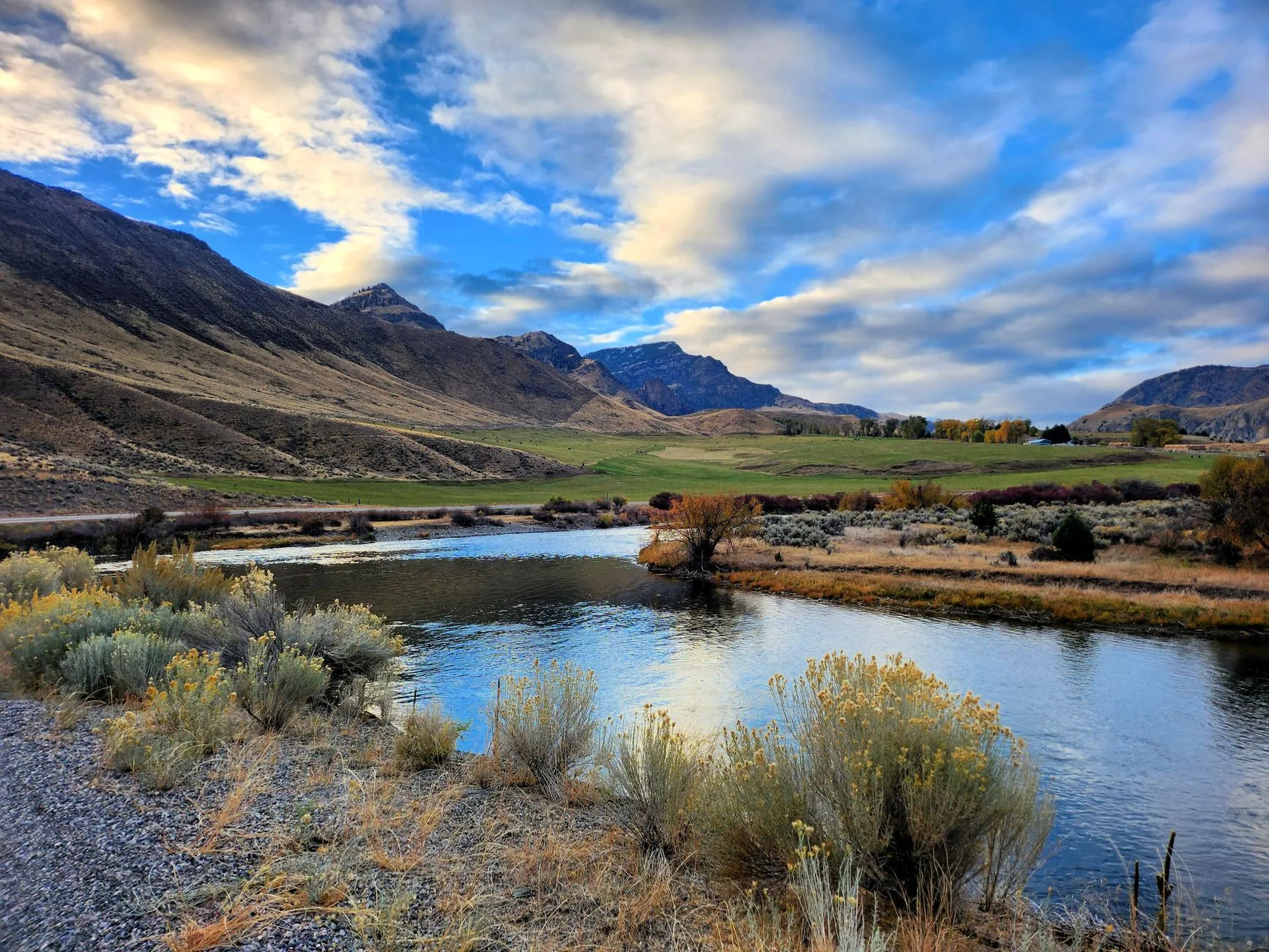
The Missouri River below Holter Dam doesn’t slow down in late October — it just gets better while everywhere else in Montana goes quiet. As elk hunters pull focus toward the timber and coulees and the pressure on other rivers drops off, the Craig corridor stays wide open, productive, and worth every cold-fingered mile of the drive up Highway 287.
Here’s what you can expect if you’re heading out this week.
Current Conditions on the Missouri Near Craig
Water temps have been running in the low-to-mid 50s Fahrenheit. Last year’s late October report out of Headhunters Fly Shop in Craig put it right around 52°F, and this season is tracking in a similar range. That number matters. Cool enough that fish are shifting their feeding rhythms, but still warm enough to keep them active and willing to look up on the right afternoon.
Flows out of Holter Dam have been moderate and stable — which is exactly the point of fishing a tailwater in fall. While freestone rivers like the Smith or the Blackfoot are swinging with rain, snowmelt, and runoff, the Mo below the dam holds steady. Check the USGS gauge near Craig before you head out. Dam operations upstream can adjust flows, and knowing what’s coming helps you pick your stretch of water before you’re already standing in it.
Visibility has been good. The Missouri in late October often carries a slight green tint but runs clear enough to sight-fish the slower pools and flats. If you’ve fished it before, you know how much that changes things — you can spot fish, watch rises, and put flies somewhere specific instead of just covering water and hoping.
What the Fish Are Doing
Brown trout are the story right now. The Missouri holds strong populations of both browns and rainbows, but late October into November belongs to the browns. They’re staging, active, and getting more aggressive as the spawn approaches. Look for them stacked in slower tailouts below riffles, tight to undercut banks, and in the deeper runs that hold warmth later into the day.
Rainbows are still showing up throughout the day on nymph rigs. Don’t write them off — a big Missouri River rainbow in October is a legitimate trophy fish, and they’ll eat if you put the right fly in the right lane.
Midday is your window. The sun hits the water late given the low October angle, and once it does, surface activity picks up. Don’t rush to the river at first light expecting a June experience. Give it time to warm up and plan to fish hard from mid-morning through mid-afternoon. That’s when it happens.
Fly Selection for Late October on the Missouri
The Missouri’s reputation as a dry fly fishery doesn’t die when October arrives. Midges are driving surface activity this time of year, and they matter more than a lot of visiting anglers expect going in.
Dry Flies Worth Rigging
- Adams (sizes 16–20): A reliable all-around pattern that holds up during midge and small mayfly activity. Last year’s late October report out of Craig specifically called out the Adams as a go-to during this window — that confidence is well-earned on this river.
- Cripple patterns (sizes 18–22): Also flagged in last year’s Craig report. Cripples shine when fish are being selective and keying on emergers stuck in the film. Getting refusals on standard dries? Drop down to a cripple and slow your drift.
Midge cluster patterns and Griffith’s Gnats in sizes 18–22 are worth keeping on hand for when the hatch gets thick — and it will. A cluster sitting in the film can be deadly during a good midge push. CDC Comparaduns in low-profile ties round out the dry fly box well, especially when fish are sipping quietly along current seams in slow water. They float well and don’t overdress the presentation.
Nymphs and Sub-Surface Rigs
The Zebra Midge in sizes 18–22 is a Missouri River staple and the anchor of most nymph rigs this time of year. Black and red, silver bead, red wire — you know the setup. Fish it under an indicator or drop it off a heavier fly. The Pheasant Tail Nymph in sizes 16–20 covers Baetis nymph imitation and works throughout the water column; drift it slow and deep. The RS2 in sizes 20–22 earns its place during Blue-Winged Olive hatches, which can still pop sporadically on overcast October afternoons above Craig.
Honestly, don’t be too proud for a San Juan Worm or an egg pattern. When browns are in spawning mode and feeding opportunistically, a well-placed worm drifted through the right run will get bit. That’s not a shortcut — that’s reading the season and fishing accordingly. As November closes in, streamers become increasingly worth your time. Olive, white, and tan Sculpins, Muddlers, or articulated patterns stripped or swung through deeper holds can draw hard strikes from big fish that aren’t interested in picking off size-20 midges all afternoon.
Where to Fish Near Craig
The stretch from Holter Dam downstream through Craig is the heart of this fishery. The Missouri here is wide, clear, and full of fish — but it rewards anglers who read water carefully. Wading in and blind-casting is a good way to spook every fish in a flat before you even get started.
The Dearborn River confluence downstream of Craig is worth your attention. Confluences concentrate fish and food, and this one is no exception. The flats above and below Craig itself offer excellent visibility and are ideal water for dry fly fishing and sight-nymphing. In my experience, the slower edges of those flats hold more fish than most first-timers expect — don’t blow past them rushing to the faster runs.
Montana's outdoor week, in your inbox at 7am Friday.