
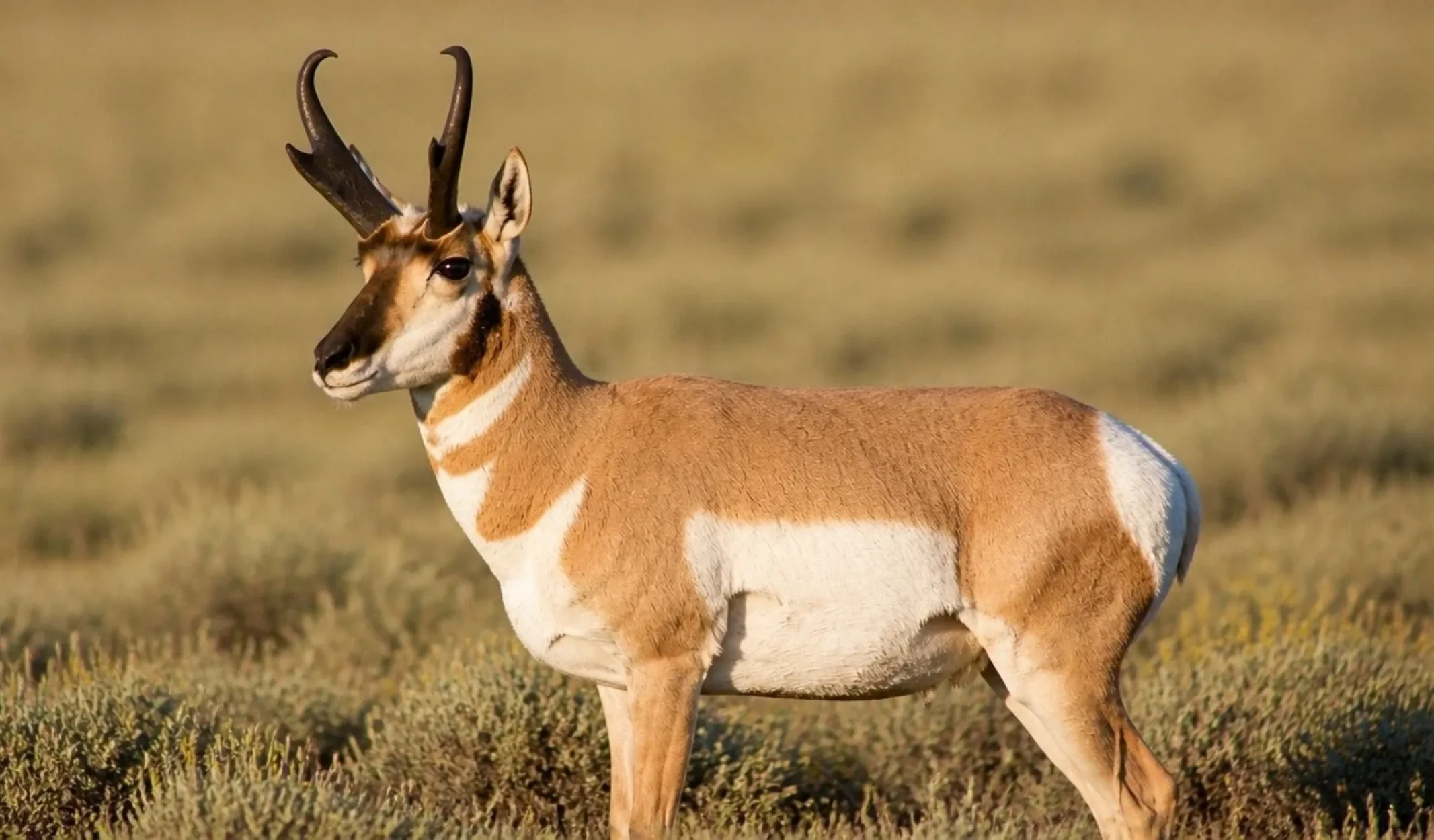
Field & Stream’s David Draper broke pronghorn judging down to three tips, and his core warning is worth tattooing on your rifle stock: “Pronghorns are notoriously difficult to judge in the field.” Even he admits the tallest buck in the group isn’t always the one worth shooting. Here’s what he says:
- Length lies (a little). Draper’s scale is simple: “A 12-inch antelope is average; 13, good; 14, exceptional,” with record-book animals taping 15 to 16 inches. But he cautions that “horns that jut straight up appear longer than they really are, while those curling back and inward, or with ivory tips, appear shorter.” His fix: “Try to view the buck from multiple angles so you can add the curl of the horn tips to your length estimate” — and use the buck’s own body as a ruler, since “the distance between the tip of the animal’s nose and its eye (about 8 inches) or between its ears (12 inches)” gives you a built-in tape measure.
- Prongs are half hidden. Draper measures prongs “from the tip of the prong, along its upper edge, then across to the back center of the horn” — 5 to 6 inches is excellent, 6 to 7 is record book. But here’s the catch: “What protrudes from the horn is only part of the measurement.” His solution is to add “about 2 inches for the width of the horn itself,” which means “a prong that extends 3 inches is excellent once you add those couple of inches.” And a handy comparison: the ear is about 6 inches long, and “if the full prong measurement is almost that long, it’s a keeper.”
- Mass is the whole game. Draper doesn’t hedge here: “This is the most critical factor of all, because it’s measured four times after dividing each horn length into quarters.” Trouble is, “circumference is difficult to judge, even for veteran antelope hunters,” and “some animals have partially flattened bases, making them score lower” than round-based look-alikes. His advice: wait for the buck to turn sideways to check the base shape, and use the eye for scale — it’s about 4½ inches around, and if the bases “look about an inch wider than the eye width, they’ll likely measure over 7 inches — now that’s a pronghorn.”
Topics
Antelope
Montana Outdoor Weekly Pulse
Montana's outdoor week, in your inbox at 7am Friday.