Key Takeaways
- Wildlife can look calm and still be unpredictable—especially when food is involved.
- Hand-feeding wild animals can lead to bites or nips, even in moments that seem harmless.
- No photo, video, or “cute moment” is worth risking injury.
- Wild animals are not petting zoo attractions—admire them from a safe distance.
Just Don’t Feed Wildlife
We see the same thing every year…actually, about every day — and somehow, people still don’t learn.
What happened in the clip
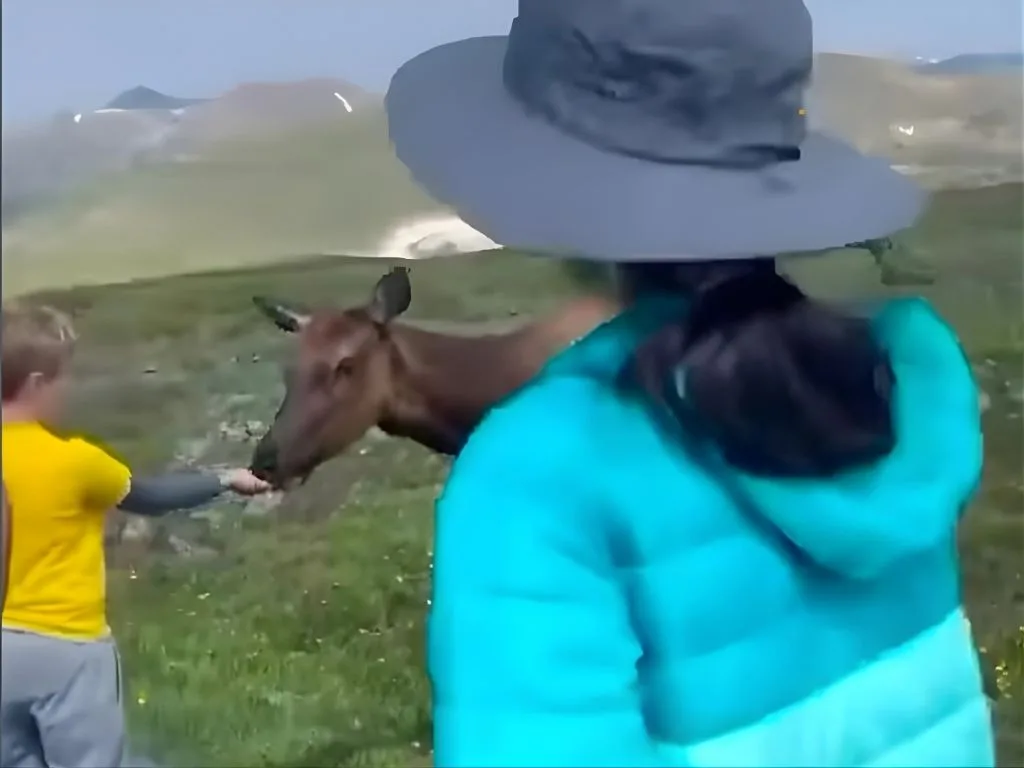
This elk may look calm, but wildlife is never predictable, especially when food is involved. In this clip, the child’s fingers got nibbled while hand-feeding the elk — a scary but preventable reminder that wild animals are not petting zoo attractions.
Why feeding wildlife is risky
No photo, no video, and no “cute moment” is worth risking injury. When people offer food, they invite close contact with an animal that can react suddenly and unpredictably.
A simple rule that prevents incidents
- Don’t hand-feed wildlife.
- Admire from a safe distance.
We haven’t shared one of these reminders in a while, but here it is again: admire …
FAQ
Why is feeding wildlife a bad idea even if the animal seems calm?
Because wildlife is never predictable, and food can change an animal’s behavior in an instant.
What happened when the elk was hand-fed?
In the clip, the child’s fingers were nibbled while hand-feeding the elk.
Is it ever worth feeding wildlife for a photo or video?
No. The post’s point is that no photo, video, or “cute moment” is worth risking injury.
What’s the safest way to watch wildlife?
Admire wild animals from a safe distance and avoid treating them like petting zoo attractions.
Montana's outdoor week, in your inbox at 7am Friday.